The U.S. House of Representatives convenes to address Houthi militia terrorism and safeguard Red Sea security.

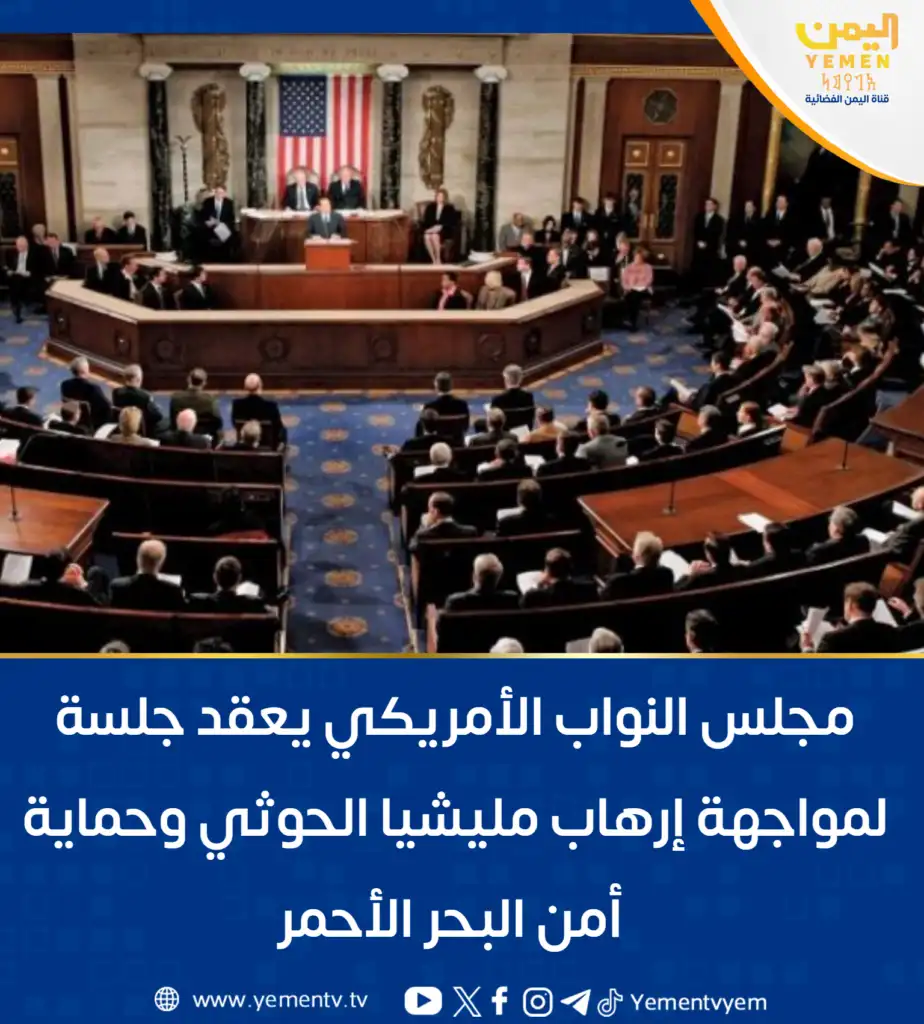
- The U.S. House of Representatives held a hearing on Houthi militia terrorism today.
- Subcommittee Chairman Mike Lawler described the Houthis as a foreign terrorist organization.
- Iran provides significant support, enhancing Houthi capabilities against U.S. interests.
- Addressing Houthi resilience requires cooperation with regional partners and the Yemeni government.
U.S. House of Representatives Holds Hearing on Houthi Terrorism and Red Sea Security
The U.S. House of Representatives convened a hearing today titled “Confronting Houthi Militia Terrorism: Protecting American Interests and Red Sea Security.” This session aimed to address the growing threat posed by the Houthi militia and its implications for U.S. interests in the region.
Houthi Threats and Iranian Support
During the hearing, Subcommittee Chairman Mike Lawler emphasized that the Houthis represent a foreign terrorist organization equipped with ballistic missiles, cruise missiles, and offensive drones. He noted that the group has targeted U.S. forces, attacked American partners, and threatened commercial shipping in one of the world’s most critical waterways.
Lawler pointed out that Iran plays a pivotal role in the development of Houthi capabilities. For years, the Iranian regime has supplied the Houthis with weapons, funding, training, and technical expertise. This support has transformed a local armed movement into a terrorist organization capable of threatening Americans and disrupting international trade. Lawler stated, “This is a strategy Iran has employed repeatedly—building and arming terrorist organizations and militias across the Middle East to attack the U.S. and its allies while distancing itself from the consequences of those attacks.”
Military Deterrence and Challenges
The situation becomes increasingly dangerous when considering Yemen, the Red Sea, and the Strait of Hormuz. Lawler explained that Iran and its Houthi proxies exert simultaneous pressure on two of the world’s most strategic maritime routes. He asserted that military deterrence is only part of the solution. While the U.S. has demonstrated its ability to destroy Houthi missiles, drones, launch platforms, and command centers, the more challenging question remains: how to prevent the Houthis from rebuilding these capabilities.
Lawler elaborated that behind every missile or drone lies a comprehensive system that facilitates funding, procurement, smuggling, and assembly. This system includes networks for illicit financing, front companies, arms traffickers, and black market procurement networks, along with direct Iranian support.
Addressing the Houthi Resilience
He warned that if this system remains intact, the U.S. could find itself in a costly and unsustainable cycle. Lawler emphasized the need to identify vulnerabilities within these networks and evaluate the effectiveness of sanctions, export controls, intelligence operations, and other tools to prevent the Houthis from rebuilding their military capabilities.
He also highlighted the importance of regional partners and the legitimate Yemeni government. Lawler stressed the need to explore what U.S. allies can contribute, as they have a direct interest in keeping maritime routes open and preventing Houthi attacks. He added, “Any sustainable strategy must consider Yemen itself. Renewed conflict could further destabilize an already fragile country, while continued Houthi control poses specific risks to regional security.”
The Houthi Attacks and Regional Implications
Representative Jared Moskowitz noted that Houthi militias attacked dozens of commercial vessels and Saudi Arabia over the past year, with no signs of these attacks abating. He referenced the Houthi leadership’s declaration on July 20 of a maritime blockade against Saudi Arabia and their threats to target Saudi oil tankers, expanding risks to vessels using Saudi ports in the Red Sea. Moskowitz pointed out that Houthi attacks in August included drones and long-range missiles targeting Saudi infrastructure, including an Aramco facility, alongside ongoing threats to commercial navigation in the Red Sea.
He argued that these operations have solidified the Houthis’ role as a disruptive regional force aligned with Iran, exploiting historical grievances against Saudi Arabia. The immediate consequences include heightened risks to commercial shipping and energy flows through maritime routes, particularly amid the already tense situation in the Strait of Hormuz. Additionally, there is a danger of Yemen being drawn deeper into the broader regional conflict with Iran.
Humanitarian Crisis in Yemen
Moskowitz highlighted that the Houthis rely on smuggling networks to acquire weapons, military equipment, and ammunition, with Iran as the primary source. This includes dual-use materials such as missile guidance systems, drone components, and other electronics. He stated, “U.S. efforts and those of partner nations have succeeded in slowing and disrupting some of these flows, but the networks remain capable of arming and equipping the Houthis while circumventing sanctions and interdiction efforts.” He called for enhanced U.S. and international efforts to curb the smuggling of dual-use materials and technology that enable the Houthis to develop their capabilities.
The humanitarian situation in Yemen remains dire, with over a decade of war, economic decline, displacement, and disease contributing to one of the world’s most severe and protracted crises. Approximately 22.3 million Yemenis require humanitarian assistance to survive, with nearly 18.3 million facing acute food insecurity. More than 2.2 million children under five suffer from severe malnutrition.
Moskowitz noted that around 10.8 million children need humanitarian aid, and nearly 40% of health facilities operate at minimal capacity or are completely non-functional. He cited a UNICEF report indicating 93,496 suspected cholera cases and approximately 250 deaths in January 2026, following an outbreak that began in late 2025.
Houthi Misappropriation of Aid
Moskowitz criticized the Houthis for exacerbating the humanitarian crisis by seizing humanitarian aid intended for civilians, hoarding it for profit, or redistributing it to their supporters and political allies. He pointed to the detrimental impact of former President Donald Trump’s aid policies and the dismantling of USAID in 2025, which led to the cancellation of thousands of grants and contracts.
He stated, “U.S. aid supported some of the most critical humanitarian programs in Yemen, including emergency food assistance, nutrition, health, and other life-saving services.” He referenced World Food Program estimates from July 2025, warning that reduced funding could deprive up to 4.8 million Yemenis of life-saving food assistance.
The Need for a Long-Term Strategy
Yemeni-American researcher Nadwa Al-Dosari testified about the factors contributing to the Houthi threat. She identified two primary drivers: ongoing Iranian support for Houthi capabilities and the underestimation of their threat by the U.S. and the international community. Al-Dosari noted that the Houthis have exploited negotiations and ceasefires to buy time and strengthen their military power, transforming their threat from a local issue to one affecting U.S. forces and international navigation.
She discussed the nature of the Houthis and their relationship with Iran, explaining that their ambitions once exceeded their capabilities. However, continuous Iranian support has helped bridge this gap by developing missiles, drones, and the necessary capabilities to target vessels and objectives throughout the region.
Al-Dosari stressed the need for a long-term strategy and the strengthening of the Yemeni government’s role. She pointed out that the Houthis’ control over territory is their primary source of power and influence, providing them with a population for recruitment, revenue, ports, smuggling routes, and areas for weapon manufacturing and storage.
Conclusion: A Call for Continued Support
Alison Meiner, Director of the Atlantic Council’s Middle East Integration Project, warned against the dangers of open warfare, asserting that it serves the interests of the Houthis. She emphasized the necessity of resuming humanitarian aid and supporting the Yemeni government, arguing that the best way to counter the Houthis internally is to demonstrate the existence of an effective alternative.
Meiner highlighted the importance of building government institutional capacity and supporting the Yemeni Coast Guard, which conducted four significant operations to intercept arms shipments last year. She called for a sustained U.S. strategy that collaborates with Yemeni and regional partners, rather than oscillating between costly military intervention and withdrawal from the issue.
The hearing underscored the urgent need for a comprehensive approach to address the Houthi threat, support humanitarian efforts, and stabilize Yemen for the sake of regional security and international trade.
To follow the news in Arabic