The Prime Minister issues a decision to form a high supervisory committee for the IMF program, emphasizing the government’s focus on reforms.


- Prime Minister Issues Decision to Form High Supervisory Committee for IMF Program Implementation Prime Minister Dr.
- It will coordinate efforts among relevant entities and adopt a unified implementation matrix that specifies targets, criteria, required procedures, responsible and supporting parties, timelines, performance indicators, and data submission requirements.
- He described these reforms as a primary pathway to restoring economic recovery, enhancing trust in government institutions, improving public resource management efficiency, and establishing financial and monetary stability.
- Integration of Financial Policies The Prime Minister highlighted the importance of enhancing the integration of financial and monetary policies, improving discipline in public finance management, and increasing revenue collection efficiency.
Prime Minister Issues Decision to Form High Supervisory Committee for IMF Program Implementation
Prime Minister Dr. Sha’if Mohsen Al-Zandani has issued decision number (68) for the year 2026, establishing a high supervisory committee to oversee the implementation of the program monitored by International Monetary Fund (IMF) experts. This initiative aims to strengthen government leadership in economic, financial, and monetary reforms, unify state institutions’ efforts, and ensure a transition from announced commitments to practical execution according to a clear timeline and performance indicators.
Committee Composition and Responsibilities
The committee will be chaired by the Prime Minister, with the Governor of the Central Bank of Yemen serving as the vice-chair. Members include the Ministers of Finance, Planning and International Cooperation, Oil and Minerals, Electricity and Energy, Civil Service and Social Insurance, Local Administration, the Secretary-General of the Cabinet, and the heads of the Tax and Customs Authorities, as well as the Central Statistical Organization. Additionally, the heads of the technical follow-up teams from the Ministry of Finance and the Central Bank of Yemen will also participate.
The committee will provide general guidance and oversight for implementing the commitments and reforms outlined in the approved program documents. It will coordinate efforts among relevant entities and adopt a unified implementation matrix that specifies targets, criteria, required procedures, responsible and supporting parties, timelines, performance indicators, and data submission requirements.
Initial Meeting and Future Priorities
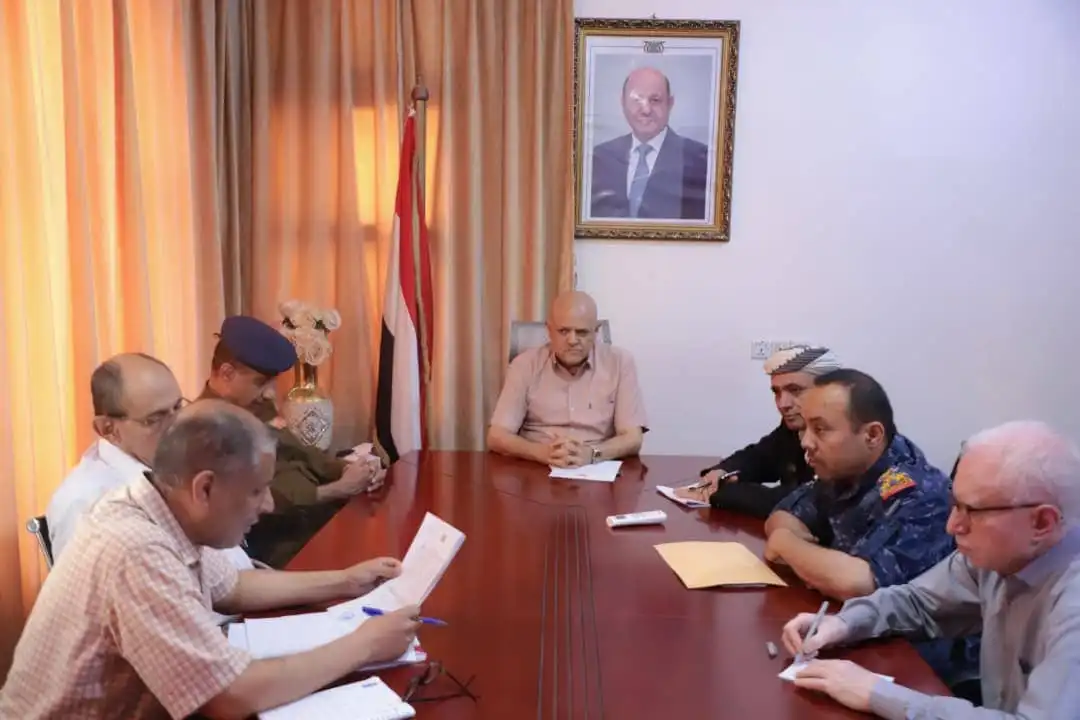
Following the issuance of the decision, the Prime Minister chaired a meeting that included the Governor of the Central Bank of Yemen, Ahmed Ghaleb, and Minister of Finance, Marwan Bin Ghanem. They discussed the committee’s work plan, priorities for the upcoming phase, and mechanisms to activate its role in leading and monitoring the implementation of reforms. The meeting also focused on enhancing coordination and integration among the relevant government entities.
Emphasis on Economic Reforms
The Prime Minister emphasized that the formation of the committee reflects the government’s exceptional commitment to economic, financial, and monetary reforms. He described these reforms as a primary pathway to restoring economic recovery, enhancing trust in government institutions, improving public resource management efficiency, and establishing financial and monetary stability. He stressed that the success of this path requires unified executive will, institutional discipline, and direct oversight at the highest levels.
Implementation Plan and Accountability
Dr. Al-Zandani directed the development of a comprehensive executive plan and a binding timeline that includes precise specifications for the required reforms and targets, the responsible entities for their implementation, performance measurement indicators, and expected outcomes. He insisted on clearly defining responsibilities and ensuring that no commitments remain unassigned to a specific entity for execution and follow-up.
Integration of Financial Policies
The Prime Minister highlighted the importance of enhancing the integration of financial and monetary policies, improving discipline in public finance management, and increasing revenue collection efficiency. He called for prioritizing the completion of requirements for periodic program reviews and raising the readiness of financial, economic, monetary, and statistical data and indicators. He also emphasized the need to leverage technical assistance and expertise from international institutions to support national capacities. He affirmed that the partnership with the IMF should translate into measurable reforms that yield results benefiting the national economy and citizens.
To follow the news in Arabic