The Governor of Taiz chaired an emergency committee meeting to discuss the general situation and enhance security measures.

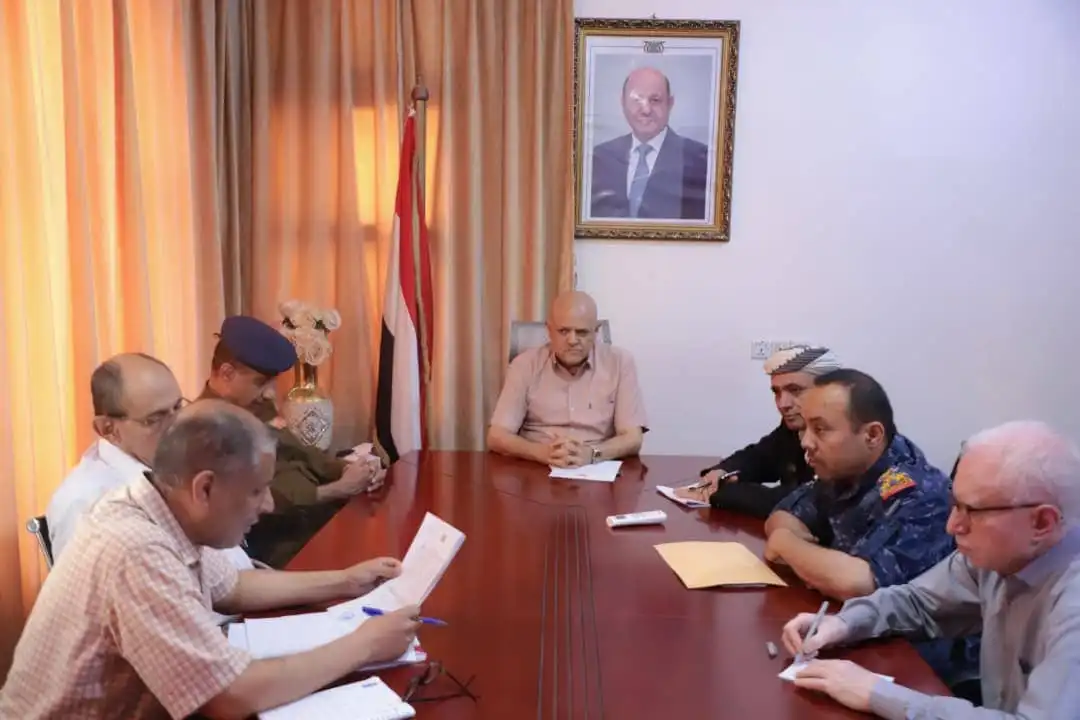
- The committee discussed various security, service, and humanitarian issues amid the ongoing blockade imposed on the city by the Houthi militia.
- These actions aim to bolster security and stability while maintaining public order.
- This initiative aims to unify coordination efforts, facilitate the work of international and local organizations, and organize interventions based on needs and priorities.
- Media Coordination Efforts The First Deputy Governor presented a report on the action plan for the unified media room, prepared under his supervision.
Governor of Taiz Chairs Emergency Committee Meeting to Discuss Current Conditions
Governor Nabil Shamsan of Taiz held a meeting today with the Emergency Committee to address the latest developments in the region. The committee discussed various security, service, and humanitarian issues amid the ongoing blockade imposed on the city by the Houthi militia.
Key Participants in the Meeting
The meeting included several key officials, such as Dr. Abdulqawi Al-Makhlafi, the First Deputy Governor; Engineer Rashad Al-Akhali, the Deputy Governor for Services; Major General Mansour Al-Akhali, the Director of Taiz Police; Major General Abdulwahid Sarhan, the Director of State Security; Major General Mohammed Mahyoub, the Commander of the Emergency Forces; Nabil Jamal, the Director of the Planning and International Cooperation Office; and Ali Qassem, the Director of the Governor’s Office.
Security Situation and Measures
During the meeting, the attendees focused on the security situation in the province. They discussed measures to secure the city’s entrances, enhance security presence, and intensify procedures in the streets and areas of the city. These actions aim to bolster security and stability while maintaining public order. The meeting emphasized the prohibition of any illegal fees or taxes at security checkpoints and city entrances, urging legal actions against violators.
Medical Services for the Injured
The committee also addressed the conditions of the injured and the level of medical services provided to them in government hospitals, particularly for those wounded in the battlefronts of the Sabir districts. The meeting directed the Deputy Governor for Health Affairs to prepare and submit a comprehensive report on their conditions and needs, including necessary treatments and proposals to improve healthcare services.
Coordination of Humanitarian Efforts
The meeting established a committee to coordinate humanitarian and relief interventions across the province and its districts. This initiative aims to unify coordination efforts, facilitate the work of international and local organizations, and organize interventions based on needs and priorities. The goal is to ensure that aid reaches the most vulnerable groups and displaced individuals.
Plans for Unliberated Districts
Additionally, the meeting reviewed draft plans for the unliberated districts and agreed to arrange a broader meeting with the directors of those districts. This meeting will focus on discussing plans, needs, priorities, and identifying required interventions based on existing conditions and challenges.
Media Coordination Efforts
The First Deputy Governor presented a report on the action plan for the unified media room, prepared under his supervision. The report included its vision, objectives, organizational structure, member names, and work mechanisms. This initiative aims to unify the media discourse, enhance coordination among relevant entities, and achieve the goals for which it was established, paving the way for its official activation.
Challenges at City Entry Points
The Commander of the Emergency Forces reviewed the procedures and regulations in place at the city’s entry points, highlighting the main challenges faced by travelers at the Houthi checkpoints.
To follow the news in Arabic