The Cabinet reviews updates and measures taken to manage the current phase and enhance the readiness of state institutions.

Yemeni Cabinet Addresses Recent Developments and Security Measures
Meeting Overview
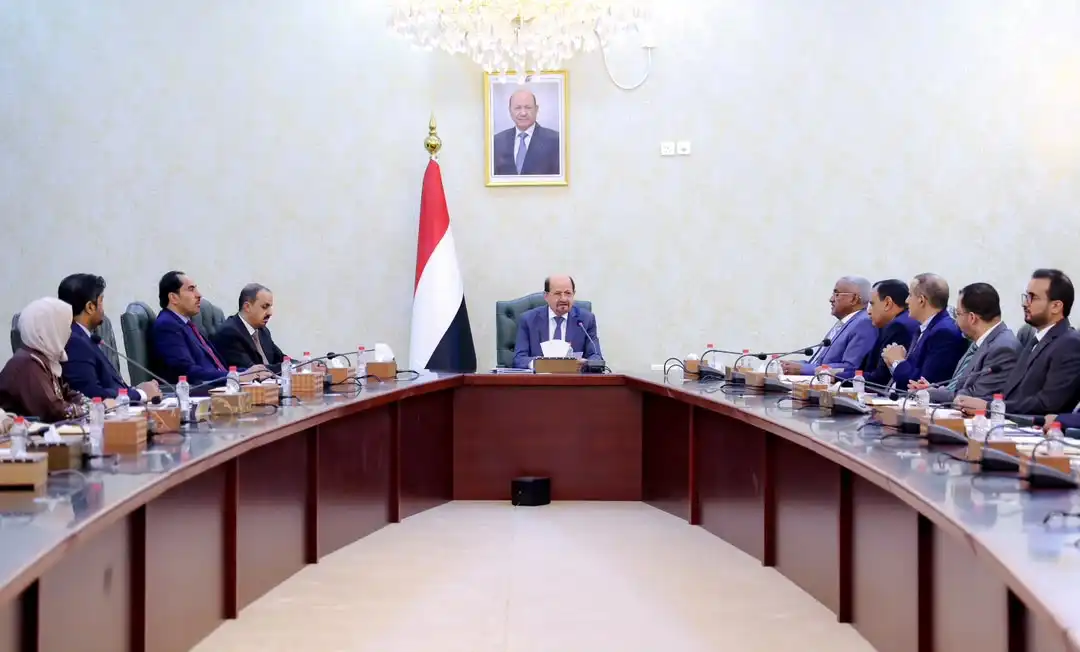
On Sunday, the Yemeni Cabinet, led by Prime Minister Dr. Shaya Mohsen Al-Zandani, convened in the temporary capital of Aden. The meeting focused on the latest Iranian violations of Yemen’s sovereignty and the government’s strategies to manage the current situation across various sectors, including political, military, security, diplomatic, economic, and media.
Enhancing State Readiness
The Cabinet reviewed the current situation and the steps taken to bolster the readiness of state institutions. They emphasized the need for swift responses to various scenarios and unified government performance to protect national sovereignty, ensure security and stability, and maintain essential services for citizens.
Government’s Approach to Recent Developments
Prime Minister Al-Zandani reiterated that the government approaches these developments with a state-centric mindset, avoiding reactive measures. The focus remains on safeguarding national sovereignty and citizens’ interests, preventing Houthi militias and their backers from exploiting the suffering of Yemenis for political gains or undermining state authority.
Call for Increased Coordination
Dr. Al-Zandani urged all ministries, government entities, and local authorities to intensify efforts and enhance coordination with military, security, and intelligence agencies. He stressed the importance of maintaining security, protecting vital facilities and ports, combating terrorism, smuggling, and corruption, and ensuring the continuous improvement of basic services. He also called for strict market oversight to prevent price hikes and monopolization during these exceptional circumstances.
International Message on Sovereignty
In his message to the international community, the Prime Minister emphasized that protecting Yemen’s sovereignty is not solely a Yemeni issue but a collective responsibility tied to regional security and adherence to international law. He warned that any leniency towards Iranian violations or attempts by militias to impose facts on the ground would not lead to peace but would instead escalate tensions and undermine stability.
Humanitarian Initiatives and National Sovereignty
The Cabinet welcomed humanitarian initiatives aimed at alleviating the suffering of Yemenis, particularly the Jordanian initiative to resume flights between Sana’a and Amman. However, they reaffirmed their commitment to national sovereignty and the exclusive authority of the state over its airspace and airports, emphasizing that humanitarian efforts should not infringe upon state sovereignty or bypass legitimate institutions.
Responsibility of Houthi Militias
The Cabinet reiterated that the Iranian-backed Houthi militia bears full responsibility for ongoing escalations, undermining peace efforts, obstructing humanitarian initiatives, and using state resources to further their insurgent agenda. They called on the militia to prioritize the interests of Yemenis and cease exploitative and aggressive policies that serve only Iranian agendas.
Support for Armed Forces
The Cabinet praised the high readiness of the armed forces and security agencies, acknowledging their efforts to protect national sovereignty and deter threats to the country’s security and stability. The government committed to providing all necessary support to enable these forces to fulfill their constitutional duties.
Appreciation for Regional Support
The Cabinet expressed gratitude for the steadfast support from Saudi Arabia, highlighting its political, economic, developmental, and humanitarian assistance to Yemen, which strengthens the state’s resilience and contributes to regional security and stability.
Ongoing Commitment to Sovereignty
The government will continue, in full coordination with the Presidential Leadership Council, to take all necessary measures to protect Yemen’s sovereignty and work steadfastly towards restoring state institutions and ending the coup.
Economic and Social Development Plans
The Cabinet approved the formation of a high supervisory committee to prepare the Economic and Social Development Plan for 2027-2029. This committee will be chaired by the Prime Minister and include several ministers, the Central Bank governor, and representatives from the private sector and civil society organizations, based on a proposal from the Minister of Planning and International Cooperation.
Focus on Service Improvements
The Cabinet listened to updates from relevant ministers regarding service conditions in Aden and liberated provinces. Prime Minister Al-Zandani directed increased efforts, expedited implementation of urgent solutions, and enhanced coordination with local authorities. He emphasized that improving services remains a top priority, with the performance of ministries evaluated based on their impact on citizens’ lives.
Response to Recent Attacks
The Cabinet condemned the recent treacherous attack targeting members of the National Shield Forces in the Rumaah district of Hadhramaut, which resulted in casualties. They affirmed that such terrorist acts will not deter the state’s resolve to establish security and stability or hinder the pursuit of criminal elements for justice.
Condemnation of Iranian Aggressions
The Cabinet strongly condemned the ongoing Iranian aggressions against Kuwait, Bahrain, and Jordan, expressing Yemen’s full support for these nations in their responses to such violations. They underscored that these actions represent a blatant violation of international law and reflect the aggressive nature of the Iranian project aimed at destabilizing the region and threatening regional and international peace and stability.
To follow the news in Arabic