Presidential Leadership Council Evaluates Strategies Amid Regional Developments

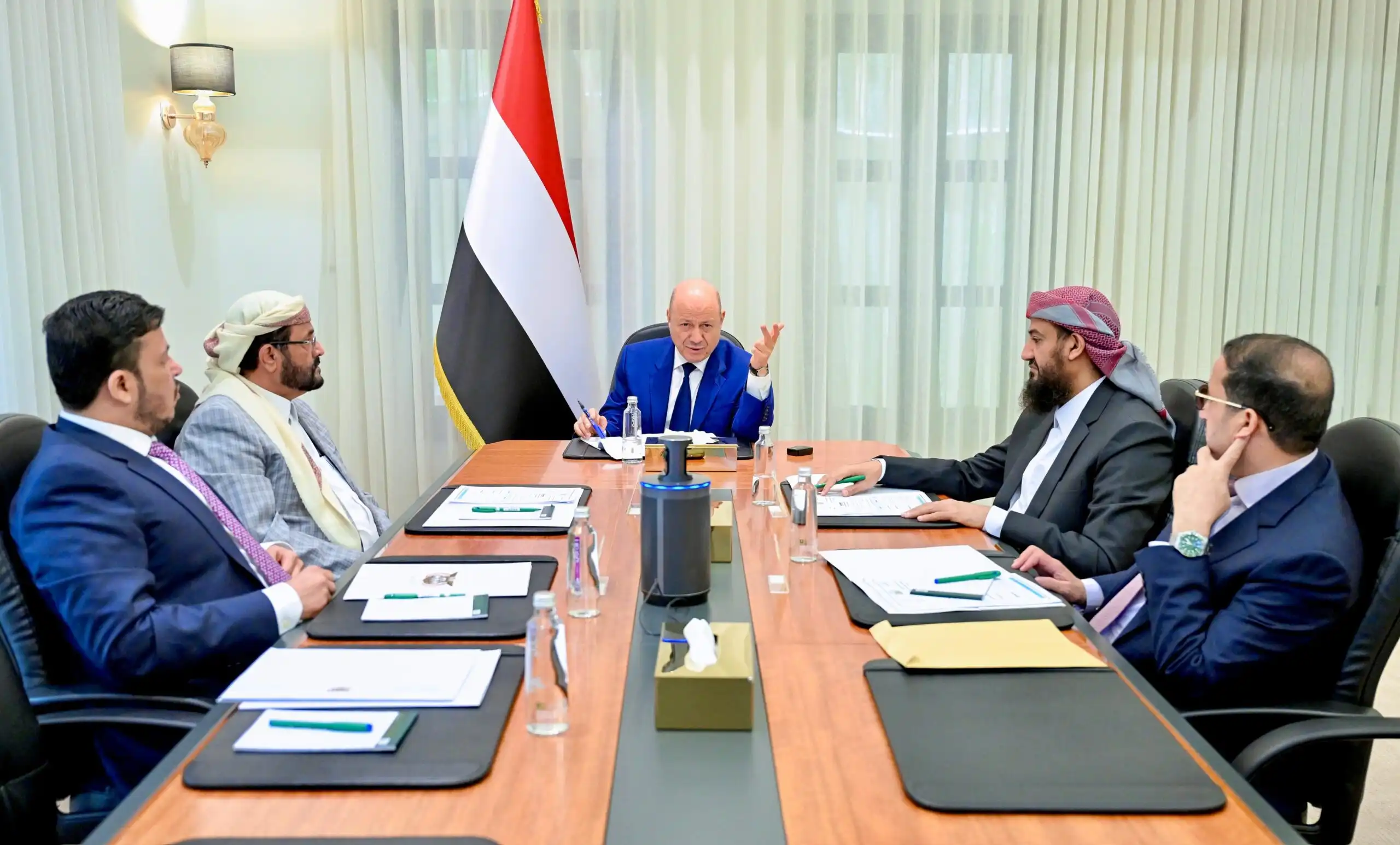
- The Presidential Leadership Council convened to discuss local and regional developments.
- The council received an economic performance report emphasizing liquidity and currency stability.
- Recommendations were approved to adapt to regional changes and sustain essential services.
- The council assessed Houthi military escalation and its implications for national security.
Presidential Leadership Council Holds Key Meeting
On Thursday, the Presidential Leadership Council convened under the leadership of President Dr. Rashad Mohammed Alimi. The meeting was attended by key members including Sultan Al-Aradah, Abdulrahman Al-Mahrami, Dr. Abdullah Alimi, and Othman Majli, with virtual participation from Tariq Saleh, Major General Mahmoud Al-Sobaihi, and Salem Al-Khanbashi.
Discussion on Local and Regional Developments
The council addressed various local developments alongside the escalating tensions in the region. They examined the implications of these tensions on both national and regional security. Furthermore, the council assessed the government’s measures aimed at mitigating the impact of these developments on the economic and humanitarian conditions of the citizens.
Economic Performance Report
In light of the evolving situation, the council received a comprehensive report from Hossam Al-Sharjabi, head of the economic team. The report highlighted critical economic, financial, and monetary performance indicators, while also detailing the progress of comprehensive reforms. Discussions included the Central Bank’s urgent measures to address liquidity shortages and its efforts to maintain the stability of the national currency.
Recommendations for Adaptation
The council approved a series of recommendations designed to adapt to both regional and international changes. These recommendations emphasize ensuring the continuous flow of goods, sustaining essential services, and fulfilling the state’s obligations to alleviate the suffering of the Yemeni people, particularly in light of challenges posed by Iranian-backed Houthi militias.
Acknowledgment of Government Efforts
The council commended the government and the Central Bank for their efforts in implementing key decisions. They highlighted the comprehensive measures that led to the resumption of Article IV consultations with the International Monetary Fund (IMF) after a hiatus of over 11 years. This resumption reflects an increasing confidence in government reforms and the gradual recovery of the national economy, which has faced severe challenges due to Houthi attacks on oil facilities.
IMF Consultations and Economic Reintegration
The council acknowledged the IMF’s approval of the outcomes from these consultations, which serve as a crucial gateway for reintegrating the Yemeni economy into the international financial system. This move aims to enhance the government’s creditworthiness among donors and investors, creating a favorable environment for external support and investment flows.
Assessment of Houthi Military Escalation
Additionally, the council reviewed the Houthi militia’s involvement in regional military escalation and their alignment with the Iranian regime. They expressed concern regarding the militia’s attempts to leverage Yemen as a regional bargaining chip, which poses direct threats to national security, international navigation, and economic stability.
Warning Against Military Ventures
The council reiterated its warning to the Houthi militias regarding the potential consequences of their military ventures that align with Iranian agendas. They condemned the use of Yemeni territory as a platform for targeting maritime shipping and international interests, deeming these actions as hostile towards Yemen and detrimental to the interests of its people and national security.
Condemnation of Iranian Aggressions
The Yemeni government condemned Iran’s aggressive actions against the sovereignty of Gulf Cooperation Council countries and Jordan. The council emphasized the necessity for the Iranian regime to adhere to a ceasefire, fully open the Strait of Hormuz, and abandon its hostile policies and expansionist agendas that contribute to chaos in the region through its militias.
Security Situation Evaluation and Support for Local Authorities
The council reviewed the security situation across several provinces and the measures implemented to bolster security and stability. They discussed strategies to deter terrorist threats, protect civilians, and secure both public and private property. Moreover, the council reaffirmed its full support for local authorities and security agencies in their efforts to maintain security and stability within the region.