Yemen urges international partners to continue supporting its efforts in implementing economic and administrative reforms.

Yemen Calls for Continued International Support for Economic Reforms
The Republic of Yemen has urged its international partners to sustain their support for the government’s efforts in implementing economic and administrative reforms. This support aims to enhance the capabilities of state institutions and finance recovery and reconstruction programs, enabling the Yemeni people to regain their developmental trajectory and achieve their aspirations for security and prosperity.
Commitment to Sustainable Development Goals
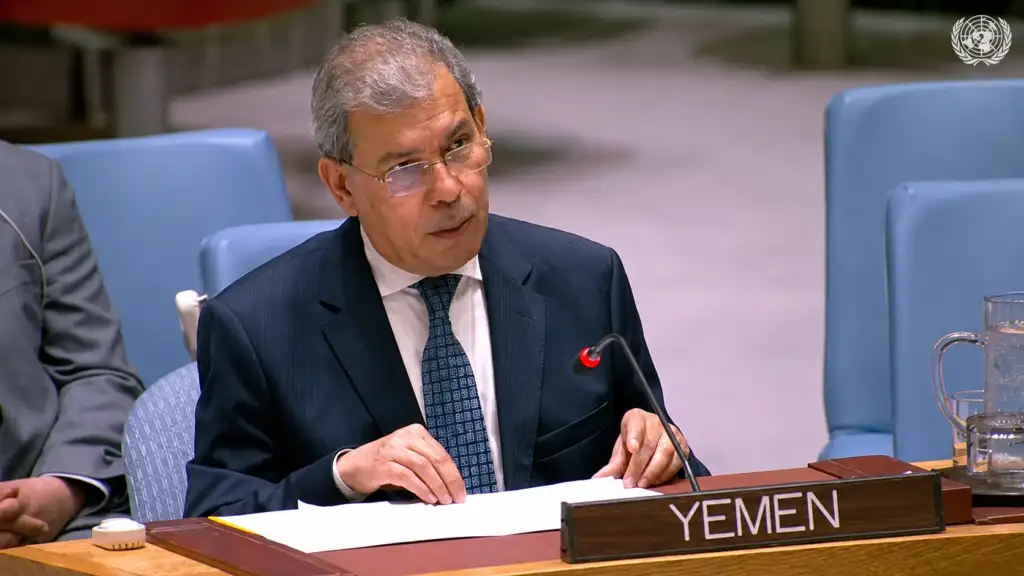
In a statement delivered by Yemen’s Permanent Representative to the United Nations, Ambassador Abdullah Al-Saadi, during the High-Level Political Forum on Sustainable Development, Yemen reaffirmed its full commitment to the Sustainable Development Goals (SDGs). The country expressed its readiness to collaborate with the United Nations and all international partners to implement the 2030 Agenda, aiming to build a more stable and prosperous future for upcoming generations.
Impact of Houthi Actions on Yemen’s Stability
Ambassador Al-Saadi highlighted the extensive destruction of infrastructure and depletion of national resources caused by the Houthi militia’s coup against the state and its constitutional institutions. This situation has severely disrupted state functions and exacerbated the humanitarian and economic crises.
He noted that the Houthi attacks on oil facilities and export ports have deprived the government of its most vital sovereign resources. This deprivation directly impacts the government’s ability to provide essential services, pay salaries, and respond to the growing humanitarian and developmental needs.
Commitment to Peace and Stability
Despite these challenges, the Yemeni government, led by the Presidential Leadership Council, remains committed to a just and comprehensive peace in accordance with agreed political solution references. The government fully supports the United Nations’ efforts and regional and international initiatives aimed at ending the conflict and restoring security and stability, recognizing that peace is fundamental to achieving sustainable development.
National Voluntary Review on Sustainable Development
In 2024, Yemen conducted its first voluntary national review on the implementation of the Sustainable Development Goals, reflecting the government’s commitment to the 2030 Agenda despite the extraordinary challenges facing the country. The outcomes of this review continue to serve as a national reference for prioritizing efforts and enhancing coordination with development partners.
Addressing Water and Energy Challenges
Ambassador Al-Saadi emphasized the importance of the forum’s discussions this year, particularly regarding access to clean water and sanitation services. He noted that these issues pose increasing challenges due to water scarcity, climate change impacts, and damage to infrastructure. Expanding access to clean and sustainable energy is also crucial for improving essential services, supporting economic recovery, and enhancing community resilience.
He added that rebuilding infrastructure, fostering innovation, and improving transportation and communication networks are essential for revitalizing the national economy and creating job opportunities. Building more sustainable and resilient cities and communities remains an urgent necessity amid ongoing internal displacement and humanitarian challenges.
Focus on Renewable Energy
The electricity and energy sector holds special priority for the Yemeni government. The government has adopted a strategic approach to enhance the use of renewable energy, particularly solar power, to improve energy security, reduce reliance on traditional fuels, and expand access to electricity. The government collaborates with donors and regional and international development institutions to implement projects for electricity generation from renewable sources, expand solar power capacity, and rehabilitate transmission and distribution networks, thereby enhancing service sustainability and sector efficiency.
Investment in Renewable Energy Policies
The government has prioritized developing policies and institutions related to renewable energy and energy efficiency. It encourages investments in this vital sector, aligning with the seventh Sustainable Development Goal. This approach contributes to building a more resilient and sustainable energy system that serves citizens and supports Yemen’s development journey.
Call for Enhanced International Cooperation
Ambassador Al-Saadi reiterated Yemen’s emphasis on fully implementing the Doha Program of Action for least developed countries. He called for strengthening international commitments related to development financing to address the specific needs of fragile and conflict-affected states.
He also renewed the call for enhancing the link between humanitarian action, development, and peacebuilding. This approach ensures a gradual transition from relief to recovery and sustainable development, strengthening national institutions’ capacity to lead development efforts.
Conclusion: Investing in Peace and Development
Investing in peace and development in Yemen is not only a humanitarian responsibility but also an investment in regional and international security and stability.
To follow the news in Arabic