Yemen participates in the 77th session of the Executive Committee of the United Nations High Commissioner for Refugees in Geneva.

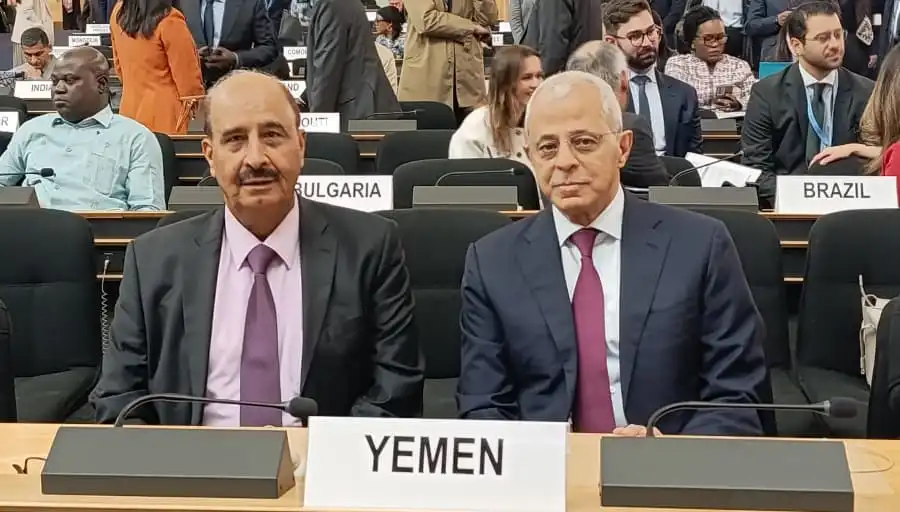
- Yemen participates in the 77th UNHCR Executive Committee session in Geneva.
- Deputy Minister Noman emphasizes Yemen's commitment to protecting refugees despite limited resources.
- Yemen seeks international support for sustainable solutions to ongoing humanitarian challenges.
- Escalation by Houthi militias exacerbates displacement and deepens Yemen's humanitarian crisis.
Yemen Participates in the 77th Session of the UNHCR Executive Committee in Geneva
The Republic of Yemen participated today in the opening of the 77th session of the Executive Committee of the United Nations High Commissioner for Refugees (UNHCR), held at the Palais des Nations in Geneva. The Yemeni delegation was led by Deputy Minister of Foreign Affairs and Expatriates, Mustafa Noman.
Yemen’s Commitment to Refugees
In his speech, Deputy Minister Noman emphasized that Yemen faces not only internal displacement but also hosts refugees, providing them protection for decades even in the most challenging circumstances. He noted that Yemen continues to fulfill its obligations despite limited resources. However, the country struggles to cope with the displacement of millions and a deep economic and humanitarian crisis that exceeds its capacity to manage alone.
Noman outlined a series of commitments and policies presented by the Yemeni government aimed at enhancing the national legal framework for refugees. These include improving access to education, healthcare, social protection, livelihoods, civil documentation, durable solutions, and financial inclusion. He reaffirmed the government’s commitment to implementing these initiatives despite severe financial and economic conditions. He also highlighted that burden-sharing represents a mutual obligation, yet none of these commitments have received international funding to date.
Support for Sustainable Solutions
The Deputy Minister expressed Yemen’s appreciation for the UN High Commissioner for Refugees, Dr. Barham Salih, and supported his vision since taking office, particularly regarding sustainable solutions, shared responsibility, and strengthening partnerships with host countries and communities. He looks forward to collaborative efforts that elevate this partnership to a more effective level for the benefit of refugees, internally displaced persons, and host communities.
Current Challenges in Yemen
Noman pointed out that Yemen’s participation occurs amid extremely difficult conditions faced by its people. He noted a resurgence of military escalation by Houthi militias backed by the Iranian regime, which has displaced tens of thousands of citizens from their homes, adding a new wave of displacement to the suffering of millions affected by years of conflict.
He reiterated that the Yemeni government has chosen the path of peace from the beginning and has responsibly engaged in efforts to end the war. He stressed that true peace cannot be established through the imposition of facts on the ground by force.
Urgent Call for Support
Noman warned that continued Houthi escalation undermines opportunities for achieving peace and stability, exacerbating civilian suffering and threatening the security of Yemen and the region. He asserted that the Yemeni people will not accept being held hostage by war or used as pawns in conflicts and agendas that do not serve their present or future.
He urged the UNHCR to play an active role in aligning Yemen’s commitments with those of donors and partners, mobilizing technical, financial, and developmental support for their implementation before the humanitarian crisis worsens. He also called on donors and international development and financial institutions to invest in host communities and enhance the capacity of state institutions to provide protection and services.
Noman demanded an urgent response to protect displaced persons and support host communities, ensuring continued protection for refugees and asylum seekers. He emphasized the need to shift from managing annual needs to sustainable solutions, recovery, and institutional building. He clarified that Yemen does not seek for the international community to replace its state but desires a genuine partnership that enables it to fulfill its responsibilities, protect Yemeni citizens and refugees, and assist the country in transitioning to peace, recovery, and restoring its institutions while preserving its sovereignty.
UNHCR’s Response to the Crisis
In his opening remarks, UN High Commissioner for Refugees Dr. Barham Salih addressed the situation in Yemen, noting that recent escalations have displaced hundreds of thousands and worsened the humanitarian suffering of millions affected by years of conflict. He highlighted recent attacks targeting airports in the Saudi capital, Riyadh, which resulted in 12 fatalities and over 300 injuries. He stressed the urgent need to end this dangerous escalation and make every effort to resolve the conflict, affirming the UNHCR’s response to humanitarian emergencies extending from Yemen to East and Horn of Africa.
The session also included participation from the Director of the International Organizations and Conferences Department at the Ministry of Foreign Affairs, Ambassador Muthana Al-Amri, and the First Secretary of the Permanent Mission of the Republic of Yemen to the United Nations in Geneva, Yahya Al-Rafiq.
To follow the news in Arabic