The Ministry of Health discusses with donors and international partners support for the health response plan and epidemic control.


- Minister of Health Discusses Support for Emergency Health Response Plan in Yemen On Sunday, Dr.
- Baheeb emphasized that the ministry operates under a unified national health response plan, which is regularly updated based on field needs in coordination with partners.
- Baheeb called for securing the needs of health facilities, including medications, supplies, fuel, and oxygen.
- Acknowledgment of Support from International Partners Dr.
Minister of Health Discusses Support for Emergency Health Response Plan in Yemen
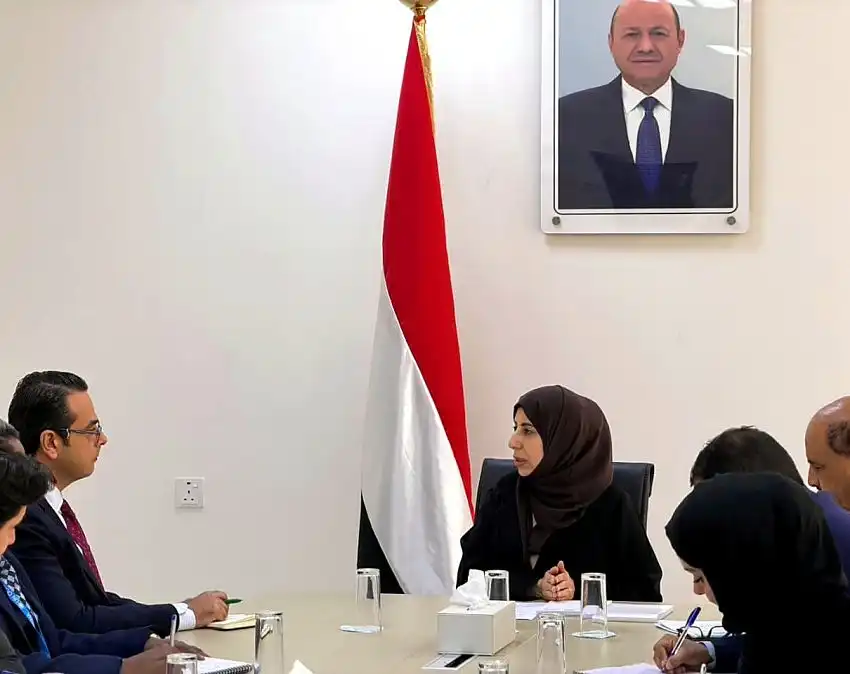
On Sunday, Dr. Qassem Baheeb, Yemen’s Minister of Public Health and Population, held a virtual meeting with representatives from donor agencies and international partners. The discussion focused on supporting the emergency health response plan in Yemen, enhancing efforts to combat epidemics, and ensuring the continuity of essential health services, particularly for displaced populations.
Current Health Situation Amid Military Escalation
During the meeting, organized by the Ministry of Health in partnership with the UK Foreign, Commonwealth & Development Office, the minister addressed the deteriorating health situation due to the military escalation by the Houthi militia. He highlighted the increasing number of casualties and displaced individuals, as well as challenges related to malnutrition, the spread of epidemics, and the difficulty of delivering medical supplies to affected areas, particularly Taiz, which faces a Houthi blockade.
National Health Response Plan
Dr. Baheeb emphasized that the ministry operates under a unified national health response plan, which is regularly updated based on field needs in coordination with partners. He stressed the importance of directing support toward the most urgent interventions and protecting life-saving essential health services.
Key Priorities for Health Services
The minister outlined the plan’s priorities, which include enhancing emergency services and injury treatment, providing healthcare for displaced individuals and host communities, and supporting epidemic response through improved surveillance, early warning systems, and rapid response. Additionally, he mentioned the need for diagnostic and treatment supplies, ongoing vaccination efforts, health awareness campaigns, and coordination with relevant sectors.
Securing Health Facility Needs
Dr. Baheeb called for securing the needs of health facilities, including medications, supplies, fuel, and oxygen. He also highlighted the importance of supporting healthcare personnel and referral services to ensure the continuity of maternal and child care, nutrition services, dialysis, and other vital services.
Urgent Call for Technical and Logistical Support
The Minister urged for the acceleration of technical and logistical support and essential supplies, enhancing coordination based on national priorities. He emphasized the need for organized follow-up on contributions and interventions to ensure efficient resource use and delivery to the most vulnerable areas and populations.
Acknowledgment of Support from International Partners
Dr. Baheeb expressed gratitude for the support from Saudi Arabia through the Saudi Program for Development and Reconstruction of Yemen, the King Salman Humanitarian Aid and Relief Center, the United Kingdom, the World Bank, the European Union, and various international organizations and donors. He praised the efforts of healthcare personnel and reaffirmed the ministry’s commitment to leading a coordinated and transparent response that protects lives and maintains the health sector’s capacity to deliver services.
Importance of Coordination Among Stakeholders
Dr. Nizar Bashihab, Deputy Minister of Planning and International Cooperation, and Charlotte Coles, Director of Development at the UK Foreign, Commonwealth & Development Office, discussed the importance of mobilizing support for the health response and enhancing coordination between the Yemeni government, donors, and partners.
Saudi Program’s Role in Health Sector Support
Engineer Hassan Al-Attas, Assistant Supervisor General of the Saudi Program for Development and Reconstruction of Yemen, noted that the program’s participation in the meeting reflects its ongoing role in supporting Yemen’s health sector. This support includes establishing, rehabilitating, equipping, and operating health facilities, as well as developing the capacities of healthcare personnel to improve the quality of medical services and expand access for citizens.
World Bank’s Support for Health Projects
Dina Abu Ghida, Director of the World Bank Group Office in Yemen, presented the World Bank’s projects supporting the health sector in Yemen.
Discussions on Health and Nutrition Needs
Discussions involving the World Health Organization, UNICEF, the United Nations Population Fund, and health and nutrition groups addressed priority needs and opportunities for supporting the response, emphasizing the integration of emergency interventions while maintaining existing health services.
To follow the news in Arabic