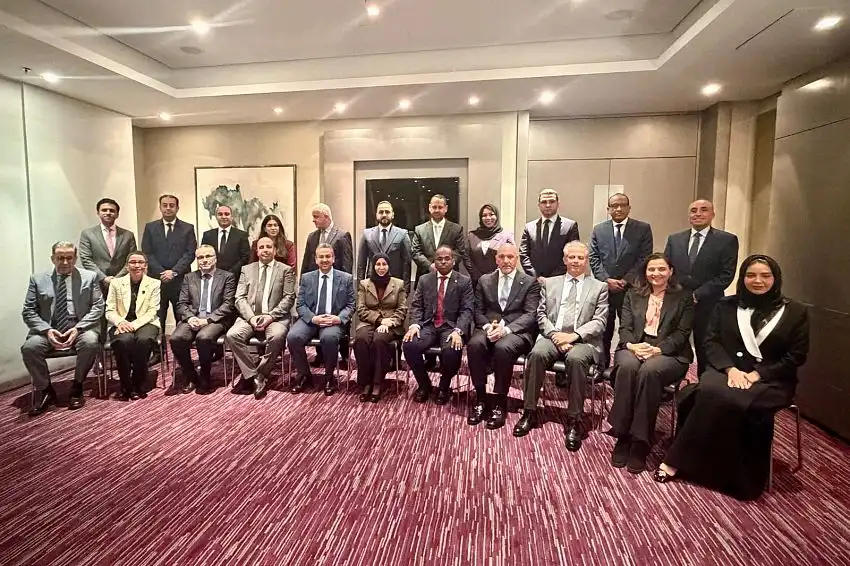
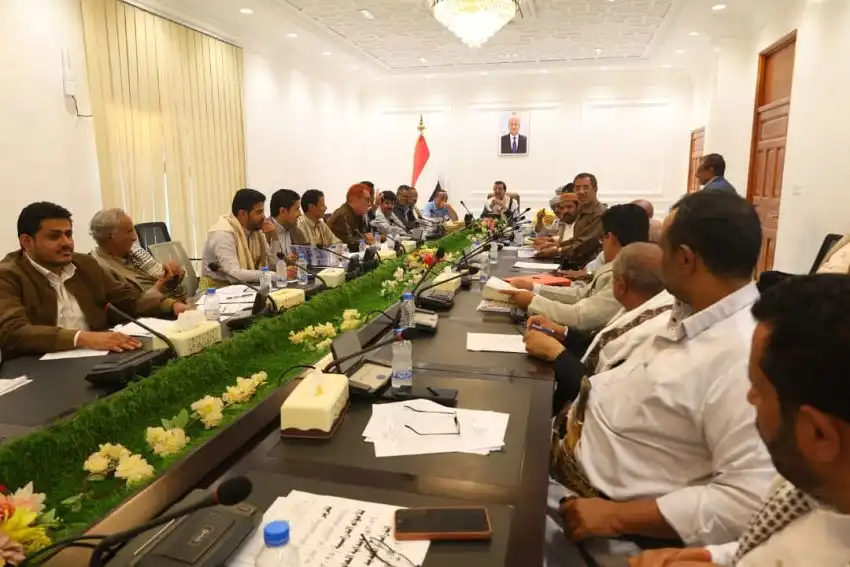
The Foreign Minister meets with the Chairman of the Foreign Affairs Committee of the German Parliament.

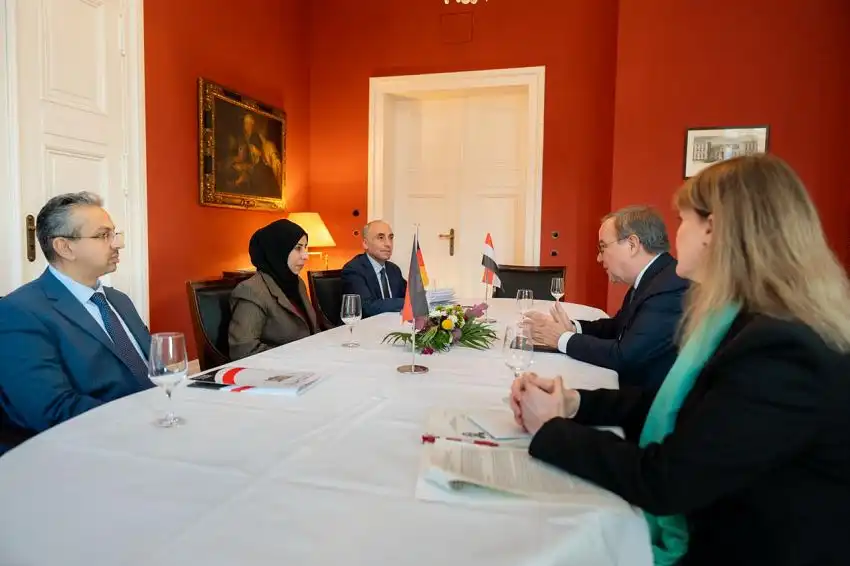
- Meeting in Berlin Today, the Minister of Foreign Affairs and Expatriates, Dr.
- Warning Against Military Escalation Al-Zuba warned about the dangers of recent military escalations and the militias' attempts to impose equations by force along the western coast and around Bab al-Mandab.
- She stressed that supporting state institutions and securing their resources represents a fundamental entry point for sustainably addressing the humanitarian crisis.
- Concerns from the German Parliament For his part, Armin Laschet expressed concern over the ongoing serious violations of human rights, including child recruitment and the deteriorating humanitarian situation.
Meeting in Berlin
Today, the Minister of Foreign Affairs and Expatriates, Dr. Afrah Al-Zuba, met with the Chairman of the Foreign Relations Committee in the German Parliament, Armin Laschet, in the German capital, Berlin. They discussed prospects for bilateral cooperation and the latest developments in Yemen and the region.
Roots of the Yemeni Crisis
During the meeting, the Foreign Minister emphasized that the roots of the Yemeni crisis trace back to the Houthi armed coup against national consensus and the outcomes of the National Dialogue Conference. She noted that current threats to freedom of navigation and global trade extend from the international community’s leniency towards the destabilizing behavior exhibited by Houthi militias since their takeover of state institutions.
Warning Against Military Escalation
Al-Zuba warned about the dangers of recent military escalations and the militias’ attempts to impose equations by force along the western coast and around Bab al-Mandab. She asserted that the ongoing siege on Taiz Governorate constitutes collective punishment for civilians, exacerbating the humanitarian crisis, particularly among women and children.
Government Efforts and International Support
The Foreign Minister reviewed the efforts made by the legitimate government to fulfill its service and development responsibilities from the temporary capital, Aden. She stressed that supporting state institutions and securing their resources represents a fundamental entry point for sustainably addressing the humanitarian crisis.
Call for Urgent Support
Al-Zuba urged Germany and European partners to provide urgent political and economic support to the legitimate government, focusing on building national capacities. This includes supporting coast guard forces and monitoring maritime borders to combat the smuggling of Iranian weapons and prevent military technologies from reaching Houthi militias.
Concerns from the German Parliament
For his part, Armin Laschet expressed concern over the ongoing serious violations of human rights, including child recruitment and the deteriorating humanitarian situation. He affirmed that targeting international navigation in the Red Sea affects the economic security of European Union countries and the world.
Need for a New European Strategy
Laschet emphasized the importance of developing a new European strategy to address the Yemeni issue, aligning with rapid developments and contributing to the protection of regional and international security.
Attendees
The meeting included the attendance of the Yemeni Ambassador to the Federal Republic of Germany, Louay Al-Iryani.
To follow the news in Arabic