The Chairman of the Presidential Leadership Council urges Europe to classify the Houthis as a terrorist organization, warning of the costs of delay.

- President Alimi Calls on Europe to Classify Houthi Militias as Terrorist Organizations President Dr.
- He clarified that European action now could reduce the resources funding these attacks and enhance the protection of civilians, regional security, and European interests.
- Addressing Local Conditions President Alimi also discussed the overall situation in Yemen, particularly the severe violations committed by Houthi militias.
- He noted that classifying the Houthi militias sends a clear message that achieving any gains through terrorism is unacceptable under any circumstances.
President Alimi Calls on Europe to Classify Houthi Militias as Terrorist Organizations
President Dr. Rashad Mohammed Alimi, head of the Presidential Leadership Council, urged European Union countries to urgently adopt the European Parliament’s resolution calling for the inclusion of Houthi militias, along with their political and military wings, leaders, and security apparatus, on the EU’s list of terrorist organizations.
Emphasizing the Role of the European Council
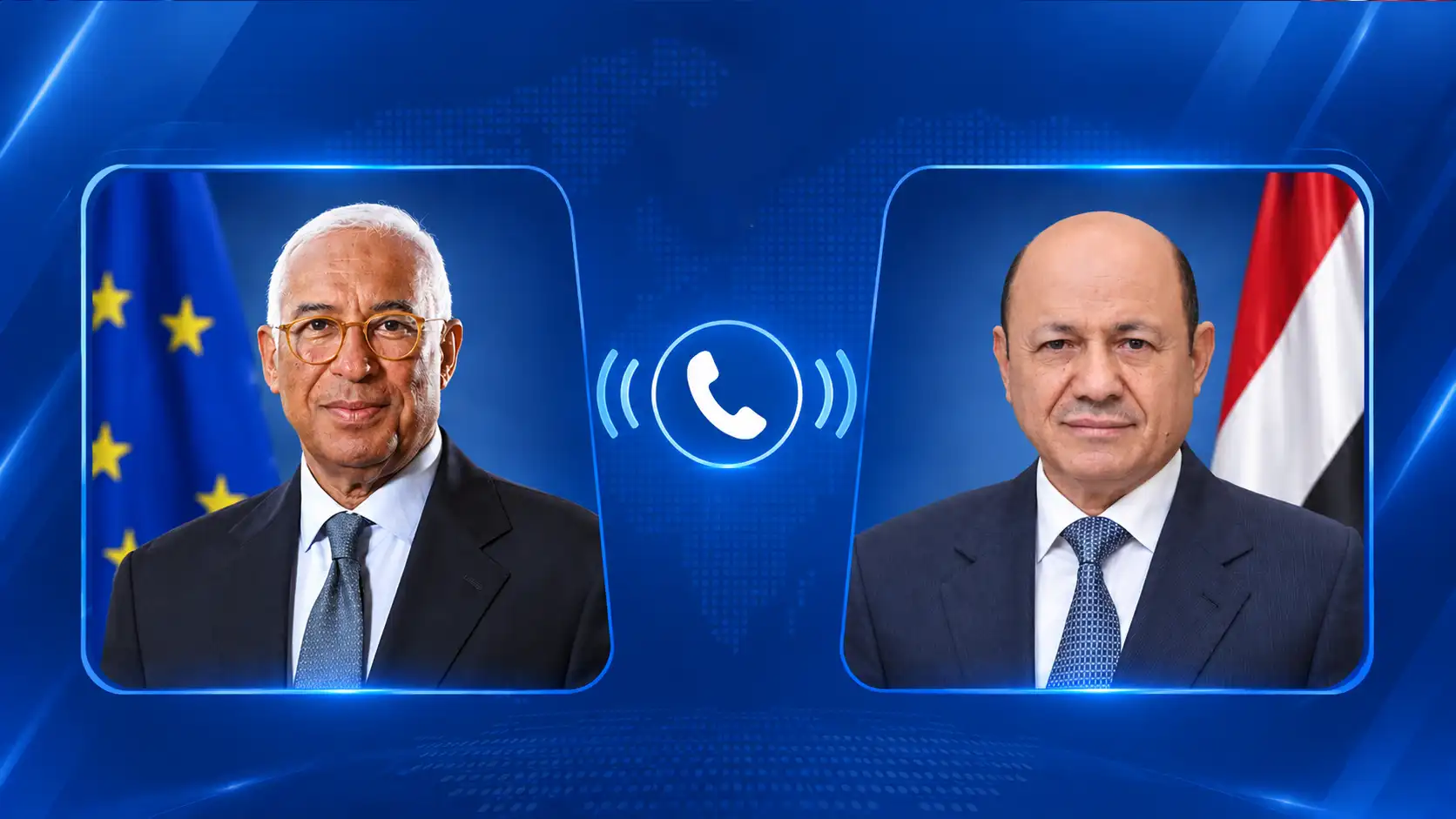
During a phone call with European Council President Antonio Costa on Tuesday, President Alimi expressed that the Yemeni government relies on the Council’s role in rallying member states to transform this significant political stance into actionable European measures. He called for the use of all legal, economic, and diplomatic pressure tools to halt the terrorist attacks by Houthi militias and to comply with international legitimacy and the will of the Yemeni people.
Urgent Action Needed Against Houthi Aggression
President Alimi stressed that now is the right time for the European Union to deliver a decisive message regarding the Houthi militias, whose criminal practices have surpassed those of terrorist organizations in terrorizing and targeting civilians, airports, and vital facilities. He highlighted issues such as child recruitment, city blockades, attacks on commercial vessels, and the detention of international and humanitarian workers, arguing that these actions necessitate the application of European anti-terrorism standards after all peaceful options have been exhausted.
The Cost of Inaction
The President warned that the ongoing Houthi attacks within Yemen and across borders, as well as threats to international navigation, make the cost of delay extremely high. He clarified that European action now could reduce the resources funding these attacks and enhance the protection of civilians, regional security, and European interests.
Addressing Local Conditions
President Alimi also discussed the overall situation in Yemen, particularly the severe violations committed by Houthi militias. He pointed to the suffocating blockade imposed on the residents of Taiz, which includes preventing access to water, fuel, and essential needs, alongside acts of killing, torture, detention, searches, and forced displacement.
Commitment to National Security
The President affirmed that the state and its armed forces, including all military formations and popular resistance, will continue the “Dawn of Yemen” operation until the terrorist threat is eliminated and state institutions are restored to full control over the national territory. He noted that classifying the Houthi militias sends a clear message that achieving any gains through terrorism is unacceptable under any circumstances.
Acknowledging European Support
During the call, President Alimi acknowledged the European Union’s role in supporting the Yemeni people and government, as well as its humanitarian interventions and efforts to protect international navigation.
European Council’s Support for Yemen
In response, European Council President Antonio Costa confirmed the EU’s support for the Presidential Leadership Council and the government, standing alongside the Yemeni people in facing current challenges and alleviating their humanitarian suffering.
Costa informed President Alimi about the EU’s ongoing monitoring of developments in Yemen and discussed ways to address urgent humanitarian needs in Taiz and other areas, given the worsening living and service conditions due to the escalation of Houthi terrorist activities.
He emphasized the EU’s commitment to enhancing humanitarian responses and alleviating the suffering of the population, while continuing to coordinate with the Yemeni government and relevant partners to identify priority needs and address them promptly.
To follow the news in Arabic