The Chairman of the Leadership Council affirmed the state’s commitment to reform initiatives and a firm response to Houthi escalation.

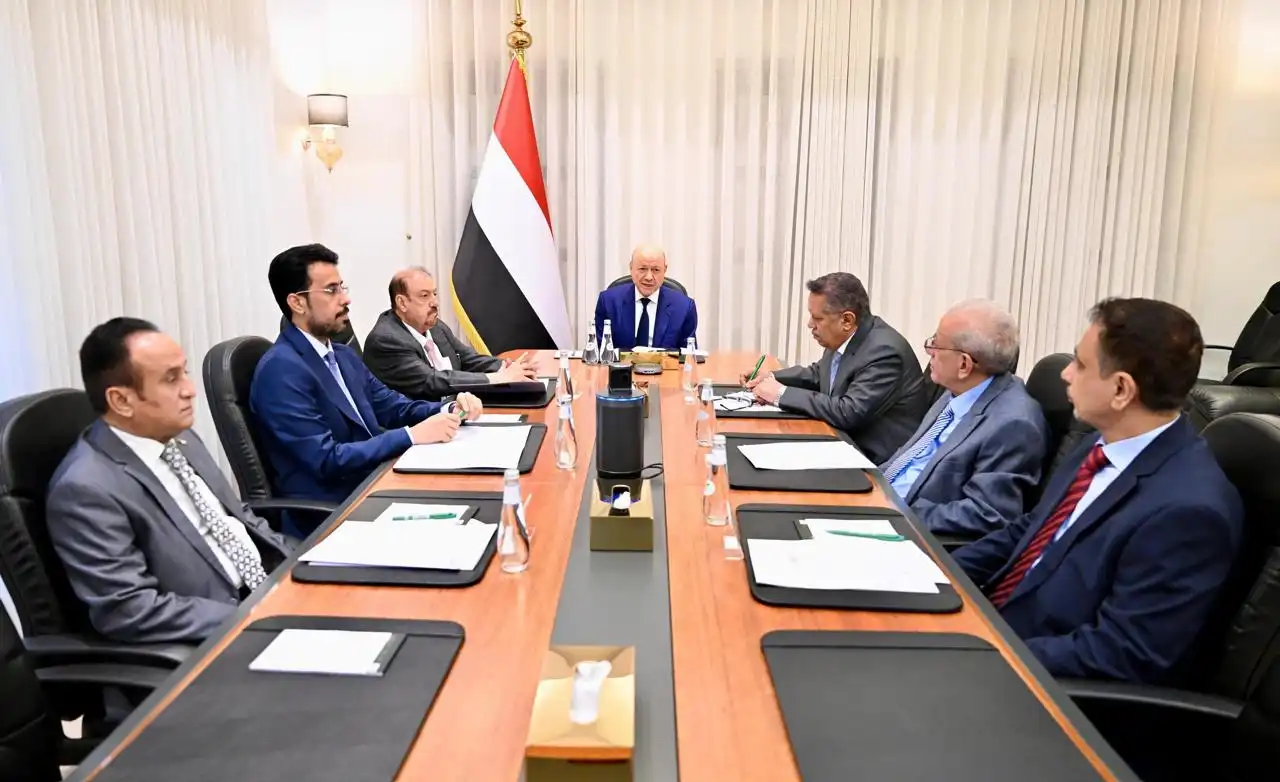
President Alimi Holds Key Meeting with Legislative Leaders
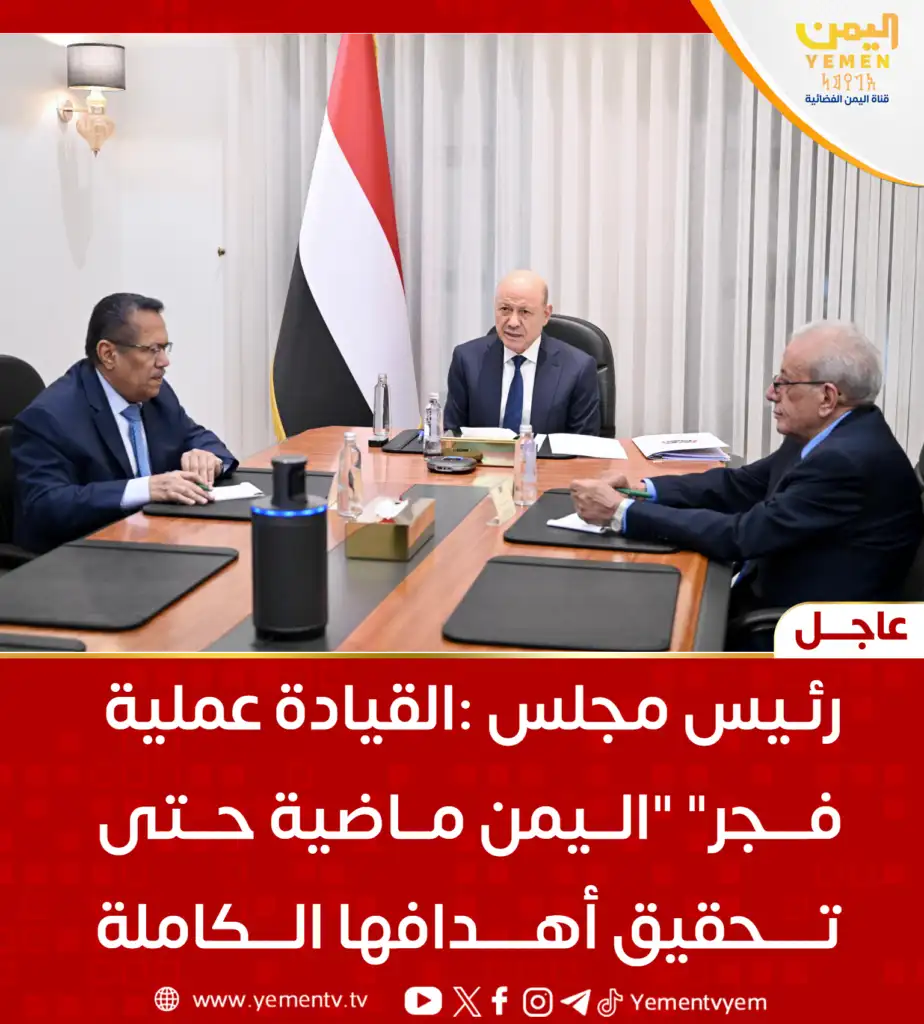
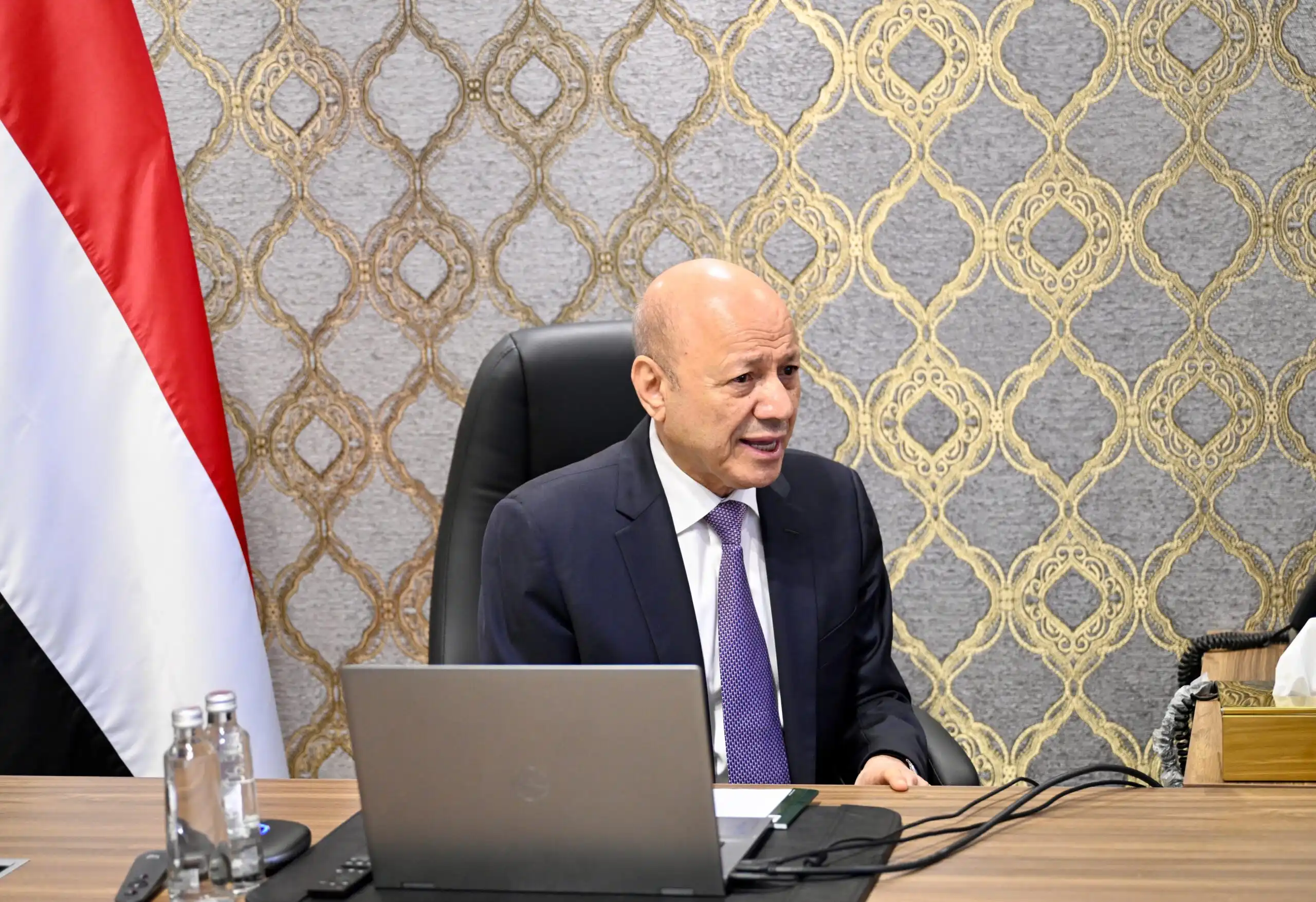
On Wednesday, President Dr. Rashad Mohammed Alimi, head of the Presidential Leadership Council, convened a significant meeting with the leadership of the House of Representatives, the Shura Council, and the Consultation and Reconciliation Committee. The meeting included prominent figures such as Sheikh Sultan Al-Barakani, Speaker of the House of Representatives, Dr. Ahmed Bin Dagher, Speaker of the Shura Council, and Mohammed Al-Ghaithi, head of the Consultation and Reconciliation Committee.
Addressing National Developments
The primary focus of the meeting was to discuss pressing national issues, particularly the recent escalation by Houthi militias, allegedly supported by the Iranian regime. This includes violations of Yemen’s sovereignty, highlighted by the recent deployment of an Iranian Revolutionary Guard aircraft to Sana’a Airport, which blatantly defies UN Security Council resolutions and international sanctions.
During the meeting, President Alimi expressed profound appreciation for the role of legislative and advisory institutions during this critical phase. He emphasized the need for national unity and a collective stance, asserting that the responsibility of protecting the state lies with all institutions as mandated by the constitution and law.
Responding to Escalation
President Alimi outlined the outcomes of state communications and actions taken to counter the escalation at all levels. He emphasized the importance of rallying both national and international support to defend the legal status of the state and dismantle Houthi misinformation regarding the humanitarian nature of the Iranian flight. Initial reports suggest that the aircraft was used to transport personnel, experts, and military technologies to bolster the Houthi militia’s capabilities.
He noted that the aircraft represents just one aspect of a broader escalation, which includes ongoing military mobilization, arms smuggling, and infiltration attempts across various fronts, particularly in the western coast region. The armed forces have responded decisively to these provocations.
Enhancing State Capabilities
The President highlighted the rapid advancements in the state’s ability to monitor and deter militia movements, including their collaboration with terrorist organizations like Al-Qaeda and ISIS. He commended the security and intelligence agencies for their significant successes in uncovering these cells and thwarting numerous criminal plots, with preliminary investigation results to be announced soon.
A Multi-Faceted Battle
President Alimi reiterated that the current struggle is not solely military; it encompasses awareness, legal, and diplomatic battles. He called on legislative and advisory institutions to support a unified stance, expose Houthi violations, and develop national visions that unify political and media discourse. He urged collaboration with community leaders to present initiatives that strengthen unity and counter misinformation.
He warned that the most significant threat to the state does not stem from military strength but from attempts to undermine national unity and erode citizens’ trust in their legitimate institutions.
Commitment to Reform and Stability
The President emphasized the importance of demonstrating that the state operates as a cohesive unit, with its institutions united in defending the republic, its sovereignty, and the security of its citizens. He stated that creating a model of unity and internal cohesion is as crucial as any military success.
He discussed the progress made in implementing reforms and executing the government program, noting that recent months have seen a shift from planning to practical execution, particularly in financial and administrative aspects. This includes enhancing governance, organizing revenue, and improving digital transformation to build a more efficient state.
Economic Stability Efforts
President Alimi explained that the government and the Central Bank, with sincere support from Saudi Arabia, have managed to maintain monetary stability. They have made significant strides in restoring financial discipline, closing government accounts outside the Central Bank, and enhancing revenue oversight.
He reaffirmed the commitment of the Presidential Leadership Council and the government to pursue ambitious plans for improving essential services, particularly in the electricity sector, despite limited resources and pressures from Houthi attacks on oil facilities.
Acknowledging Saudi Support
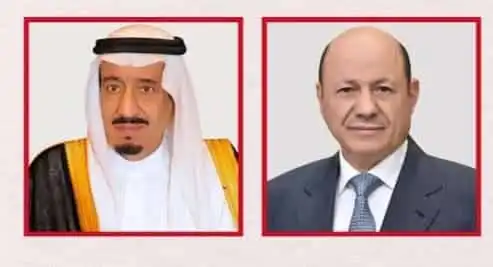
In this context, President Alimi praised the steadfast support from Saudi Arabia, led by King Salman bin Abdulaziz and Crown Prince Mohammed bin Salman. He noted that this support reflects the deep strategic partnership between the two nations and underscores Saudi Arabia’s commitment to empowering Yemeni state institutions.
Call for National Unity
The leaders of the House of Representatives, the Shura Council, and the Consultation and Reconciliation Committee expressed their unwavering support for the Presidential Leadership Council and the government in all measures taken to protect national sovereignty and strengthen the internal front against Houthi escalation.
They emphasized the importance of unifying the national discourse and supporting the armed forces and security agencies while advocating for a more robust international stance against Houthi violations.
Conclusion
The meeting concluded with a call for all national forces to rally around the state project, unify efforts to support the liberation struggle, and end the humanitarian crisis caused by the Houthi militia.
The meeting was attended by Dr. Yahya Al-Shaibi, Director of the Presidential Office, and various deputies from the House of Representatives and the Shura Council, highlighting the collaborative effort to address Yemen’s pressing challenges.
To follow the news in Arabic