Houthi checkpoints highlight violations of women’s rights in the region, raising concerns among local and international observers.

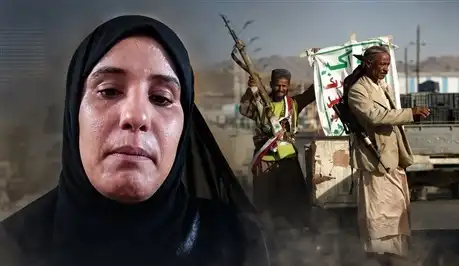
Houthi Checkpoints Highlight Women’s Rights Violations in Yemen
The recent harassment incident involving citizen Leila Al-Maqtari at a checkpoint controlled by the Houthi militia in Bajil has shed light on a troubling reality for women in areas under Houthi control. These checkpoints have transformed into spaces of fear and daily anxiety for many women.
Checkpoints: A Daily Threat
Women from Sana’a and other provinces report that Houthi checkpoints pose significant psychological and security barriers to their mobility. Authorities impose arbitrary measures, including lengthy interrogations and degrading treatment, creating a constant feeling that women are “suspects simply for trying to pass through.”
Many women express that even the thought of leaving home has become an overwhelming burden. They cannot predict the type of violation or the mood of security personnel they may encounter at any moment.
Violations Within Closed Institutions
The violations extend beyond the roads and checkpoints; they also infiltrate official institutions and closed circles. These violations include:
- Arbitrary detention
- Financial extortion
- Psychological threats
- Restrictions on work and civil activities
Local and international human rights organizations have documented various patterns of violations against women in Houthi-controlled areas over the past years. Unfortunately, a lack of independent entities capable of providing justice for victims exacerbates the situation.
Silence Enforced by Fear and Stigma
Activists highlight that many women fear reporting violations due to potential retaliation or social stigma, especially when the perpetrator is part of the Houthi security or military apparatus. This environment makes confrontation nearly impossible for victims.
A female activist from Sana’a states, “Many women prefer silence because the cost of confrontation is extremely high.”
Absence of Justice and Lost Trust
Lawyer Taysir Qasim points out that the biggest obstacle for women is not the legal text itself, but the surrounding environment. Victims often wonder, “Who will protect me if I speak out?” She emphasizes that justice begins with creating a safe environment where women can share their grievances without fear of retaliation, a condition that is sorely lacking in Houthi-controlled areas.
The fear does not only affect women; it permeates the entire community. Many choose silence, as confronting a powerful and influential entity “can be very costly,” according to testimonies from citizens in Sana’a.
Rights That Should Not Be Compromised by War
Human rights advocates argue that protecting women cannot remain hostage to political rhetoric. These groups assert that women’s rights are not a postponed issue for after the war; they are an integral part of the humanitarian crisis in Yemen.
Advocates warn that continued silence gives perpetrators a sense of security, encouraging further violations. Disclosure and accountability represent the first steps toward achieving justice.
Leila Al-Maqtari’s story raises a larger question: How many similar stories remain trapped in fear behind closed doors? Unpunished violations send a threatening message to every woman. The victim who speaks out today does not seek privilege; she demands her natural right to be treated as a human being and to find legal protection when danger looms.
For more information, visit Yemen TV.
To follow the news in Arabic