Foreign Minister: A stable Yemen is an asset for Gulf security, regional stability, and international trade.

- A stable Yemen is essential for Gulf security and regional stability.
- Iran's support for Houthi militias threatens neighboring states and maritime navigation.
- Strengthening Yemeni state capacities is vital for sustainable maritime security and trade.
- The Yemeni government seeks a long-term partnership with the Gulf for development and security.
Yemen’s Stability: A Pillar for Gulf Security and International Trade
Foreign Minister Affirms Importance of a Stable Yemen
Dr. Afrah Al-Zouba, Yemen’s Minister of Foreign Affairs and Expatriates, emphasized that a stable Yemen, characterized by a capable state and effective institutions, serves as a crucial asset for Gulf security and regional stability. She highlighted that restoring state institutions and asserting their authority over all territories and waters is essential for addressing sources of threats and achieving sustainable stability.
Yemen’s Geopolitical Significance
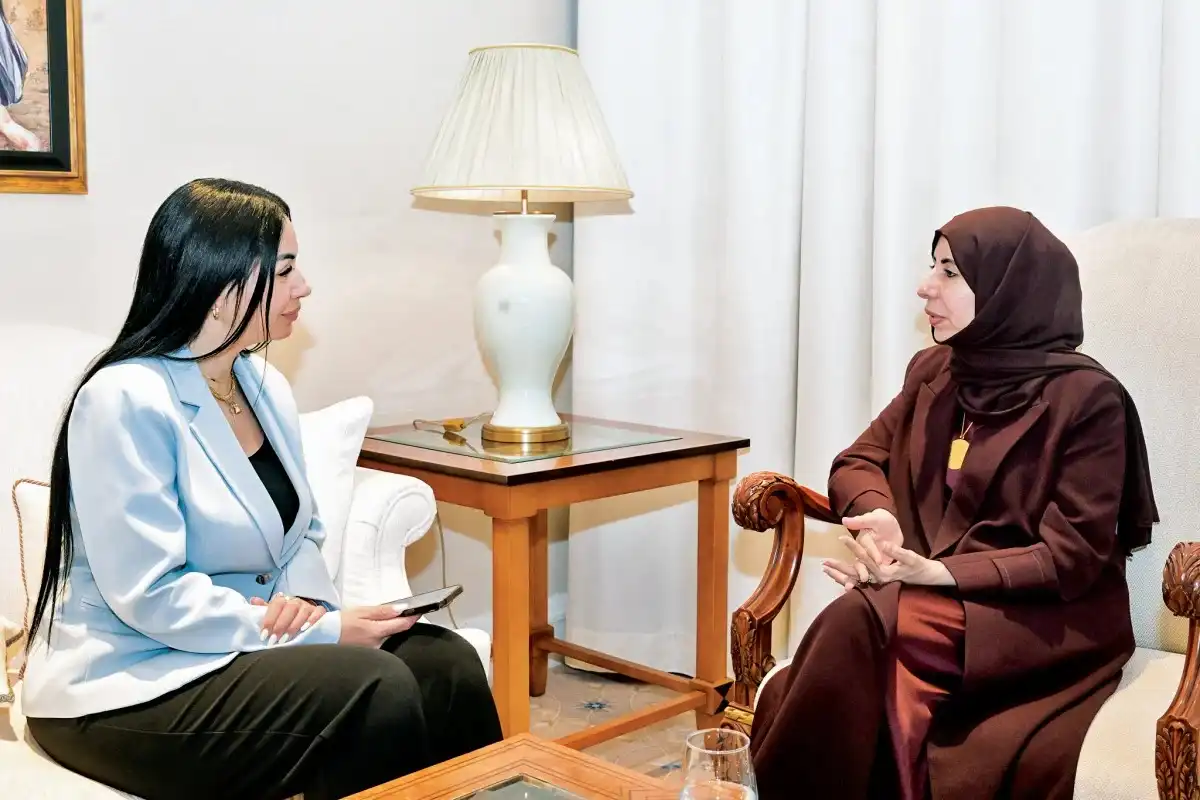
In an interview with the Qatari newspaper “Al-Sharq,” Al-Zouba stated, “Yemen is not an isolated issue for the Gulf; it is a geographical, security, and economic extension of it, with its southern gateway on the Red Sea, Bab al-Mandab, and the Gulf of Aden.” She pointed out that the weakening of Yemeni state institutions directly impacts the security of neighboring countries and maritime routes.
Iranian Support for Houthi Militias
Al-Zouba noted that Iran’s ongoing support for Houthi militias through weapons, technology, and smuggling networks has significantly enhanced their capacity to threaten neighboring states and international navigation. She firmly stated that Yemen will not allow its lands, ports, or waters to become platforms for threatening Saudi Arabia, Qatar, or any other brotherly nation, nor will it permit its territory to be used as a bargaining chip in regional conflicts at the expense of the Yemeni people.
Strengthening Maritime Security
The Minister stressed the necessity of protecting ships to counter immediate threats. However, she asserted that sustainable maritime security begins with empowering the Yemeni state to safeguard its coasts, ports, and waters. This includes enhancing the capabilities of the coast guard, naval forces, and port security, as well as combating smuggling and illicit financing. She emphasized that strengthening state capacities represents a direct investment in Gulf security and international trade.
Challenges in Peace Initiatives
Al-Zouba explained that the Yemeni government has positively engaged with international and regional initiatives. However, the issue lies not in a lack of initiatives but in the Houthi militias’ failure to fulfill their commitments, often exploiting ceasefire periods to reposition and rearm. She insisted that any serious path to ending the war must dismantle the coup and lead to a unified state with national institutions, a single sovereign decision, and a legitimate monopoly on weapons according to the constitution and law.
Long-term Gulf Partnership
Regarding Yemen’s position within the Gulf, Al-Zouba expressed the government’s aspiration for a long-term Gulf partnership that supports Yemen politically, economically, developmentally, and security-wise. This partnership would aid in restoring resources, improving services, building maritime and institutional capacities, and creating an investment-friendly environment.
Strategic Partnership with Saudi Arabia
Al-Zouba highlighted the strategic partnership with Saudi Arabia and its leadership role in supporting legitimacy and state institutions as a fundamental pillar of this equation. She noted that the roles of Qatar and other Gulf Cooperation Council (GCC) countries gain greater value through coordination and integration. “We do not seek the Gulf to manage a Yemeni crisis on its periphery, but rather a partnership that restores Yemen to its natural position as a contributor to Gulf security and development,” she stated.
Strengthening Yemen-Qatar Relations
During her visit to Doha, Al-Zouba described the trip as a significant and fruitful stop in her Gulf tour aimed at intensifying consultations with GCC countries. She acknowledged the Qatari officials’ commitment to Yemen’s security and stability, as well as their understanding of its priorities. Discussions included expanding cooperation in development, investment, education, health, energy, water, youth empowerment, and capacity building.
Appreciation for Qatar’s Support
Al-Zouba praised Qatar’s supportive stance towards the legitimate Yemeni government, Yemen’s unity, sovereignty, and territorial integrity, as well as its rejection of Houthi threats to navigation. She expressed Yemen’s desire to transition from responding to urgent needs to establishing a long-term institutional partnership that translates priorities into actionable and measurable programs in coordination with the government.
Economic Recovery and Development Needs
On economic and developmental matters, Al-Zouba stated, “Yemen needs a recovery framework, not just management of open needs.” She outlined priorities such as restoring state resources, particularly oil exports, improving services, creating job opportunities, expanding the private sector’s role, and enhancing institutional capacities. She urged partners to link aid to recovery and direct more support towards national systems and local capacities.
Commitment to Foreign Policy Principles
Regarding foreign policy, Al-Zouba reaffirmed that the core principles, including defending Yemen’s sovereignty, unity, republican system, and the interests of its people, as well as the strategic partnership with Saudi Arabia and GCC countries, and respect for international law, will remain unchanged. She clarified that the targeted change would focus on performance, results, and responsiveness.
Proactive Diplomatic Approach
Al-Zouba concluded by stating that Yemeni diplomacy aims to shift from reactive measures to proactive initiatives. The goal is to move beyond merely explaining Yemen’s position to building support and influencing policies by unifying the state’s message, activating diplomatic missions, and enhancing communication with decision-making centers, media, and intellectual circles to serve the interests of the state and its citizens.
To follow the news in Arabic