Yemen calls for fair funding to support biodiversity protection in least developed countries affected by conflicts.

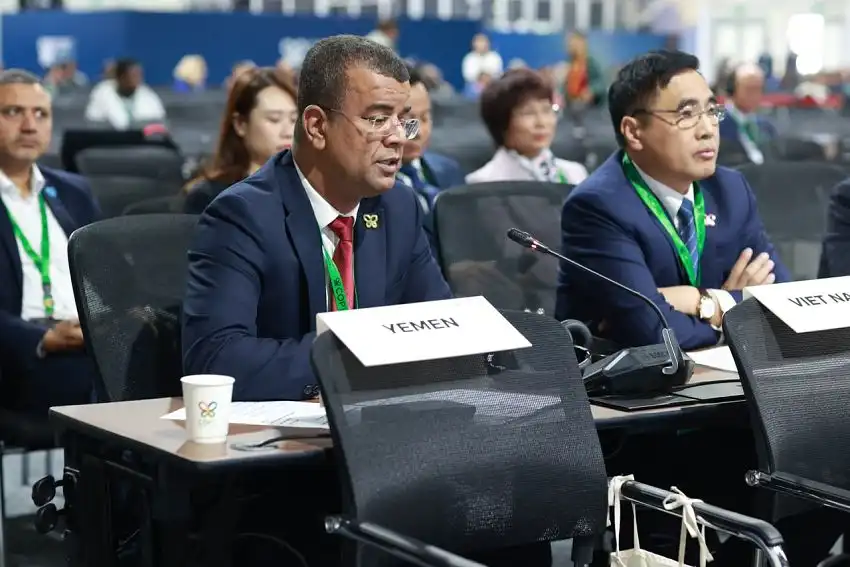
- This call came during Yemen's participation in the high-level segment of the seventeenth Conference of the Parties to the Convention on Biological Diversity (COP17), held in Yerevan, Armenia.
- Emphasizing Action Over Commitments Fahmi Abdul Hadi bin Shabraq, the head of the General Authority for Environmental Protection, delivered Yemen's statement.
- National Strategy for Biodiversity Yemen has completed its third national biodiversity strategy and action plan for the period 2025–2030.
- This plan aligns with the global framework and reflects national priorities in nature conservation, ecosystem restoration, and enhancing the livelihoods of local communities.
Yemen Calls for Fair Funding to Support Biodiversity Protection in Least Developed and Conflict-Affected Countries
The Republic of Yemen has urged the international community to prioritize funding efforts for biodiversity protection in least developed countries affected by conflicts. Yemen emphasized the need for accessible and adequate financing, technology transfer, and capacity building to help these nations fulfill their international commitments and achieve the goals of the global biodiversity framework.
This call came during Yemen’s participation in the high-level segment of the seventeenth Conference of the Parties to the Convention on Biological Diversity (COP17), held in Yerevan, Armenia.
Emphasizing Action Over Commitments
Fahmi Abdul Hadi bin Shabraq, the head of the General Authority for Environmental Protection, delivered Yemen’s statement. He highlighted that the real challenge, four years after the adoption of the Kunming-Montreal Global Biodiversity Framework, lies not in formulating international commitments but in translating them into concrete actions supported by financing, technology, and national capacity building.
Unique Biodiversity Under Threat
Bin Shabraq pointed out Yemen’s unique biodiversity, which ranges from mountains and plains to coasts and islands, notably including the Socotra Archipelago, a significant global biodiversity hotspot. He explained that this natural heritage faces increasing challenges due to climate change, ecosystem degradation, unsustainable exploitation of natural resources, and the repercussions of the war ignited by the Houthi terrorist militias, which have led to economic, institutional, and humanitarian crises.
National Strategy for Biodiversity
Yemen has completed its third national biodiversity strategy and action plan for the period 2025–2030. This plan aligns with the global framework and reflects national priorities in nature conservation, ecosystem restoration, and enhancing the livelihoods of local communities.
Bridging the Gap Between Ambitions and Capabilities
Bin Shabraq stressed the importance of the first global review of the implementation of the global framework as an opportunity to address the gap between international ambitions and national capabilities. He called for simplifying access to financial resources and supporting the protection of terrestrial and marine ecosystems, nature reserves, and threatened species.
Fair Benefit-Sharing Mechanisms
He also emphasized the need to develop fair mechanisms for sharing benefits arising from the use of genetic resources and digital sequence information, ensuring the rights of developing countries and their local communities.
Commitment to International Cooperation
The head of the General Authority for Environmental Protection affirmed Yemen’s readiness to enhance cooperation with the Convention Secretariat, the Global Environment Facility, United Nations agencies, and international partners to transform national priorities into actionable programs.
To follow the news in Arabic