The Presidential Leadership Council praises the unity of state institutions and their growing capabilities to deter terrorist militia threats.

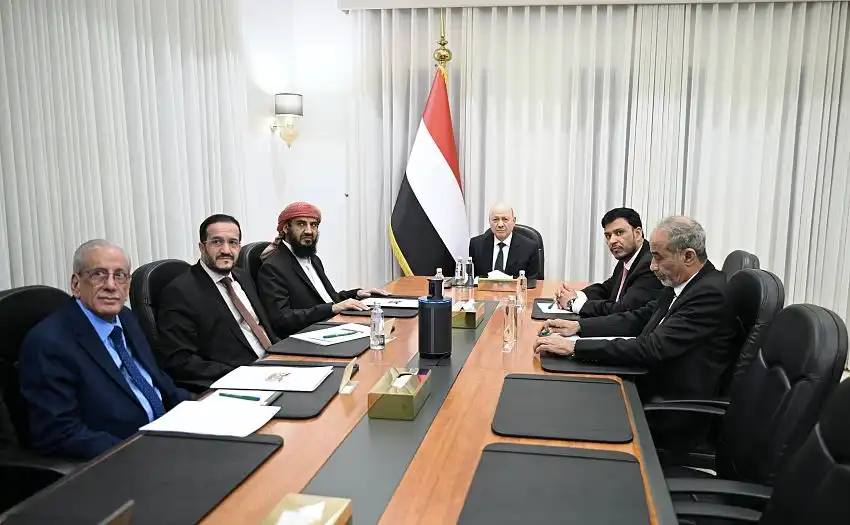
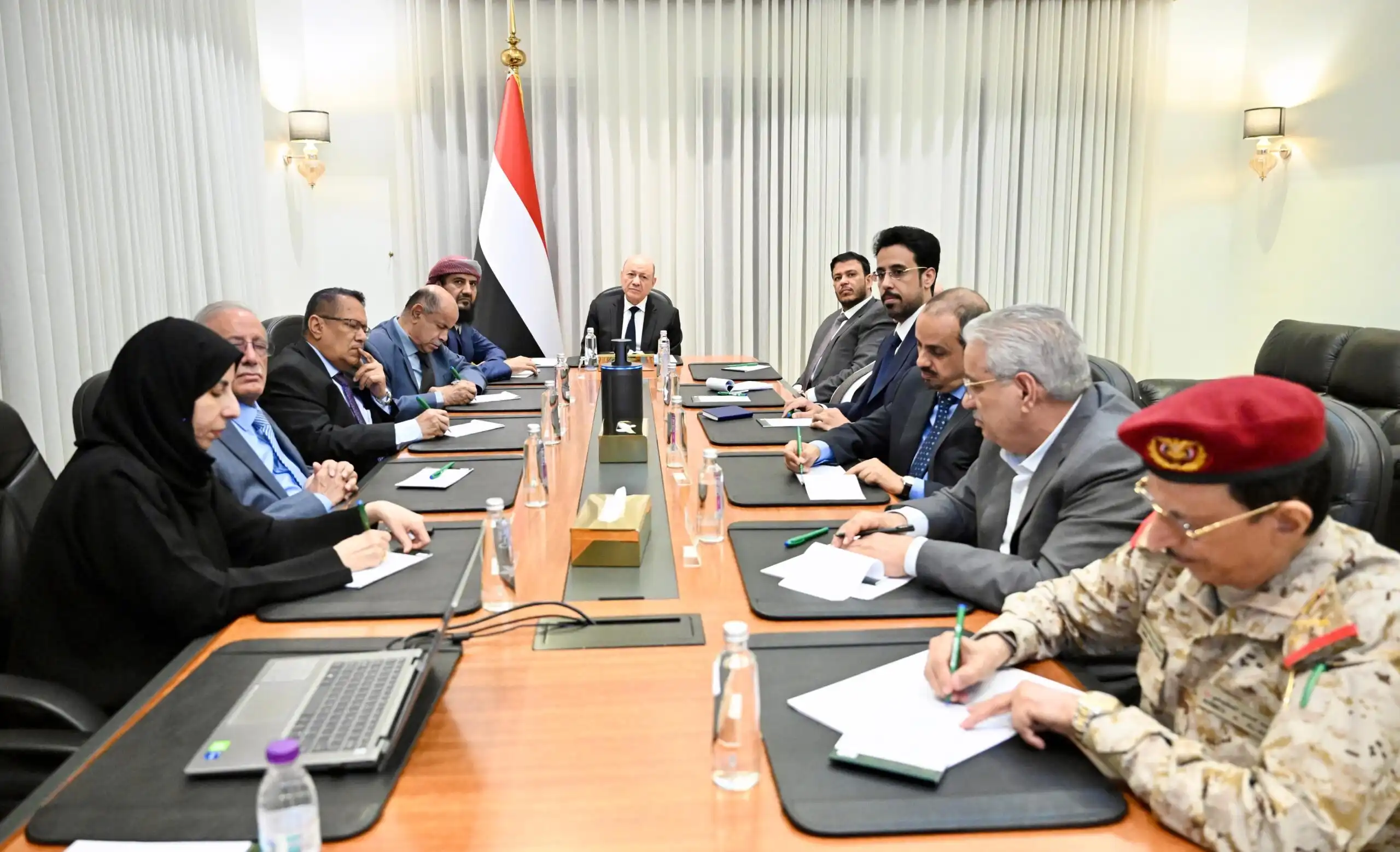
Presidential Leadership Council Holds Extraordinary Meeting
On Tuesday, the Presidential Leadership Council convened an extraordinary meeting led by President Dr. Rashad Mohammed Alimi. All council members, including Sultan Al-Arada, Tariq Saleh, Abdulrahman Al-Mahrimi, Dr. Abdullah Alimi, Othman Majli, Mahmoud Al-Sabihi, and Salem Al-Khanbashi, attended the session. The council discussed recent developments in national and regional situations across various levels.
Security and Military Updates
The council reviewed brief reports on security and military developments across different fronts. They assessed the readiness of the armed forces and security agencies, along with the progress of economic and financial reforms. The government’s efforts to improve public services, enhance economic stability, and alleviate the humanitarian suffering caused by the Iranian-backed Houthi militias were also highlighted.
Unity and Responsibility
The Presidential Leadership Council emphasized that the unity of the council and the government represents a crucial pillar for the transitional phase. They aim to fulfill their national responsibilities collectively, thereby boosting citizens’ trust in state institutions. This unity enables the government to address various challenges with a cohesive approach, ultimately fulfilling the national commitments outlined in the power transfer announcement.
Commendation for Leadership
The council praised President Dr. Rashad Mohammed Alimi for his wise leadership during this exceptional period. His political acumen and ability to unify positions have helped maintain the integrity of state institutions. The council acknowledged his efforts in transforming challenges into opportunities and fostering partnerships with regional and international allies to support the restoration of state institutions and counter the ongoing coup.
Commitment to National Interests
The council expressed appreciation for the national spirit exhibited by its members. Their commitment to institutional work and prioritizing the country’s higher interests has strengthened the council’s unity. This collaborative approach has reinforced citizens’ and international partners’ confidence in the council’s ability to lead the transitional phase and achieve national objectives.
Government Efforts in Economic Reforms
The council recognized the government’s efforts under Dr. Sha’if Al-Zandani’s leadership in implementing economic and administrative reforms. They stressed the need to intensify efforts to improve services, enhance public resources, and maintain financial stability. These improvements will positively impact citizens’ lives and strengthen the state’s ability to meet its obligations.
Military Readiness and Security
The council commended the high readiness of the armed forces and security agencies. Their successes in protecting national sovereignty and deterring terrorist threats have been significant. The progress made in unifying military and security decisions lays a solid foundation for building a professional national military institution dedicated to the constitution and the state.
Condemnation of Houthi Attacks
The council condemned the recent attack by Houthi militias on an Indian cargo ship in the Red Sea, which resulted in the vessel sinking. They held the militias fully responsible for this criminal act, viewing it as part of their ongoing strategy to target civilian assets and economic facilities to serve their Iranian backers.
Call for International Action
The council urged the international community, the United Nations Security Council, and relevant maritime organizations to take decisive actions to halt these repeated terrorist attacks. They called for accountability for the perpetrators and their supporters to ensure the protection of international maritime routes and safeguard freedom of navigation.
Support for Multinational Naval Coalition
In this context, the council welcomed the announcement of a multinational naval defense coalition led by Saudi Arabia. They view this initiative as a strategic response to the increasing challenges facing the security of the Red Sea, Gulf of Aden, and Bab-el-Mandeb. The coalition underscores the collective responsibility of nations to protect international maritime routes through enhanced coordination and cooperation.
Appreciation for Saudi Arabia’s Role
The council expressed deep appreciation for Saudi Arabia’s pivotal role in supporting the Yemeni people and safeguarding national institutions. They acknowledged the leadership of King Salman bin Abdulaziz Al Saud and Crown Prince Mohammed bin Salman bin Abdulaziz in promoting regional security and stability. The council affirmed that the relationship between Yemen and Saudi Arabia continues to advance toward a robust strategic partnership based on shared interests and mutual destiny.
Conclusion
The meeting concluded with the attendance of Dr. Yahya Al-Shaibi, Director of the Presidency Office, underscoring the collaborative efforts of the council in navigating Yemen’s complex challenges.
For more updates, visit Yemen TV.
To follow the news in Arabic