The Ministers of Foreign Affairs and Planning discuss with the United Nations the repercussions of the Houthi escalation.

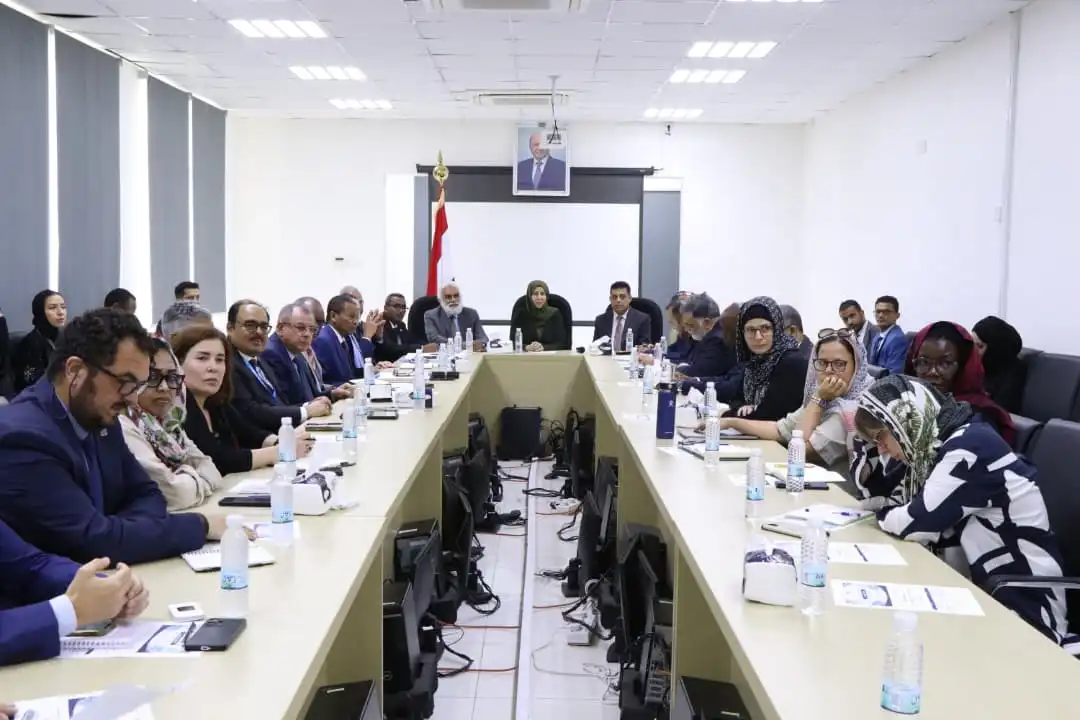
- A joint meeting in Aden addressed the humanitarian crisis due to Houthi escalation.
- Ministers discussed urgent needs for 12,597 registered displaced families across six governorates.
- The government reaffirmed its commitment to protect civilians and facilitate humanitarian aid access.
- Calls were made for coordinated international action to mobilize resources for humanitarian response.
Meeting in Aden Addresses Humanitarian Crisis
A joint meeting took place today in the temporary capital of Aden, featuring the Minister of Foreign Affairs and Expatriates, Dr. Afrah Al-Zuba, the Minister of Planning and International Cooperation, Mohammed Al-Faqmi, and representatives from United Nations agencies and international and non-governmental organizations operating in Yemen. The attendees discussed the latest developments in the humanitarian situation and the implications of the recent escalation by Houthi militias, focusing on urgent response priorities for displaced individuals and affected communities.
Recent Displacement and Coordination Efforts
The meeting, attended by Minister of State Walid Al-Abara and deputy ministers from both ministries, addressed the recent wave of displacement and the increasing needs of affected individuals and host communities. Participants explored ways to enhance coordination between the government, UN agencies, and international organizations, ensuring the integration of humanitarian interventions and the continuation of development programs.
Political and Humanitarian Updates
Dr. Al-Zuba presented updates on the political, military, and humanitarian situations, particularly recent developments in the western coast and Bab Al-Mandab. She highlighted how threats to ports and supply lines exacerbate risks to food security and increase the costs of accessing essential goods, thereby intensifying the living and humanitarian burdens on the Yemeni people.
Government Commitment to Protect Civilians
The Minister reaffirmed the government’s commitment to its constitutional and legal responsibilities in protecting civilians and displaced persons while safeguarding their rights. She emphasized the importance of continuing collaboration with partners to facilitate humanitarian aid access to those in need across various governorates without discrimination, and creating the necessary conditions for organizations to carry out their humanitarian missions.
Addressing Immediate Humanitarian Needs
Minister Al-Faqmi reviewed urgent humanitarian and developmental needs, noting that 12,597 displaced families have been registered across six governorates. He pointed out the pressing needs these families face in areas such as shelter, food, safe water, healthcare, and protection services.
Call for Coordinated International Action
Al-Faqmi called for immediate and coordinated international action to mobilize resources and fill funding gaps for humanitarian response. He stressed the ministry’s commitment to directing interventions based on actual needs and national priorities, enhancing transparency and accountability, and integrating relief efforts with support for livelihoods and early recovery.
Strengthening Partnerships for Humanitarian Response
Both ministers underscored the importance of strengthening partnerships between the government, the United Nations, and international organizations. They advocated for increased presence and operations from the temporary capital of Aden to enhance direct coordination with state institutions and improve the efficiency and sustainability of humanitarian and developmental programs.
Comprehensive Response to Displacement
The Minister of State presented a unified government report on the recent wave of displacement, emphasizing the need for a comprehensive response based on early warning and preparedness, protecting displaced individuals, supporting host communities, and mobilizing international support to mitigate the expansion of displacement and its humanitarian consequences.
UN Coordination and Ongoing Challenges
Laurent Bukira, the Acting Resident Coordinator and Humanitarian Coordinator for the United Nations in Yemen, highlighted the severity of the humanitarian situation and the growing needs of displaced individuals. He reviewed ongoing coordination among agencies and organizations to enhance readiness and respond to urgent needs, reaffirming continued cooperation with the Yemeni government and ongoing developmental work alongside humanitarian responses.
Addressing Operational Challenges
The meeting also included input from representatives of UN agencies, international organizations, and NGOs regarding the challenges they face in their operations, priority needs, and ways to enhance coordination and expand responses for those affected.
Ensuring Humanitarian Principles
The attendees stressed the importance of maintaining the civilian nature of humanitarian work, protecting the premises, vehicles, and resources of organizations from any use that contradicts their humanitarian and developmental missions, and providing a safe environment for workers and beneficiaries.
Enhancing Coordination Mechanisms
The meeting concluded with a call for ongoing consultations and the development of coordination and follow-up mechanisms to ensure rapid responses, effective interventions, and the integration of government, UN, and international efforts.
To follow the news in Arabic