The government stated that Operation “Fajr Al-Yemen” represents a new phase in restoring state institutions and ending the Houthi coup.

- The Yemeni government launched "Fajr Al-Yemen" to restore state institutions and sovereignty.
- The operation aims to end the Houthi coup and liberate remaining territories.
- The government reiterated its commitment to international humanitarian law during operations.
- Achieving comprehensive peace is a priority to protect citizens' rights and national dignity.
Yemeni Government Launches “Fajr Al-Yemen” Operation
The Yemeni government confirmed that the announcement by His Excellency President Dr. Rashad Mohammed Alimi, Chairman of the Presidential Leadership Council, regarding the launch of the “Fajr Al-Yemen” operation stems from his constitutional and legal responsibilities to protect citizens and uphold Yemen’s sovereignty over its airspace, land, and territorial waters.
A New Phase in State Restoration
The government explained that the initiation of this operation marks a new phase in the journey to restore state institutions, end the coup, and complete the liberation of remaining Yemeni territories, ultimately reaching the capital, Sana’a. The operation aims to end the cycle of war, restore security, stability, and peace in Yemen and the region, and prevent an armed group from monopolizing the decisions of Yemenis, forcing them back into conflict whenever peace contradicts its interests and those of its supporters in the Iranian regime.
Statement to the United Nations Security Council
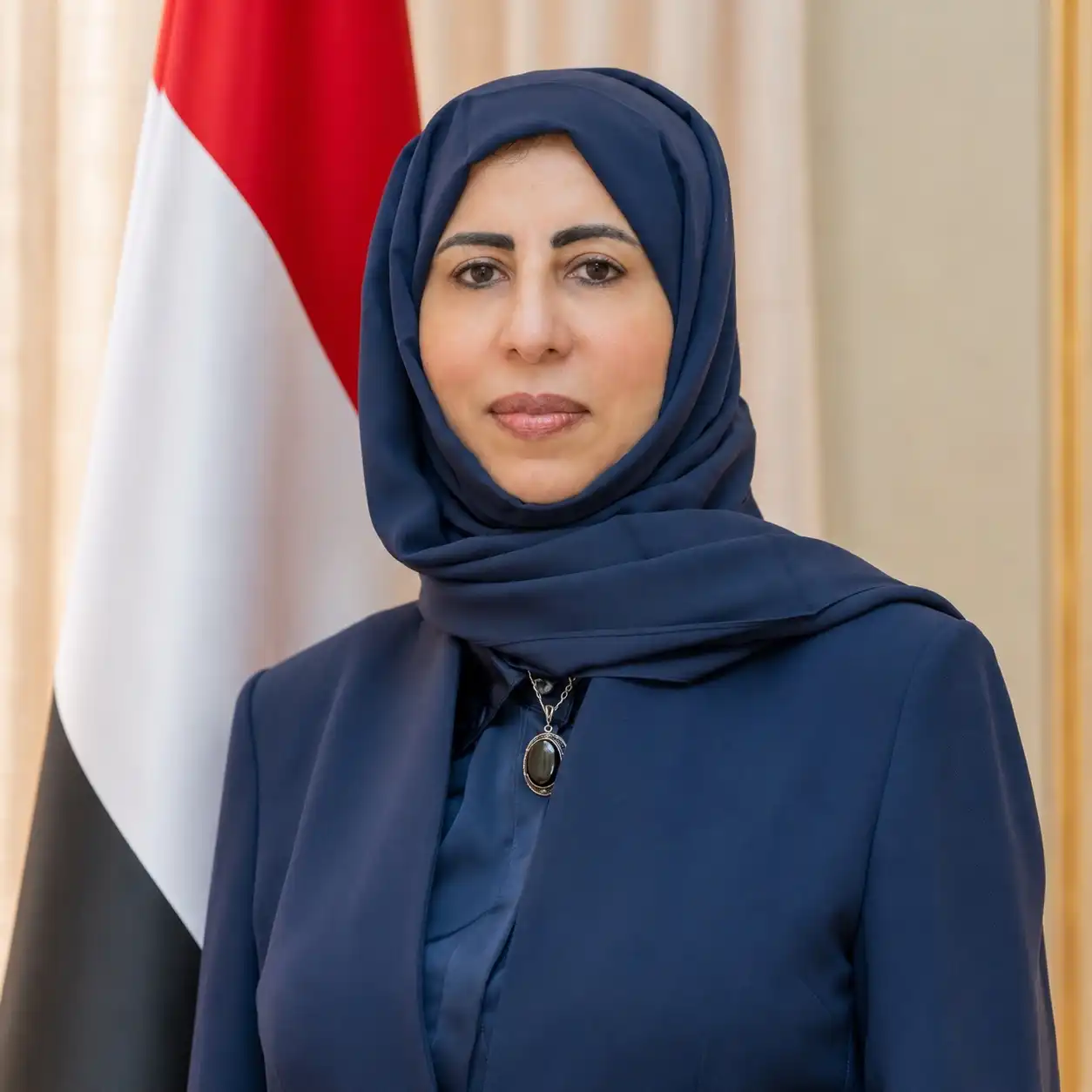
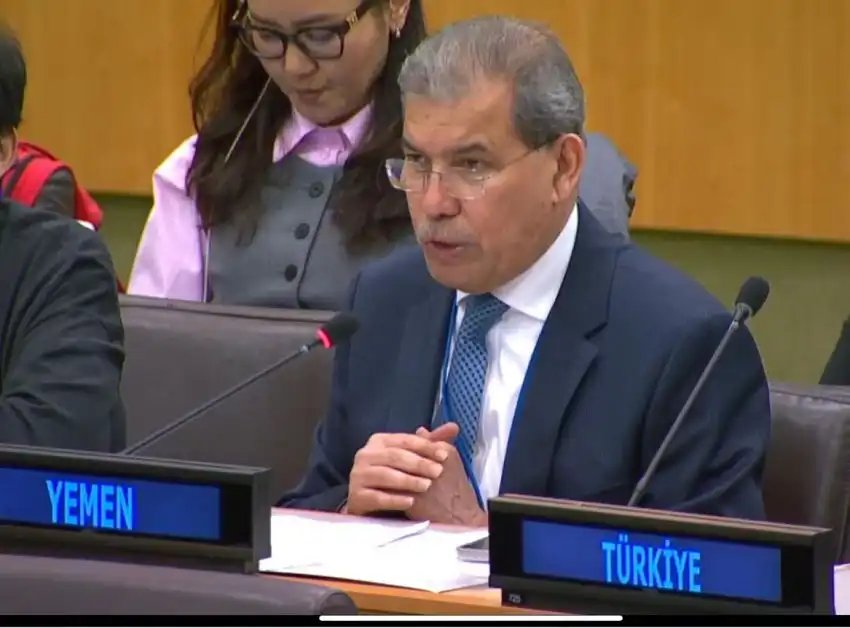
This information was presented in a statement by the Republic of Yemen at the United Nations Security Council during an open session dedicated to discussing the situation in the Middle East (Yemen), delivered by Yemen’s Permanent Representative to the UN, Ambassador Abdullah Al-Saadi.
Clarification on the Nature of the Operations
The Yemeni government reiterated that these operations do not target the residents of any region or governorate, nor do they target any sect or social group. Instead, they fall within the government’s responsibility to protect its citizens, restore its national institutions, and confine the power of war and peace to the state, in accordance with the law. The essence of the battle lies in the confrontation between the Yemeni people, their legitimate government, and state institutions on one side, and the Iranian-backed Houthi militias on the other.
Commitment to Humanitarian Law
The government affirmed its commitment to international humanitarian law and international human rights law, emphasizing its dedication to maintaining the highest levels of discipline and adherence to rules of engagement. It aims to protect civilians, properties, and civilian facilities, prevent acts of revenge, ensure humane treatment of prisoners and the wounded, investigate any violations of these commitments, and open the door for those misled to return and align with the state and its institutions.
Pursuit of Lasting Peace
The government highlighted that achieving genuine, comprehensive, and sustainable peace remains a steadfast goal. It emphasized that the desired peace is one that ends the coup, restores state institutions, and reestablishes control over its territories and national decisions, thereby protecting citizens’ rights and preserving their freedom and dignity. This peace aims to prevent Yemen from becoming a platform for threatening regional and international security and peace, in accordance with the agreed-upon references, primarily Security Council Resolution 2216. The government reiterated its support for the efforts of the UN Secretary-General and his Special Envoy to Yemen.
Escalation by Houthi Militias
Ambassador Al-Saadi stated, “Today’s session convenes amid ongoing escalation by the terrorist Houthi militias, threatening the lives of Yemenis and the security of neighboring countries and the region, as well as one of the world’s most important maritime corridors. In light of rapid developments at a pivotal moment in the history of the war in Yemen, we must contextualize what is happening today and avoid starting our analysis from the middle of the story or viewing recent military developments in isolation from the roots of this war and its trajectory over the past years.”
Responsibility for the Escalation
He added, “Before discussing the implications of this escalation, it is essential to clearly identify the responsible party. The Houthi militias initiated the war with their armed coup against the state and political consensus twelve years ago, thwarting peace initiatives. Recently, they chose to end the truce after the Yemeni government provided multiple opportunities for peace, bearing significant political, economic, and humanitarian costs for the sake of calm.”
Increased Violence Against Civilians
The ambassador confirmed that the Houthi militias responded to these opportunities with increased armament, mobilization, and recruitment, expanding their attacks on civilians and infrastructure within Yemen. They targeted the Kingdom of Saudi Arabia, threatened commercial vessels, and attempted to impose military realities on the ground in Taiz, Al-Mokha, and Bab Al-Mandab.
Humanitarian Cost of the Escalation
Ambassador Al-Saadi noted that the humanitarian cost of this escalation reveals the nature of the project the government faces. He pointed out that at least one hundred children died during confrontations in September alone, while the Houthi militias continued to recruit children and send them to the front lines. He stated, “These children belong in schools and with their families and communities, not on battlefields.”
Displacement Crisis
He highlighted that Houthi attacks in recent weeks have displaced thousands of Yemenis, with approximately two hundred thousand people internally displaced, many of whom are experiencing displacement for the third or fourth time. Additionally, around three thousand people have fled to Djibouti, all requiring urgent humanitarian assistance.
Targeting Civilian Areas
The ambassador mentioned that Houthi attacks targeted residential neighborhoods, markets, schools, displacement camps, and civilian service facilities, exacerbating pressures on communities already worn down by years of war.
Attack on Aden International Airport
He added, “The day before yesterday, the Houthi militias targeted Aden International Airport with two ballistic missiles, one of which fell near the runway just before a civilian flight landed, putting passengers, workers, and flight safety at direct risk in a serious attack reminiscent of their terrorist assault on the airport in December 2020.”
Escalation of Attacks on Saudi Arabia
The ambassador confirmed that the Houthi militias have expanded their brutal attacks on the Kingdom of Saudi Arabia, targeting airports, facilities, and civilian and economic sites. He noted that these crimes once again reveal the reality of the Houthi militias as a terrorist group that does not hesitate to target civilians and vital institutions, attempting to distract from their violations and crimes against Yemenis for the benefit of Iranian interests in the region. This behavior shows that they disregard the lives of innocents and international laws and norms.
Human Cost of Houthi Actions
Ambassador Al-Saadi stated, “Last month, security and medical sources documented thousands of deaths and injuries among Yemenis misled into the ranks of the militia, serving their terrorist objectives and those of the Iranian regime in destabilizing Yemen, the region, and the world. The claim of a divine right to rule over people cannot legitimize the usurpation of an entire people’s will. Furthermore, serving an Iranian agenda that seeks to use Bab Al-Mandab as a leverage point akin to the Strait of Hormuz should not justify sacrificing the lives and future of Yemenis or threatening global interests.”
Regional and Global Threat
He pointed out that the Houthi threat is no longer a Yemeni issue that can be contained within the country’s borders. The threat to navigation is not a future possibility but a current reality that may deepen if impunity continues.
Growing Cooperation with Terrorist Groups
The ambassador noted that the danger of this threat increases in light of UN reports indicating growing cooperation between the Houthi militias and Al-Shabaab in Somalia, involving piracy, arms smuggling, training, and logistical support.
Threat to Global Trade Routes
He emphasized that the consolidation of armed group control over Bab Al-Mandab, alongside the growing ties to terrorist organizations on the opposite shore, threatens to transform this corridor into a connected space for terrorism, smuggling, and extortion.
Defense of Vital Maritime Routes
The armed forces, supported by the coalition led by the Kingdom of Saudi Arabia, defend the Red Sea and Bab Al-Mandab, thereby protecting a vital artery relied upon by the global economy. He pointed out that while freedom of navigation is a shared interest, its protection is also a shared responsibility, and Yemenis should not bear this cost alone.
Call for Action from the Security Council
Ambassador Al-Saadi urged the Security Council to take a clear stance holding the Houthi militias accountable for the escalation and to work effectively on implementing the Council’s resolutions, particularly Resolution 2216. He called for practical and decisive measures to limit funding and smuggling networks, halt the flow of weapons, technology, and dual-use military components to the Houthi militias, and hold accountable those behind this support, especially the Iranian regime. He also emphasized the need to enhance cooperation with the Yemeni government to combat the smuggling and funding networks that fuel the war.
Support for Yemeni State Institutions
He called for political, economic, humanitarian, and security support for state institutions, enhancing their capacity to protect civilians and assist those displaced by the recent escalation, who join millions of Yemenis displaced by the Houthi militias both within and outside the country.
Gratitude for Saudi Support
The ambassador expressed deep appreciation and gratitude to the brothers in the Kingdom of Saudi Arabia, its leadership, government, and people, for their steadfast positions alongside the Yemeni people and government. He acknowledged their continuous support for state institutions and the national economy, including a new budget support package provided at the beginning of this month, at a time when the country faces unprecedented economic and humanitarian challenges.
Humanitarian Initiatives for Yemenis
He stated, “This support extends beyond defense, security, and economic fields; it also impacts the life, dignity, and stability of the Yemeni citizen. His Majesty King Salman bin Abdulaziz, in response to a request from His Excellency President Dr. Rashad Mohammed Alimi, directed actions to regularize the status of Yemenis residing in the Kingdom irregularly. This significant humanitarian initiative opens avenues for Yemenis who have lost their livelihoods at home to find stability, work, and a decent life, alleviating burdens on thousands of Yemeni families during these exceptional circumstances.”
International Responsibility Towards Yemen
He affirmed that the international community’s responsibility towards Yemen should not stop at merely managing the crisis or responding to its security repercussions. It must extend to protecting the Yemeni people, supporting their livelihoods, and enhancing the capacity of their institutions to fulfill their inevitable obligations.
Call for Increased International Support
He added, “While the Kingdom of Saudi Arabia has provided a practical model of solidarity, we call on our partners in the international community to assume their responsibilities and double their economic and humanitarian support for the Yemeni government, assisting its efforts to restore stability and end the suffering that escalates day by day due to the escalation of the Iranian-backed terrorist Houthi militias.”
To follow the news in Arabic