The Central Bank Council discusses options to address liquidity shortages and approves a set of measures.

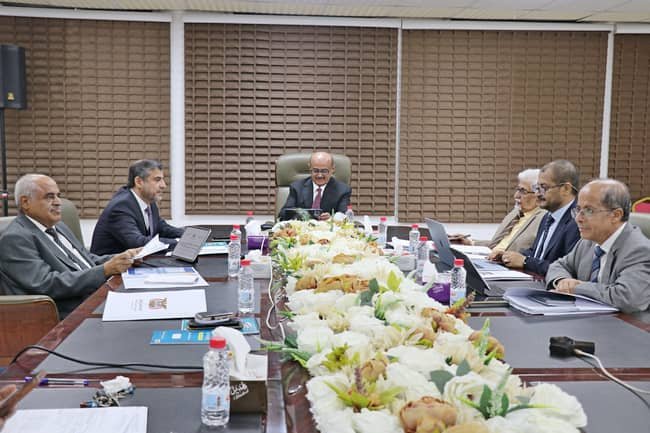
Central Bank of Yemen Discusses Solutions to Currency Shortage
On Sunday, the Central Bank of Yemen convened in the temporary capital of Aden, led by Governor Ahmed Ghaleb. The board focused on strategies to address the ongoing shortage of the national currency in the markets, despite the bank’s calculated interventions to inject liquidity in line with economic standards and stability requirements.
Immediate and Long-term Measures Approved
During the meeting, the board approved a series of measures, some of which are immediate while others extend into the short and medium term. The executive management received instructions to implement these measures and to continuously assess the situation, coordinating with relevant authorities to take necessary corrective actions.
Commitment to Economic Stability
The board reaffirmed its commitment to maintaining cautious policies aimed at stabilizing the national currency’s exchange rate and controlling inflationary pressures. They emphasized the importance of avoiding reliance on unfounded economic predictions, especially given the unfavorable regional and international developments.
Utilizing Available Tools for Economic Goals
The Central Bank expressed its determination to utilize all available tools—monetary, administrative, and legal—to achieve its objectives of preserving economic and financial stability.
Financial and Economic Developments Reviewed
The board reviewed preliminary indicators of financial and economic developments, including the public budget status, foreign reserves, and local and international obligations for the first quarter of the year. They also evaluated the economic performance outlook amid rapid regional and global changes.
Economic Impacts of Regional Developments
The council discussed the economic repercussions of ongoing regional developments, particularly their effects on economic indicators such as rising transportation and insurance costs, as well as energy prices. These developments have added pressure on supply chains and exacerbated challenges for economies facing structural imbalances and chronic deficits, including Yemen’s economy.
Government Efforts to Mitigate Challenges
The council acknowledged the efforts made by state institutions, guided by political leadership and the government, to alleviate the severity of these repercussions.
Enhancements to Payment Systems
The board approved several organizational decisions aimed at developing and enhancing the infrastructure of payment systems. Notably, they established a unified national standard for QR Code services applicable to all financial institutions operating in Yemen.
Additionally, they approved the integration of electronic wallets to ensure unified connection pathways, enhancing operational efficiency. The Central Bank will play a key role in the Instant Payment System (FPS) as a major stakeholder, with the executive management tasked to complete the necessary implementation procedures.
Positive Developments in International Relations
The council welcomed positive developments in Yemen’s relations with international partner organizations. This was highlighted by the visit of the World Bank’s Vice President for the Middle East and North Africa, along with accompanying delegations to Aden. Furthermore, the board approved the presentation of the Article IV consultation report with Yemen to the International Monetary Fund’s Board of Directors later this March, alongside the reception of various diplomatic and developmental delegations from different countries and organizations in Aden.
This meeting underscores the Central Bank’s proactive approach to addressing economic challenges and enhancing financial stability in Yemen.
To follow the news in Arabic
