Robots enter the U.S. construction sector, but limited gains are insufficient to resolve the housing crisis.

- The U.S. housing industry faces a severe skilled labor shortage, impacting home construction.
- Approximately 1.2 million homes are needed to address the housing deficit in the U.S.
- Robots excel in repetitive tasks but cannot fully replace human workers on construction sites.
- Japan's automated construction model increases efficiency and production while reducing labor needs.
Housing Industry Faces Labor Shortage Crisis
The housing industry in the United States faces increasing pressure to build more homes amid a severe skilled labor shortage. Attention has turned toward robots and automation as a potential solution. However, current results indicate that gains remain specialized and limited, failing to address the national crisis effectively.
Housing Shortage and Labor Crisis Worsens
According to estimates from the National Association of Home Builders (NAHB), the United States suffers from a deficit of approximately 1.2 million homes. Additionally, around 300,000 job openings existed in the construction sector by the end of 2025. The industry requires 740,000 workers annually to compensate for growth, retirements, and workers leaving the sector.
Furthermore, residential construction productivity has increased by only 16% since 1993, compared to over 50% for the overall U.S. economy. This disparity intensifies pressure on companies, which lose about 11 billion dollars annually due to labor shortages.
Why Robots Struggle on Construction Sites
Unlike factories, construction sites change daily, making comprehensive automation challenging. Robotics companies explain that:
- Each project varies in design, soil, and materials.
- The lack of standardization prevents robots from performing repetitive tasks on a large scale.
- Advanced robots still fall short of fully executing human tasks on-site.
Major Gains Come from Repetitive Tasks
Results indicate that robots perform best in:
- Locating structural elements.
- Digging, installing, and transporting materials.
- Automation within factories.
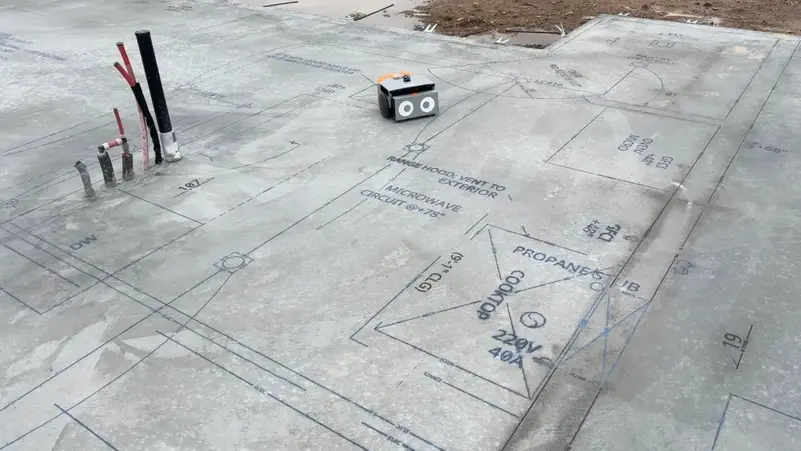
Dusty Robotics claims its FieldPrinter can print building plans directly onto the site floor, reducing errors and increasing accuracy. Its use has led to:
- A 75% reduction in rework.
- A 35% decrease in layout time.
Coordination Among Workers More Important Than Replacement
Construction experts argue that the greatest benefits arise not from replacing workers but from coordinating their efforts through a unified plan, which reduces errors and saves time. The RapidShell system in California, which combines robots and prefabricated materials, has cut the time to build a home’s basic structure from 21 days to about 12 days.
Japan Offers an Advanced Model
In Japan, homes are built in automated factories up to 80%, before being transported and assembled on-site. Robots have helped increase production from 55 to 65 units daily while reducing the number of operators by 20%.
Does This Represent the Future of American Construction?
Experts believe the United States could benefit from:
- Automation within factories.
- Prefabricated components.
- Mechanically manufactured structures.
Renco USA states that its facility in Florida can produce enough materials to build 7,000 homes annually, cutting overall construction time by 30% to 40%.
Robots Will Not Replace Skilled Labor
Experts agree that robots will help increase production in the coming years, but through targeted gains rather than a complete revolution. They also expect skilled workers—such as welders, electricians, and plumbers—to experience their best decade, as demand for their on-site expertise continues.
The future of construction in the United States will not consist of an army of human-like robots but rather a hybrid system that combines:
- Specialized robots.
- Automated factories.
- Prefabricated components.
- Skilled human labor.
The post Robots Enter the American Construction Sector: Limited Gains Insufficient to Solve Housing Crisis appeared first on Yemen TV.
To follow the news in Arabic