Presidential Leadership Council Approves Reform Matrix and Highlights Security Coordination Progress

- The Presidential Leadership Council approved a chronic reform matrix to enhance living conditions.
- President Alimi discussed security threats in the Red Sea during his visit to Djibouti.
- The council reaffirmed commitment to counterterrorism and protecting vital facilities for citizens.
- Administrative performance enhancements were approved to strengthen state institutions across various sectors.
Presidential Leadership Council Holds Key Meeting
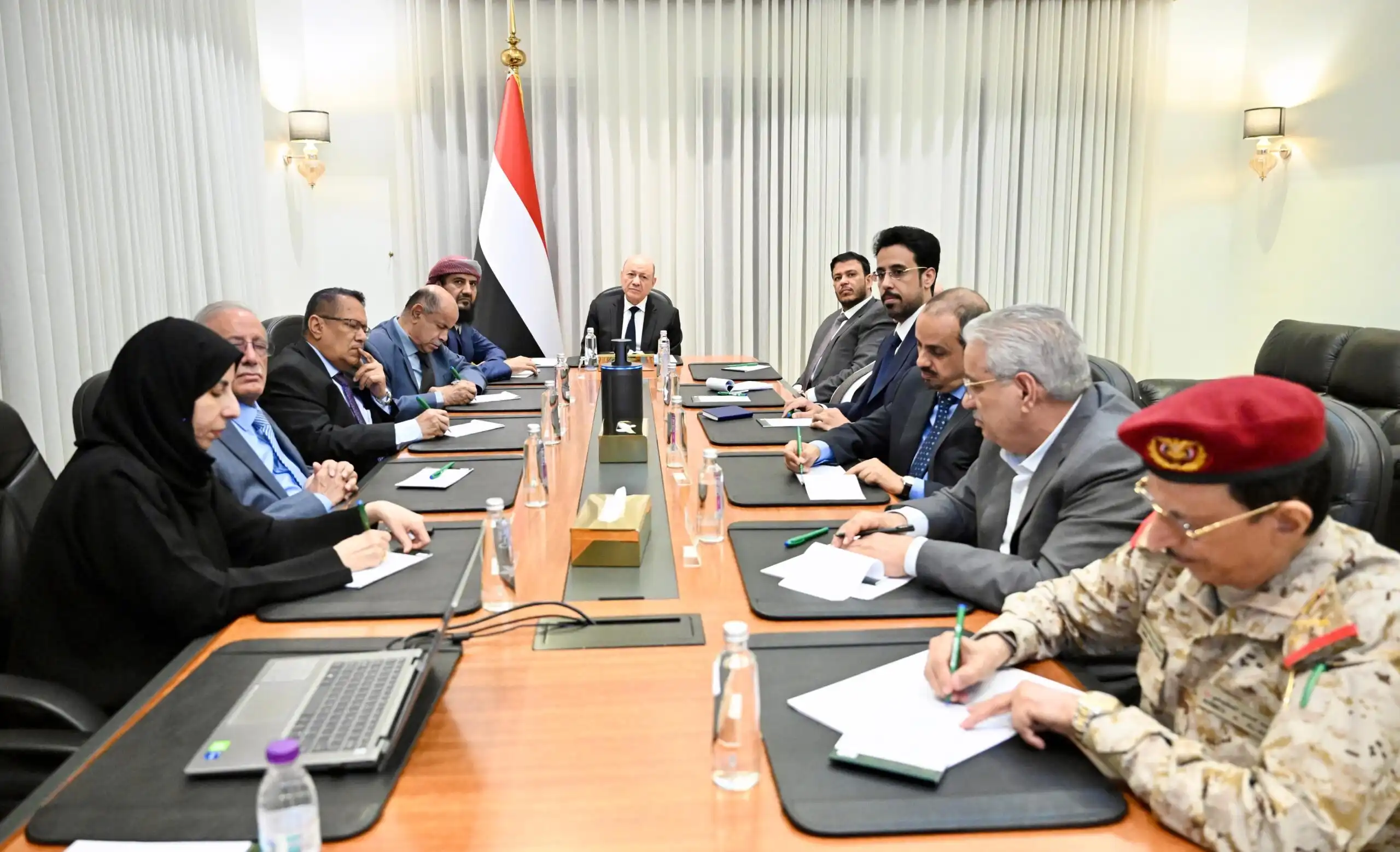
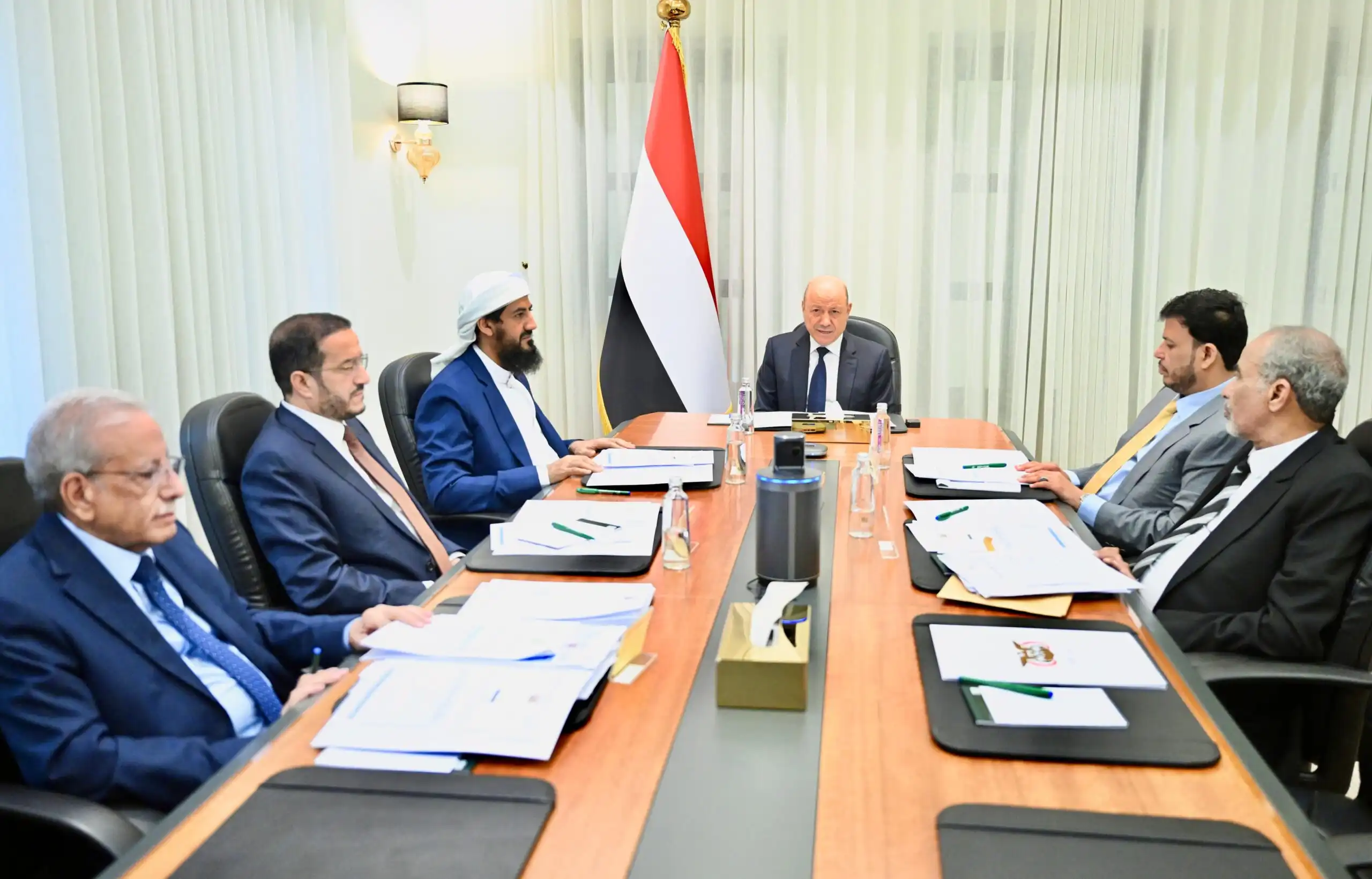
On Tuesday, the Presidential Leadership Council convened under the leadership of President Dr. Rashad Mohammed Alimi. All council members were present, with Sultan Al-Aradah, Tariq Saleh, and Salem Al-Khanbashi participating via video conference.
Discussing Local Developments and Reforms
The meeting focused on local developments and a comprehensive matrix of chronic reforms across various sectors. The council emphasized the government’s commitment to improving living conditions and essential services. Additionally, discussions centered on strengthening state institutions and reinforcing security and stability.
President Alimi’s Visit to Djibouti
President Alimi briefed the council on his recent visit to the Republic of Djibouti, where he engaged in discussions with Presidents Ismail Omar Guelleh and Hassan Sheikh Mohamud. The talks were aimed at enhancing joint coordination to address escalating threats in the Red Sea and Gulf of Aden, including smuggling, organized crime, and cross-border armed groups.
Strengthening Yemen’s Presence
The council praised the outcomes of President Alimi’s visit, highlighting its significance in enhancing Yemen’s presence in the Red Sea and Horn of Africa. They reaffirmed their collective responsibility to protect international navigation and combat terrorism and smuggling activities.
Government Progress Report
The council reviewed a report from a recent government meeting with governors of liberated provinces, assessing progress in financial and service reforms, governance, and transparency. They also discussed the implementation of Decision No. (11) for 2025 along with the strategic partnership requirements with Saudi Arabia and donor communities.
Addressing Security Developments
Recent security incidents, particularly assassinations in the temporary capital, Aden, were also addressed during the meeting. The council expressed strong support for security forces in their pursuit of terrorist elements, commending the improvement in security and military coordination, facilitated by support from Saudi Arabia.
Commitment to Counterterrorism
The council reiterated the state’s commitment to advancing counterterrorism efforts. They stressed the importance of protecting vital facilities and ensuring the safety of citizens, relief workers, and the business community. Additionally, they called for collective efforts to restore state institutions and alleviate the suffering caused by the Iran-backed Houthi militia.
Enhancing Administrative Performance
The council approved the Prime Minister’s proposal to enhance administrative and institutional performance across several state sectors. They also addressed regional developments, reiterating Yemen’s condemnation of Iranian attacks targeting civilian and economic facilities in Kuwait, the UAE, and Bahrain.
Attendance
The meeting included the presence of the Director of the Presidential Office, Dr. Yahya Al-Shaibi. This gathering marks a significant step in the council’s ongoing efforts to stabilize Yemen and improve governance amid challenging circumstances.