President Alimi Meets German Deputy Parliament Speaker to Strengthen Bilateral Ties

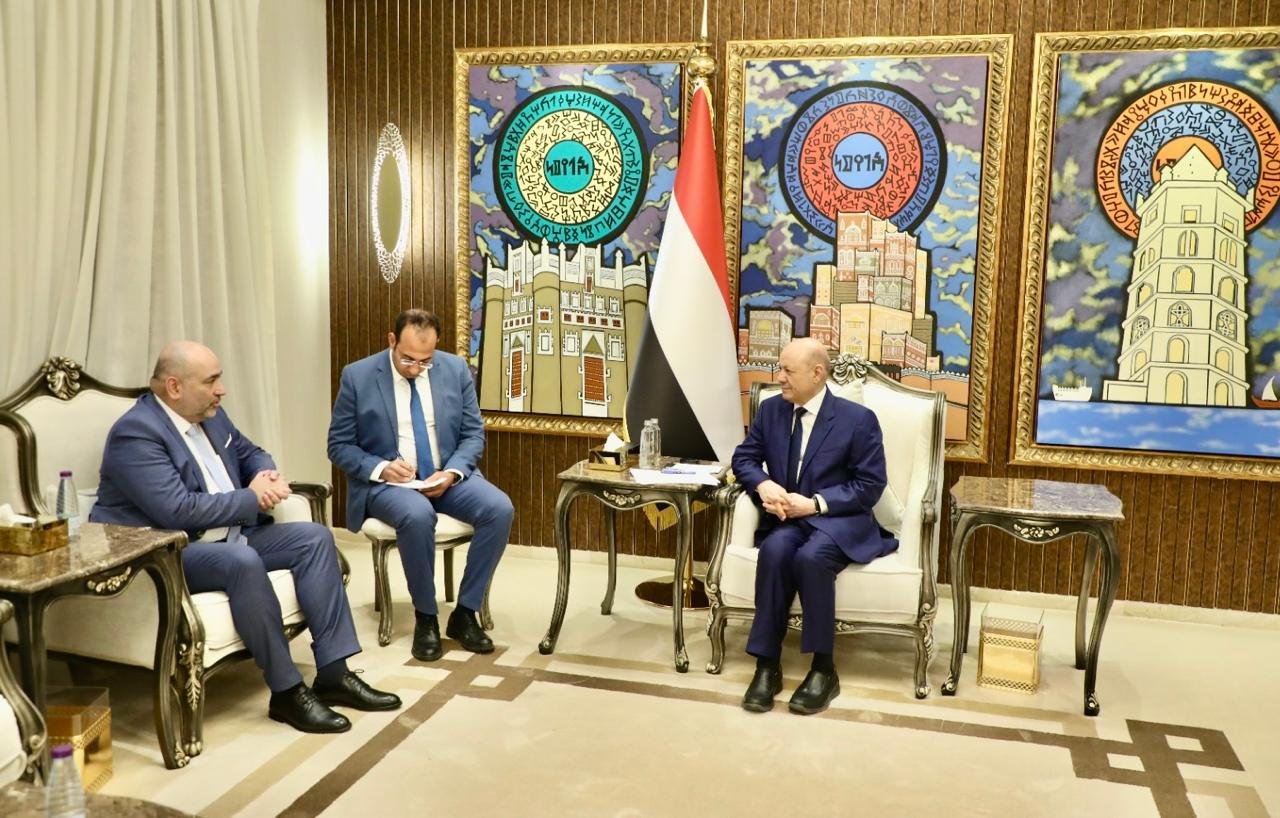
- President Alimi welcomed Omid Nouripour, Deputy Speaker of the German Bundestag, on Sunday.
- The meeting focused on strengthening Yemen-Germany ties in peace and institutional development.
- Alimi discussed Yemen's economic reforms and sought increased German support for humanitarian efforts.
- He addressed the Houthi challenge and emphasized the need for a fair political landscape.
President Alimi Welcomes German Deputy Parliament Speaker
On Sunday, President Dr. Rashad Mohammed Alimi, the head of the Presidential Leadership Council, welcomed Omid Nouripour, the Deputy Speaker of the German Bundestag. This meeting underscored the ongoing collaboration between Yemen and Germany, focusing on mutual interests in fostering peace and stability in the region.
Strengthening Diplomatic Relations
During the meeting, President Alimi expressed his gratitude for the Bundestag’s interest in Yemen. He acknowledged Germany’s significant contribution as a European partner in promoting peace, constructing institutions, and safeguarding human rights and freedoms. The President conveyed his hope for enhanced German and European support in Yemen’s forthcoming phases of development, emphasizing the resumption of active German institutional engagement, particularly in humanitarian interventions and development programs. Such initiatives are vital for national and regional security and stability.
Addressing Current Challenges and Future Prospects
President Alimi addressed the ongoing challenges facing Yemen, particularly the misleading narratives propagated by certain platforms regarding the country’s situation. He emphasized that the Yemeni people are confronted with an armed group that has forcibly seized state institutions, undermining national consensus and exposing the country to a broader regional agenda.
The President highlighted that the primary challenge posed by the Houthis revolves around their armed political agenda, which seeks to monopolize power while rejecting the principle of equal citizenship. He noted that regions under militia control have deteriorated into some of the most difficult places to live, particularly for marginalized groups, including minorities, women, journalists, and civil society workers. Alimi stressed that genuine peace in Yemen cannot be achieved by appeasing rebels; rather, it necessitates supporting the national state, protecting diversity, deterring militia influence, and fostering a fair political landscape for all Yemenis.
Additionally, President Alimi discussed the ongoing arrangements concerning the southern issue, reaffirming that a responsible approach to this just cause is fully supported by the state leadership. He emphasized the necessity of a comprehensive southern dialogue that acknowledges political and social diversity, which is currently being organized under the auspices of Saudi Arabia.
The meeting was attended by Dr. Yahya Alshaibi, Director of the Office of the Presidency, and Thomas Schneider, Ambassador of the Federal Republic of Germany. This engagement highlights the commitment of both nations to cultivate a collaborative relationship aimed at achieving stability and peace in Yemen.