Displaced Yemenis Endure Alarming Food Insecurity Amid Ongoing Conflict

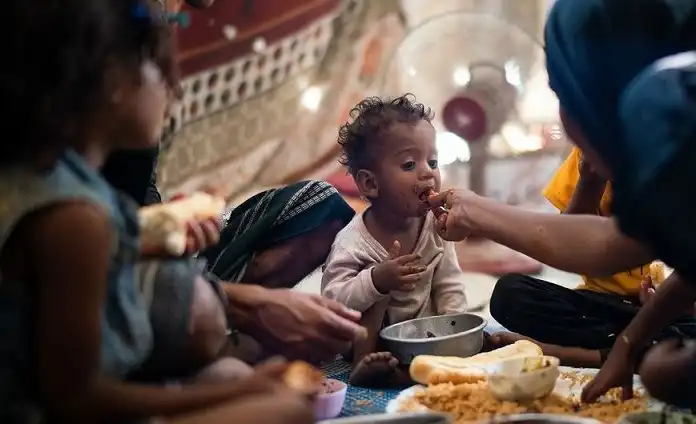
- Approximately 5.2 million internally displaced persons in Yemen face severe food insecurity.
- % of displaced individuals experience moderate to severe hunger, double the general population's rate.
- % of displaced individuals in camps suffer from moderate to severe hunger conditions.
- One-third of displaced individuals live in informal settlements, with 92% unable to afford rent.
Introduction: Dire Situation of Displaced Yemenis
A recent report from the World Food Programme (WFP) has shed light on the alarming circumstances faced by internally displaced persons (IDPs) in Yemen. Approximately 5.2 million individuals fall into this category, making them the most vulnerable group amid the worsening food insecurity crisis. Yemen currently ranks as the fifth largest internal displacement crisis globally, reflecting the urgent need for humanitarian intervention.
Food Insecurity: A Growing Concern
The WFP report reveals that while remote monitoring data from March 2026 indicated a temporary improvement in food security among displaced individuals during Ramadan, significant disparities persist. Food consumption gaps for IDPs are markedly worse than those experienced by the general population. Notably, 39% of displaced individuals suffer from moderate to severe hunger, a figure that is double the 19% reported among the general population. In regions controlled by the Houthis, this percentage increases to 41%, while it stands at 35% in areas governed by the legitimate government.
Harsh Living Conditions in Displacement Camps
The report emphasizes the critical living conditions within displacement camps, where 50% of residents experience moderate to severe hunger, compared to 34% among those living in local communities. Alarmingly, 17% of displaced families report that at least one member goes an entire day and night without food—more than double the rate of the general population at 7%. This figure escalates to 23% within the camps, illustrating the severe challenges faced by these individuals.
Desperate Measures to Combat Hunger
In response to food shortages, 54% of displaced individuals resorted to extreme food coping strategies in March 2026, marking a 12-point increase since the beginning of the year. In contrast, only 34% of the general population adopted similar measures. Furthermore, 73% of displaced individuals relied on crisis or emergency livelihood strategies to meet their basic needs, compared to 60% among the general population. This situation is even more pronounced in camps, where 81% resort to such strategies.
Living Conditions: A Struggle for Survival
The report also highlights the precarious living conditions of displaced individuals, with one-third residing in informal displacement sites that serve as their last refuge. Alarmingly, 92% of these individuals cannot afford rent and face the looming threat of eviction. These factors contribute to a growing humanitarian crisis, necessitating immediate attention and support from the international community.
For more information, visit the original post on Yemen TV.