The Head of the Presidential Leadership Council stated that peace in Yemen begins with ending the Iranian regime’s agenda and restoring national institutions.

President Alimi Meets UN Special Envoy to Discuss Yemen’s Peace Efforts
On Tuesday, President Dr. Rashad Mohammed Alimi, head of the Presidential Leadership Council, welcomed Hans Grundberg, the United Nations Special Envoy to Yemen. This meeting aimed to address ongoing peace initiatives and the recent developments in the region.
Condolences and Support for Yemen
At the beginning of the meeting, Grundberg expressed his heartfelt condolences to President Alimi for the passing of former President Abdrabbuh Mansur Hadi. He conveyed his wishes for security, stability, and peace for Yemen and its people.
Update on Peace Initiatives
President Alimi listened attentively as Grundberg provided an update on his recent communications. The discussion focused on efforts to implement an agreement to release 1,750 detainees. Additionally, they reviewed coordinated efforts with the international community to revive the peace process, which the Iran-backed Houthi militia has undermined.
Acknowledging Collaborative Efforts
President Alimi expressed his appreciation for the efforts of the UN envoy’s office and regional and international partners, particularly Saudi Arabia, Oman, and the International Committee of the Red Cross. He described the detainee release agreement as a significant humanitarian step that restores hope to thousands of Yemeni families. He emphasized the need to build on this achievement and prevent any delays or obstacles from the Houthis that could undermine its humanitarian essence.
Regional Developments and Houthi Allegiances
The President addressed recent regional developments, particularly the Houthis’ announcement of their commitment to defend the Iranian regime and its militias. He highlighted their alignment with Tehran’s destructive agenda, using Yemen as a platform for questionable interests that do not serve the Yemeni people.
Understanding the Crisis
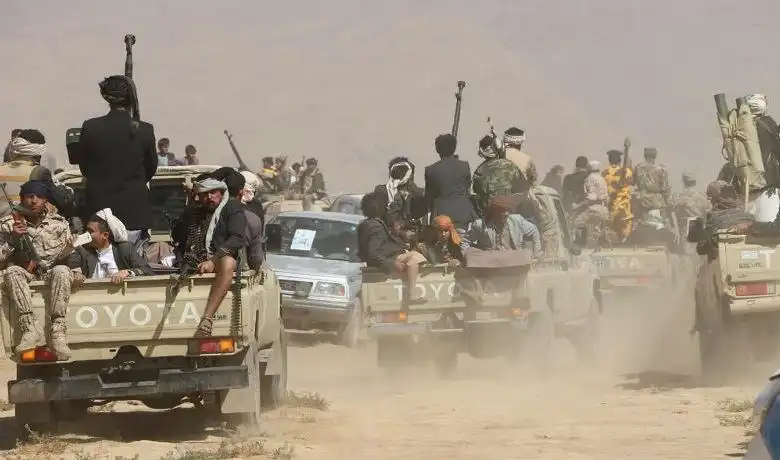
President Alimi stressed the importance of the international community recognizing that the crisis in Yemen is not merely a political dispute. Instead, it involves an armed group challenging the state’s authority, linked to a cross-border regional project managed by the Iranian Revolutionary Guard’s operations room.
Commitment to Sustainable Peace
The President reaffirmed the Council’s and the government’s commitment to a sustainable peace approach based on agreed-upon references, particularly UN Resolution 2216. He emphasized that addressing the root causes of the conflict is crucial, rather than merely establishing a ceasefire that could lead to a more complex resurgence of violence.
Restoring National Institutions
Alimi asserted that sustainable peace cannot be achieved through power-sharing between the state and the militia. Instead, it requires the restoration of national institutions’ exclusive powers, the rule of law, justice, and respect for rights and freedoms.
Ongoing Violations by Houthi Militias
While the Iranian regime speaks of de-escalation, Alimi noted that its militias in Yemen continue to engage in arbitrary arrests, forced disappearances, recruitment, and violations of public freedoms. He condemned ongoing assassinations, targeting of opponents, and suppression of civil society. He insisted that these violations must remain a central focus in UN reports, as they significantly hinder peace efforts in Yemen and the region.
Local Developments and Government Initiatives
The President also discussed local developments and the government’s efforts to normalize conditions while addressing current challenges. He highlighted the ongoing comprehensive financial, administrative, and institutional reforms.
Call for Enhanced UN Support
Alimi expressed his hope for a more effective role for the United Nations in rallying international support for these reforms. He urged the UN to protect the fundamental references for a comprehensive solution and to prevent any humanitarian agreements from being exploited for political or military gains. He also emphasized the need to address the increasing interconnection between the Yemeni issue and regional developments as a key factor in future peace approaches.
Warning Against Delays
Finally, President Alimi warned that each day of delay in restoring state institutions increases the risk of Yemen becoming a permanent platform for regional conflicts, threatening international navigation and collective security. He called for greater clarity in defining the problem, a firmer approach to its causes, and sustained support for the Yemeni state as the sole guarantor of security and stability.
The meeting underscored the urgent need for collaborative efforts to achieve lasting peace in Yemen, emphasizing the importance of addressing both local and regional challenges.
To follow the news in Arabic