A laser innovation transforms plastic into nanodiamond crystals.

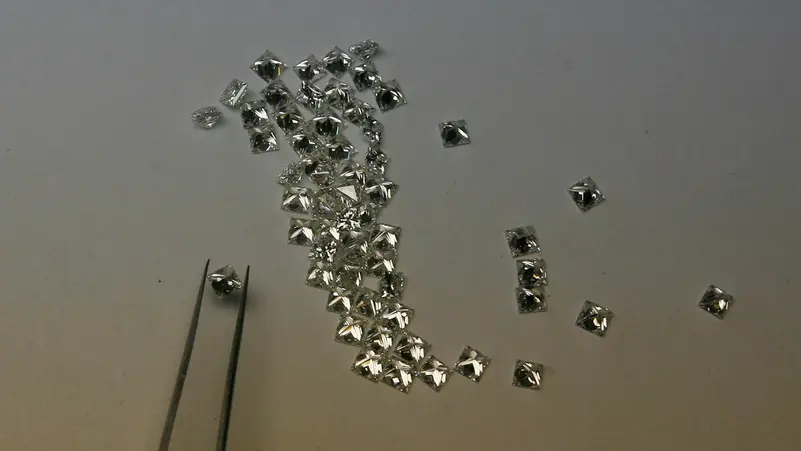
- German researchers convert plastic into billions of nanodiamond crystals using high-energy lasers.
- The nanodiamonds produced have an average diameter of three nanometers and high purity.
- Each laser pulse generates approximately 10 trillion nanodiamond crystals from plastic films.
- Future applications include quantum sensors, medical imaging, and enhanced chemical reaction efficiency.
German Researchers Transform Plastic into Nanodiamond Crystals
German researchers have successfully converted ordinary plastic into billions of nanodiamond crystals using high-energy laser beams. This scientific achievement opens new avenues for the use of nanodiamonds in medicine, advanced technologies, and energy applications.
Breakthrough at Helmholtz Center and University of Rostock
A team from the Helmholtz Center Dresden-Rossendorf and the University of Rostock managed to recover intact diamond crystals after producing them under extreme pressure and temperature conditions. This success demonstrates the crystals’ ability to withstand and transition to normal conditions without damage.
Characteristics of the Nanodiamonds
Researchers noted that the average diameter of the recovered particles measured only three nanometers, with each containing approximately three thousand carbon atoms. The new technique offers a high degree of purity and uniformity in size compared to traditional production methods.
The Laser Process
The process involves directing ultra-high-energy laser pulses onto plastic films made from PET. This action generates shock waves that convert the carbon present in the plastic into nanodiamonds, which then travel at speeds exceeding ten kilometers per second.
Production Potential
Each laser pulse produces around 10 trillion nanodiamond crystals, with the potential for increased production in the future through more advanced and efficient laser technologies.
Future Applications and Research Plans
Scientists believe these nanocrystals could contribute to the development of highly precise quantum sensors, enhance medical imaging materials, and improve the efficiency of chemical reactions used in energy and environmental fields. The research team also plans to conduct new experiments to produce ultra-hard carbon materials using higher pressures, which may lead to the discovery of materials that surpass the properties of traditional diamonds.
To follow the news in Arabic