Human brain cells guide a robotic dog in a pioneering experiment for biological computing.

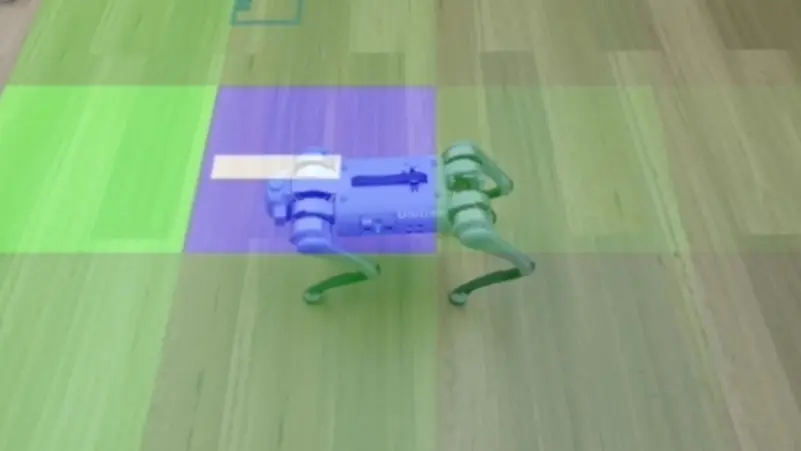
- Researchers Develop Biological Computing System Using Human Neurons Researchers at the Australian company Cortical Labs have successfully developed a biological computing system that utilizes human neurons grown in the lab.
- These electrodes facilitate bidirectional signal exchange, enabling the neurons to process information and send control commands to the robot's movements.
- Current Development Stage The research team noted that the experiment remains in its early stages.
- Potential of Living Neurons The researchers explained that living neurons possess significant potential in learning, adaptation, and decision-making.
Researchers Develop Biological Computing System Using Human Neurons
Researchers at the Australian company Cortical Labs have successfully developed a biological computing system that utilizes human neurons grown in the lab. This innovative system can direct a robotic dog towards specific targets, marking a significant advancement in the integration of biological systems and robotics.
Experiment Overview
The experiment involved cultivating human neurons on an electronic chip equipped with electrodes. These electrodes facilitate bidirectional signal exchange, enabling the neurons to process information and send control commands to the robot’s movements.
Future Implications
The researchers assert that this technology could pave the way for the development of more energy-efficient robots and intelligent systems. These systems may adapt better to changing environments compared to traditional computing systems.
Current Development Stage
The research team noted that the experiment remains in its early stages. The current technology requires further development before it can be applied in large-scale practical applications. However, it opens promising avenues for biological computing and autonomous systems.
Potential of Living Neurons
The researchers explained that living neurons possess significant potential in learning, adaptation, and decision-making. This capability could contribute to the future development of a new generation of robots capable of operating efficiently in complex and hazardous environments.
Ongoing Research
This experiment is part of a series of studies aimed at exploring the use of human neurons as a foundation for advanced computing systems. These systems are characterized by learning and adaptation capabilities that mimic the functioning of the human brain.
To follow the news in Arabic