The National Emergency Committee discusses the health emergency response plan.

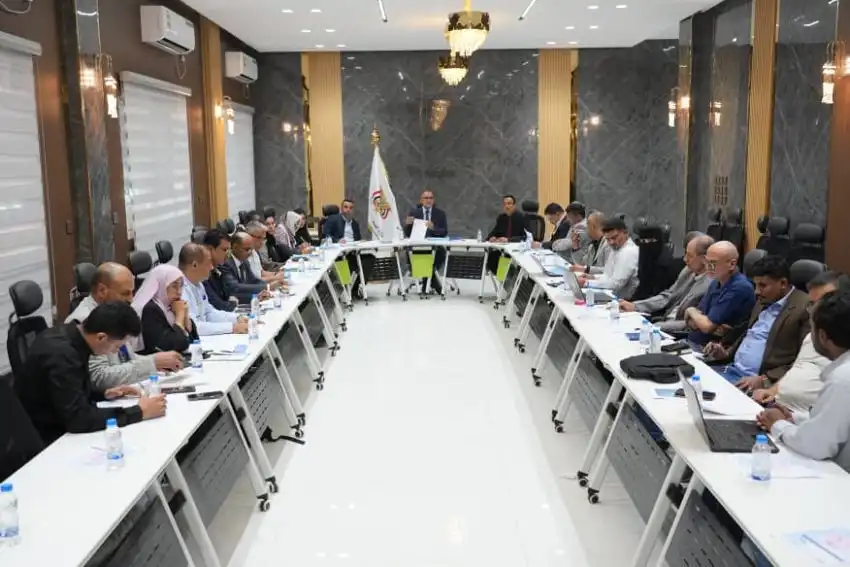
- National Committee Discusses Health Emergency Response Plan The National Committee for Coordinating Health Emergency Response, led by Minister of Public Health and Population Dr.
- He noted that the worsening military and humanitarian conditions increase pressure on health institutions and their staff.
- Shared Responsibility in Health Emergency Response The Minister pointed out that addressing health emergencies is a shared responsibility.
- It also focused on activating monitoring mechanisms and defining responsibilities and priorities to support the implementation of required interventions and improve readiness for health emergencies.
National Committee Discusses Health Emergency Response Plan
The National Committee for Coordinating Health Emergency Response, led by Minister of Public Health and Population Dr. Qassem Bahibeh, convened today in the temporary capital of Aden. The committee addressed the repercussions of the Houthi escalation on the health and humanitarian situation, as well as the readiness of the health sector to respond to emergencies and the challenges hindering the continuity of medical services.
Health Sector Faces Significant Challenges
Minister Bahibeh emphasized that the health sector suffers greatly from the impacts of military escalation. This sector directly affects citizens’ lives and requires a continuous supply of medications, medical supplies, qualified personnel, and operational capabilities to ensure the ongoing provision of health services.
He noted that the worsening military and humanitarian conditions increase pressure on health institutions and their staff. Limited resources and rising needs exacerbate these challenges. Therefore, he stressed the importance of taking possible measures and actions without waiting for complete resources to implement necessary interventions. This approach aims to maintain a minimum level of readiness in health facilities to continue providing essential services and mitigate the health and humanitarian consequences of the current situation.
Shared Responsibility in Health Emergency Response
The Minister pointed out that addressing health emergencies is a shared responsibility. Each ministry and relevant entity must fulfill its role according to its competencies. Coordinated efforts and interventions will enhance the effectiveness of multi-sectoral responses, helping to overcome current difficulties and optimize the use of available resources.
Recommendations and Action Items
The meeting resulted in several recommendations and assignments aimed at strengthening coordination among relevant entities. It also focused on activating monitoring mechanisms and defining responsibilities and priorities to support the implementation of required interventions and improve readiness for health emergencies.
Discussion on Current Health and Epidemiological Situation
The meeting, which included several undersecretaries from related ministries and representatives from international organizations, discussed updates on the health and epidemiological situation. Participants reviewed necessary interventions to enhance health responses for displaced persons and preparations for a measles vaccination campaign. These efforts aim to reduce the risk of disease outbreaks and protect the most vulnerable populations.
Additionally, the meeting addressed the responsibilities of ministries and committee member entities, along with mechanisms to enhance their contributions to multi-sectoral health responses and the national health emergency response plan.
To follow the news in Arabic