The permanent representative of Yemen to the European headquarters: Security and stability in the Red Sea start with restoring Yemen’s state institutions.

- Dr. Ali Majour emphasizes restoring Yemen's state institutions for Red Sea security.
- Yemeni crisis must not be reduced to temporary maritime disruptions, warns Ambassador Majour.
- Ambassador highlights military threats from Houthi escalation towards key maritime regions.
- Urgent humanitarian response needed for civilians affected by Houthi shelling in coastal areas.
Yemen’s Permanent Representative Emphasizes Security in the Red Sea
Dr. Ali Majour, Yemen’s Permanent Representative to the European United Nations and international organizations in Geneva, stated that the security and stability of the Red Sea begin and end with the restoration of Yemen’s state institutions and the full exercise of its sovereignty. He emphasized that any arrangements that overlook this reality will remain inadequate and unsustainable solutions.
Yemen’s Crisis: More Than Just Maritime Disruption
In his address at the high-level Geneva Dialogue on Security Engineering for Peace in the Middle East and North Africa (GAPS MENA) held in Geneva, Ambassador Majour explained that reducing the Yemeni crisis to a mere “transitory maritime disruption” and relying on temporary solutions and fragile agreements has not brought any stability. Instead, these approaches have allowed the Houthi terrorist militias to enhance their military arsenal and extend their threats to global shipping and supply chains.
Warning of Escalating Military Threats
Ambassador Majour warned about the dangerous developments on the ground in Yemen, particularly the military escalation by Houthi militias towards the port of Al-Mokha, the Bab al-Mandab Strait, and the island of Meyun. He noted that these movements fall within a regional plan driven by Tehran to tighten pressure on both the Strait of Hormuz and Bab al-Mandab.
Rising Security Threats from Militia Coordination
He highlighted the growing security threat resulting from the coordination and transfer of weapons between Houthi militias and the Somali terrorist group Al-Shabaab, which is linked to Al-Qaeda. This cooperation poses a direct threat to the stability of the Gulf of Aden and the southern Red Sea.
Strategic Pillars to Counter Escalation
The Permanent Representative of Yemen stressed three strategic pillars to counter this escalation. First, he called for the international community to move beyond verbal expressions of concern and condemnation to establish a tangible security and military partnership on the ground. He reaffirmed that “there is no alternative to state sovereignty.”
Sustainable Solutions for Maritime Security
Ambassador Majour explained that international naval patrols and the interception of missiles and drones at sea remain temporary and costly solutions. He argued that the sustainable solution lies in the comprehensive empowerment of Yemen’s Coast Guard and Navy to enforce control, secure coastlines and ports, and combat smuggling networks.
Urgent Humanitarian Response Needed
He urged for an immediate humanitarian response to assist tens of thousands of civilians and displaced individuals affected by recent Houthi shelling on villages and camps in the coastal areas, Taiz, and Marib.
Attendance at the Session
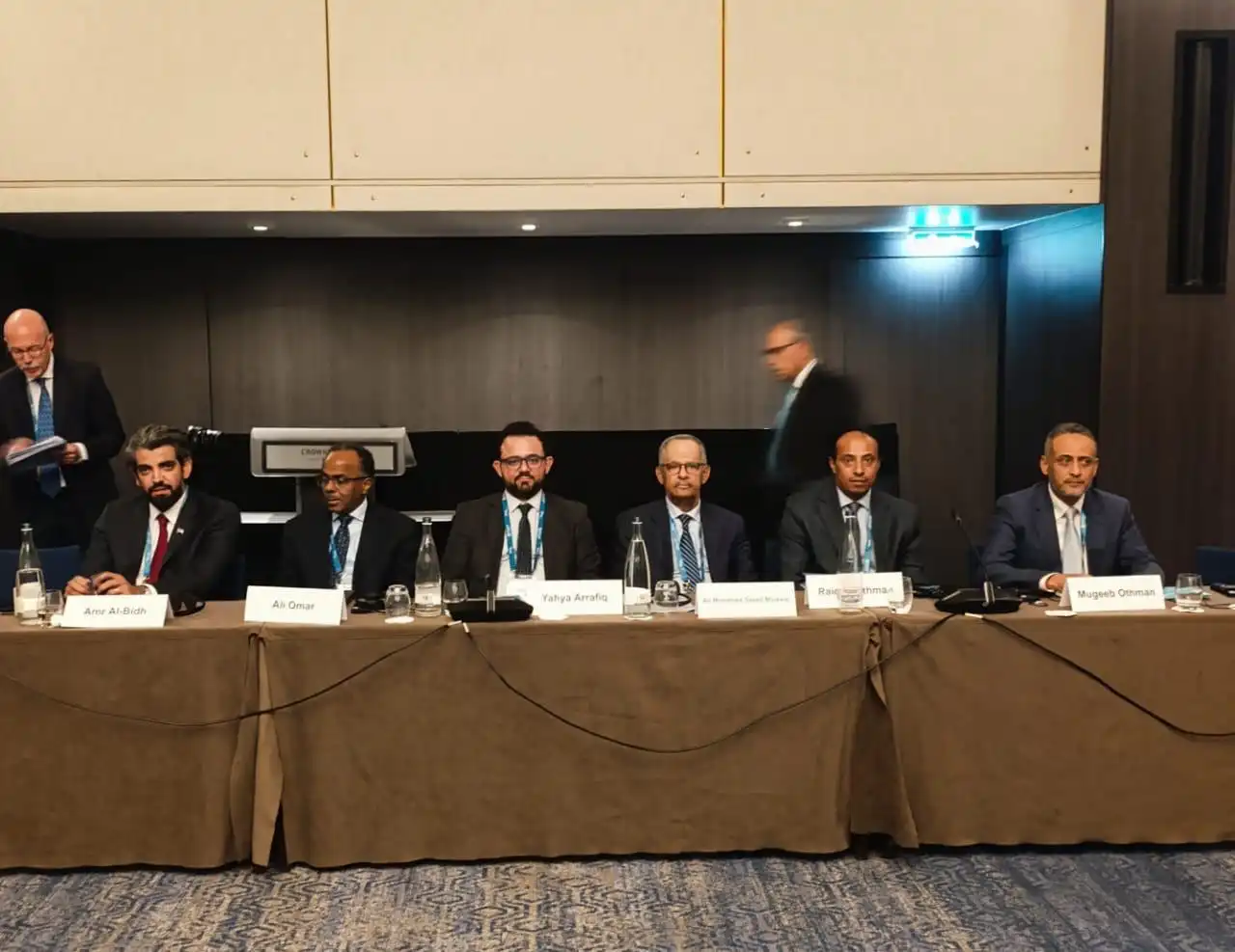
The session was attended by the Ministerial Advisor, Ambassador Mujib Othman, and members of Yemen’s Permanent Mission in Geneva, including Advisor Raidan Othman and First Secretary Yahya Al-Rafiq.
To follow the news in Arabic