The Import Regulation and Financing Committee has decided to prohibit the entry and trade of Iranian goods.

- The National Committee for Import Regulation prohibits the entry of Iranian goods.
- Authorities have been directed to implement the ban in accordance with laws.
- The committee reviewed import financing requests exceeding five billion US dollars this year.
- Temporary measures were approved to assist importers with tax and commercial document renewals.
National Committee for Import Regulation and Financing Bans Iranian Goods
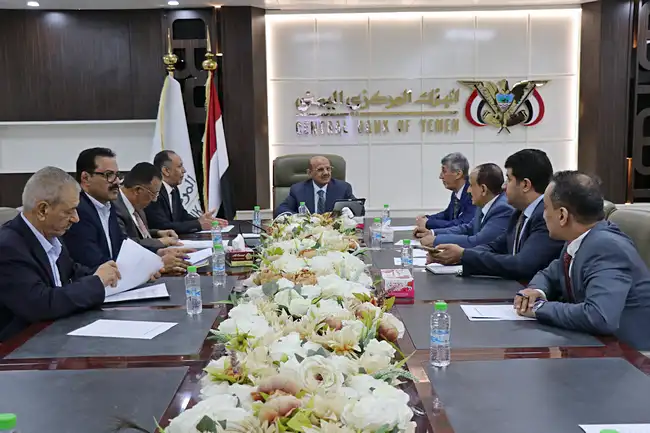
The National Committee for Import Regulation and Financing convened today, Sunday, under the leadership of Ahmed Ghaleb, the Governor of the Central Bank of Yemen and the committee’s chair. The committee decided to prohibit the entry and circulation of Iranian goods and products of all types, citing the necessity of national interests.
Implementation of the Ban
The committee directed relevant authorities to take necessary actions to implement the decision, with each entity responsible for its respective duties, in accordance with existing laws and regulations.
Review of Import Financing Requests
During the meeting, which included Minister of Industry and Trade, Mohammed Al-Ashwal, the committee’s vice-chair, and representatives from various governmental and non-governmental entities, members reviewed reports from the executive team. These reports detailed the progress of the committee’s work and the mechanisms for processing import financing requests through the banking sector. The reports indicated that the total value of import requests handled since the beginning of the year exceeded five billion US dollars, primarily consisting of essential and vital goods, including food, medicine, fuel, and production inputs. This aims to ensure a smooth flow of goods to markets and meet the needs of citizens and various economic sectors.
Customs Operations Report
The meeting also heard a detailed report from the Head of the Customs Authority regarding the workflow and performance levels at various land and sea ports, along with the challenges facing customs operations. The committee discussed the observations included in the report and made several decisions and measures aimed at addressing discrepancies, facilitating procedures, and enhancing operational efficiency at the ports.
Temporary Solutions for Importers
The committee approved several temporary measures allowing importers to complete and renew their tax documents and commercial records, following the established controls and procedures. This decision reflects a commitment to avoid disrupting commercial activities and ensure the continuity of import operations, balancing legal compliance with ongoing business activities.
Addressing Concerns from the Business Community
The meeting also addressed topics and concerns raised by representatives from the Chamber of Commerce and Industry and the Yemeni Banks Association, related to import processes, financing, and associated procedures. The committee took necessary actions to address these issues, contributing to overcoming challenges, improving work mechanisms, and enhancing coordination between governmental entities and the commercial and banking sectors.
To follow the news in Arabic