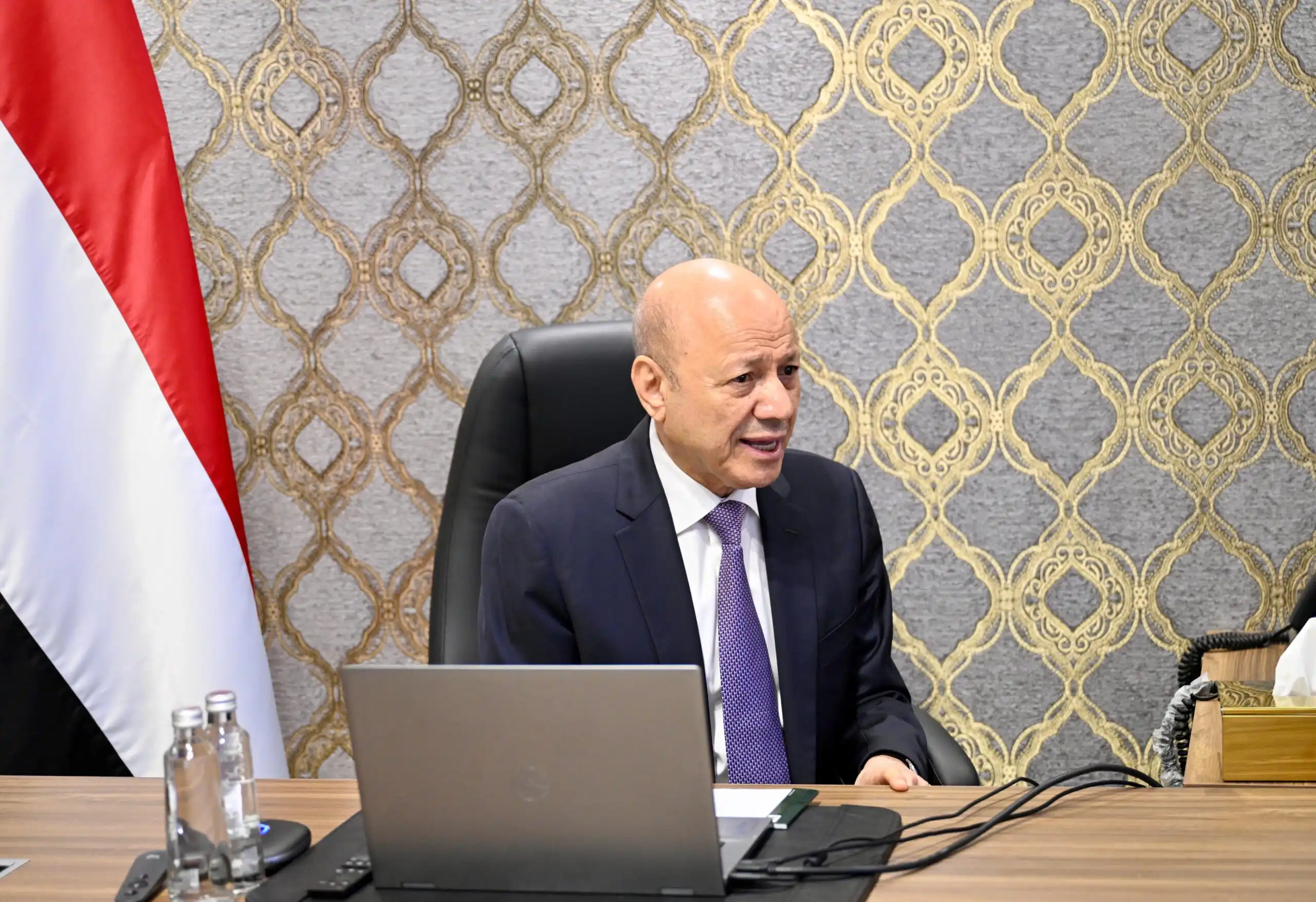
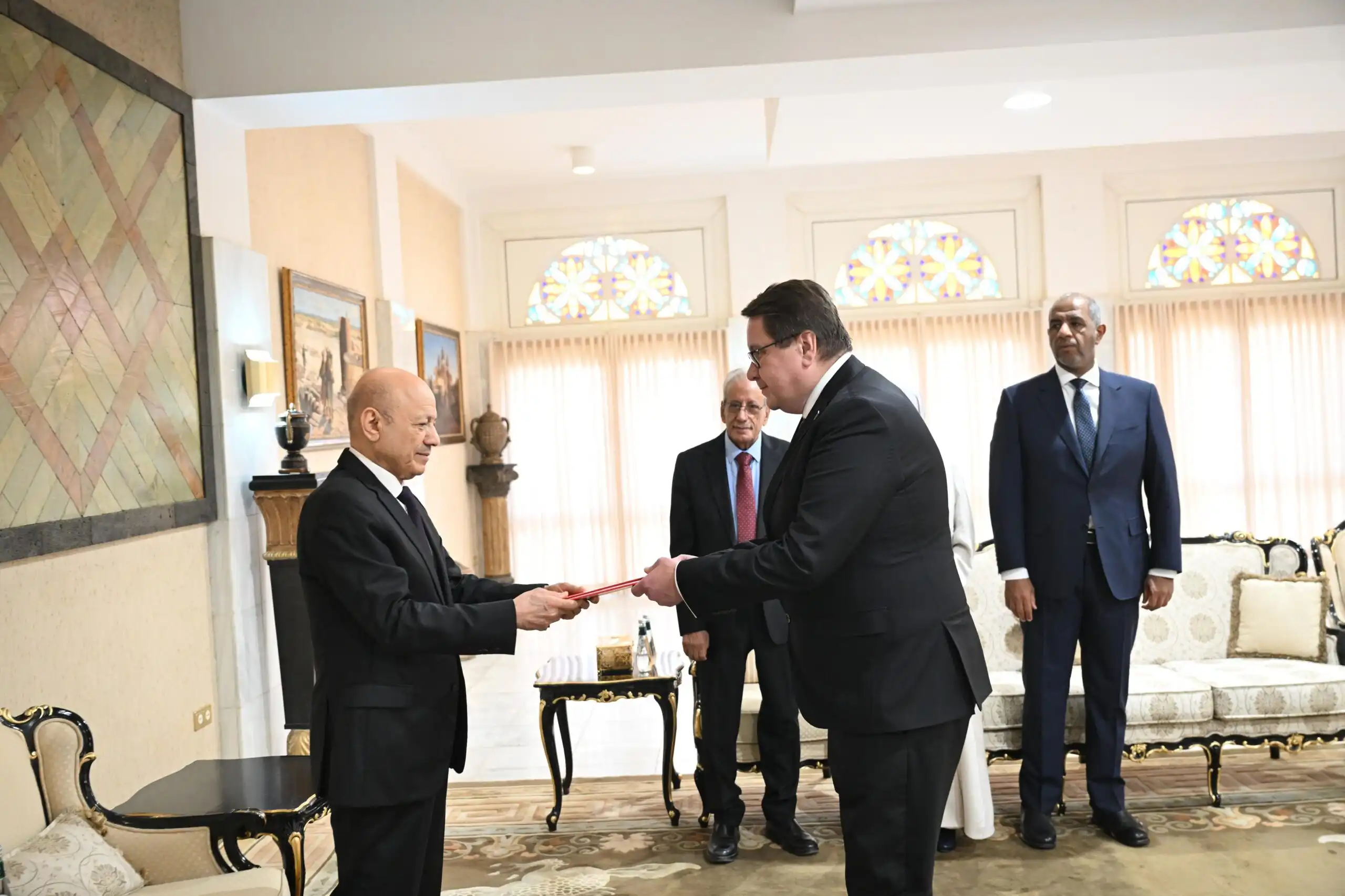
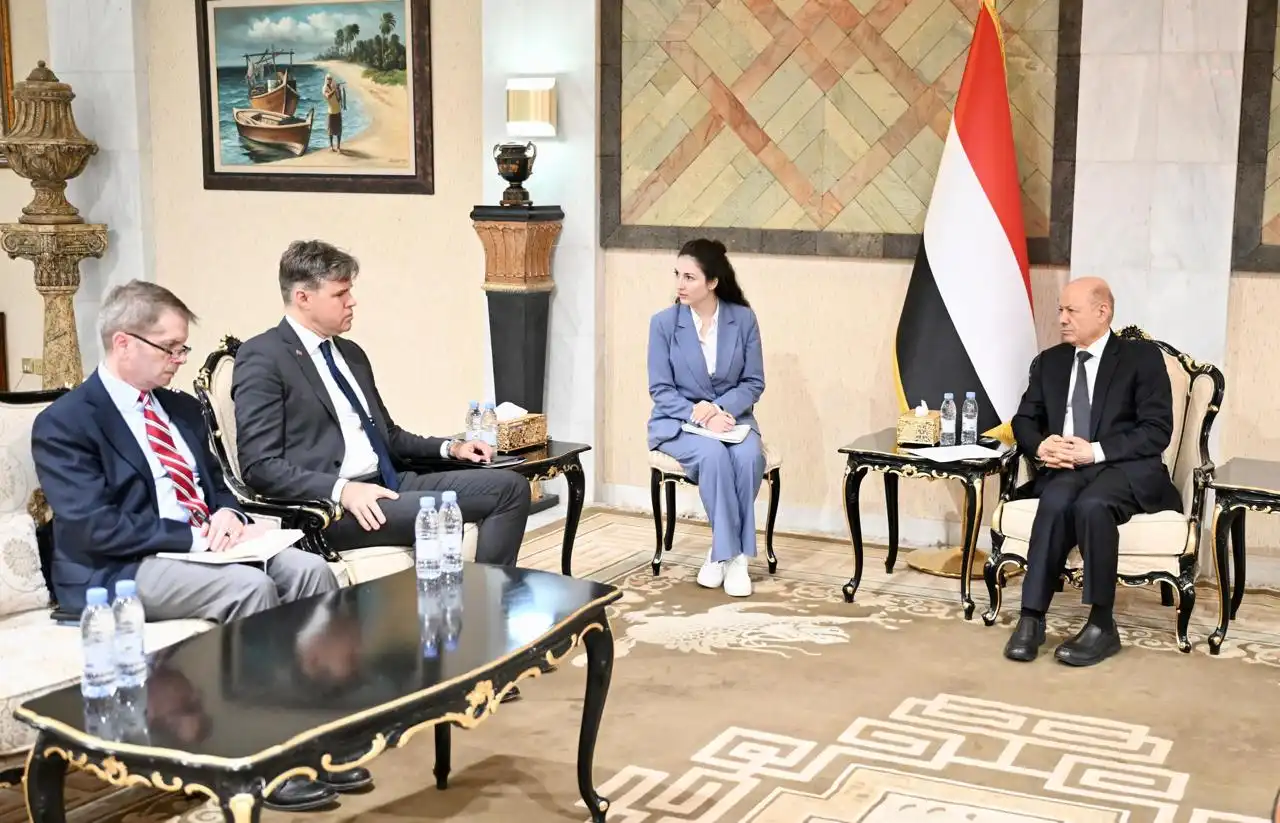
The Chairman of the Presidential Leadership Council stated that the Houthi militias chose war and must bear the consequences.

- President Alimi calls for international reassessment of the Yemen crisis approach.
- Escalation of violence is a recurring behavior of Houthi militias, says Alimi.
- Continued leniency towards militia violations could lead to humanitarian disasters, warns Alimi.
- Alimi emphasizes the need to hold militias accountable under international law.
President Alimi Calls for International Reevaluation of Yemen Crisis Approach
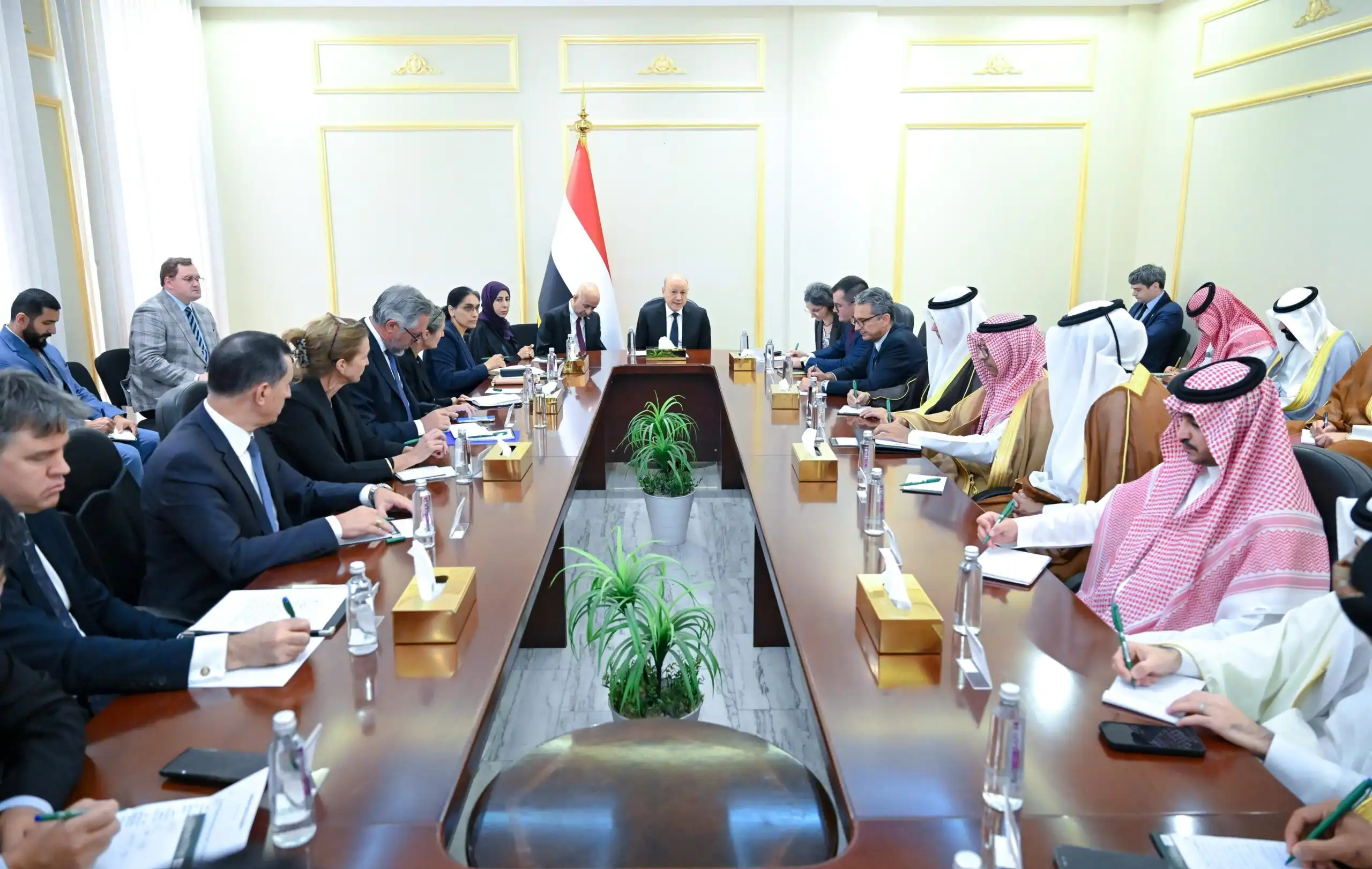
In a recent meeting with ambassadors from countries supporting the political process in Yemen, President Rashad Mohammed Alimi emphasized the need for the international community to reassess its approach to the Yemeni crisis. He criticized past strategies that merely contained escalations without addressing the root causes of the conflict. Alimi stated that experiences have shown that ceasefires lacking enforceable commitments often lead to renewed hostilities.
Escalation as a Pattern of Behavior
During the meeting, which included Foreign Minister Afrah Al-Zuba, President Alimi highlighted that the escalation of violence is a recurring behavior of rogue militias. He noted that these groups perceive peace as a sign of weakness. The president stressed that calls for de-escalation should not equate the aggressor with those defending their citizens. He firmly stated that the state should not be expected to refrain from fulfilling its duties while militias continue to use force to impose their will.
Consequences of Inaction
President Alimi reiterated the government’s warnings that continued leniency towards militia violations would lead to a new cycle of war, displacement, and humanitarian disasters. He clarified that the government did not initiate this escalation and that the Houthi militias chose to intensify their attacks, thus bearing responsibility for the resulting humanitarian and security consequences.
International Responsibility
The president urged the international community to clearly identify the initiators of the escalation and hold the militias accountable for their actions. He called for support for the Yemeni state’s right to protect its citizens and sovereignty under international law. Alimi emphasized that the international community should not fight on behalf of Yemenis but should implement its resolutions and support the Yemeni government’s efforts to restore its institutions and control over arms.
Importance of Security Council Resolutions
Alimi asserted that the implementation of relevant United Nations Security Council resolutions, particularly Resolutions 2140, 2216, and 2722, is not merely a Yemeni demand but a commitment that should be effectively realized. He presented the ambassadors with an overview of the national situation, highlighting the Houthi militia’s escalation of terrorist attacks, which have extended beyond Yemen to target the Kingdom of Saudi Arabia.
Iranian Influence and Regional Security
The president pointed out that the current escalation reflects the militia’s alignment with Iranian agendas, which include unauthorized flights to Sanaa. He described this as part of a broader strategy aimed at controlling the Bab el-Mandeb Strait and using international navigation as leverage in negotiations with their supporters.
Humanitarian Impact of Houthi Attacks
Alimi noted that the recent Houthi escalation has forced thousands of civilians back into displacement after years of relative calm. The militia’s horrific attacks on residential areas and displacement camps in Marib, as well as populated regions and civilian facilities in Taiz, Hodeidah, and other provinces, have exacerbated the humanitarian crisis.
Commitment to Civilian Protection
The president reaffirmed that protecting civilians remains a core responsibility of the state. He stated that the armed forces and government military formations are committed to international humanitarian law, rules of engagement, and the protection of civilian objects. He emphasized that the conflict is not with the residents of militia-controlled areas but with an armed project that undermines the state and deprives Yemenis of their rights to peace, freedom, and normal life.
Support from Saudi Arabia
President Alimi praised the continuous and generous support from the Kingdom of Saudi Arabia, highlighting its crucial role in stabilizing Yemen’s economy and finances, paying salaries, improving services, and supporting reform and recovery programs. He reiterated the government’s commitment to maximizing the impact of this support while pursuing reforms, combating corruption, and enhancing transparency.
Shared Security Interests
Alimi concluded by stating that the security of Yemen is interconnected with the security of Saudi Arabia and neighboring countries. He warned that using Yemeni territory to threaten regional and international interests would undermine any serious opportunity for peace.
International Condemnation of Houthi Actions
In response to the escalating violence, the ambassadors of the supporting countries condemned the Houthi attacks targeting Yemen and Saudi Arabia, including energy sources and civilian infrastructure. They recognized these actions as serious threats to the security and stability of Yemen and the region, increasing the risk of conflict escalation and disrupting global energy supplies and trade.
The ambassadors reaffirmed their countries’ support for the Presidential Leadership Council and the Yemeni government, emphasizing Yemen’s right to protect its territory and citizens in accordance with international law and humanitarian principles.
To follow the news in Arabic