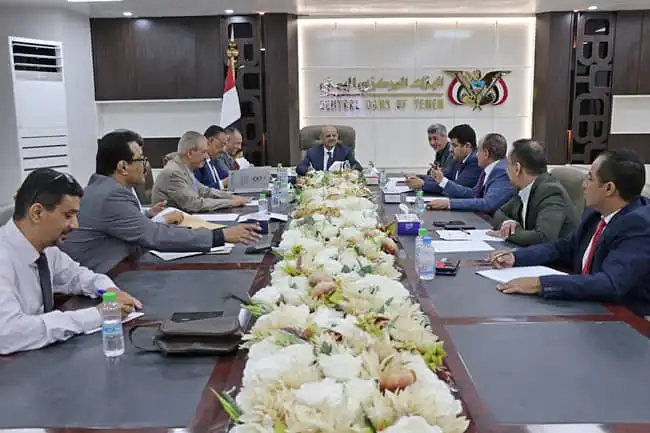
The Import Regulation and Financing Committee discusses enhancing its regulatory frameworks and technical unit operations.

National Committee Discusses Import Regulation and Financing Improvements
The National Committee for Organizing and Financing Imports convened today in Aden, the temporary capital of Yemen. The meeting, led by Ahmed Ghaleb, Governor of the Central Bank of Yemen, focused on enhancing the regulatory frameworks governing the committee and its technical unit.
Importance of Policy Review
During the meeting, which included Minister of Industry and Trade, Mohammed Al-Ashwal, and representatives from relevant government agencies, attendees emphasized the need to review various policies and procedures related to import regulation and financing. This review aims to improve institutional performance and enhance governance and transparency in managing foreign trade operations.
Progress Reports and Challenges
The committee reviewed a report from the executive team detailing the progress made in recent months. Additionally, the Customs Authority presented an update on operations at customs points, highlighting advancements in implementing organized import and financing procedures.
Addressing Importer Challenges
The meeting also addressed several topics related to facilitating the entry of goods and equipment necessary for production and service sectors. Participants discussed solutions to regulatory challenges faced by importers and the organization of commercial documents and records. These discussions align with national laws and international best practices.
Enhancing Executive Team Efficiency
The committee explored ways to boost the efficiency of the executive team and improve its performance. Ensuring the continuity of task execution and enhancing monitoring and implementation will help achieve the committee’s goals in regulating and financing imports.
Commitment to National Interests
The committee reiterated the importance of adhering to the regulations governing import financing and organization. These measures serve as a national interest, protecting the economy and strengthening the financial and commercial system. They also aim to mitigate risks associated with foreign trade, safeguarding importers and stakeholders from potential legal or financial repercussions.
A Collective Responsibility
The committee stressed that the success of the import regulation and financing system is a shared national responsibility. It requires the collaborative efforts of all state institutions and the private sector. This cooperation will enhance the country’s economic security, protect the financial and commercial system, and uphold citizens’ interests while ensuring Yemen’s commitment to relevant international standards.
For more information, visit Yemen TV.
To follow the news in Arabic