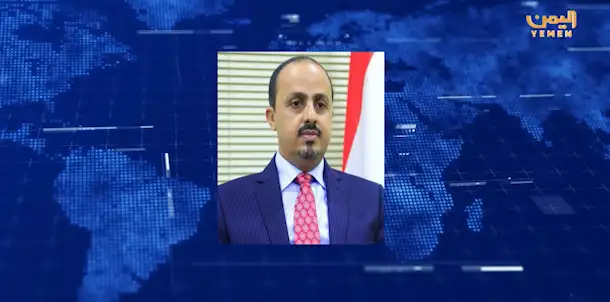
The Minister of Information stated that simultaneous attacks by Iranian proxies reveal the unity of Iranian decision-making and the falsehood of the “siege” narrative.

Iranian-Backed Militias Target Saudi Oil Facilities, Exposing Houthi Claims
Minister of Information Denounces Terrorist Attacks
Minister of Information Muammar Al-Eryani condemned the recent terrorist attacks carried out by Iranian-backed Iraqi militias targeting oil facilities in Saudi Arabia. He stated that these actions undermine the Houthi militia’s claims that their recent escalation relates to a fabricated “siege” or developments concerning Yemen. Instead, Al-Eryani emphasized that the Houthis’ movements align with a broader Iranian agenda that extends beyond Yemen’s borders.
Coordination Between Militias
In a press statement, Al-Eryani highlighted the simultaneous actions of the Houthis and Iranian militias in Iraq. This coordination suggests a unified command and shared objectives, indicating a strategic Iranian plan to shift threats from the Strait of Hormuz to the Red Sea and Bab al-Mandab. Such actions aim to disrupt international shipping and global energy supplies, showcasing systematic coordination among Iran’s military proxies in the region.
A Unified Iranian Strategy
Al-Eryani pointed out that the current events in the region are not isolated incidents in Yemen or Iraq. Instead, they represent synchronized chapters of a unified Iranian strategy. Tehran employs its proxies to establish a new equation that threatens energy security and international navigation whenever it faces political or military pressures. This tactic aims to extort the international community and impose new realities that serve Iran’s interests.
Houthi Actions Serve Iranian Interests
The Minister asserted that the Houthis do not act in defense of Yemen or in response to the suffering of Yemenis, as they claim. Rather, they function as tools within a transnational Iranian network, operating under Tehran’s calculations rather than the interests of the nations they affect. This project seeks to destabilize regional security and threaten global economic interests.
Implications for Global Trade and Security
Al-Eryani warned that the Houthi’s declaration of “siege for siege” represents merely a part of Iran’s broader plan targeting the security of the Red Sea, Bab al-Mandab, and international maritime routes. This strategy aims to disrupt supply chains and increase trade and energy costs. He cautioned that the repercussions of this escalation would extend beyond the region, impacting the global economy and energy security. The world must share the burden of this escalation if it remains unaddressed.
Call for International Action
Al-Eryani stressed that the international community can no longer rely solely on statements of condemnation or expressions of concern. It must take concrete and deterrent actions to halt this escalation, hold Iran and its proxies accountable, and protect maritime routes and energy facilities. He emphasized that any leniency in confronting this project would encourage its expansion, jeopardizing both regional and international security.
Houthi Militia as a Threat
The events have reaffirmed that the Houthi militia is not a Yemeni group acting on national interests. Instead, it serves as an advanced arm of the Iranian Revolutionary Guard, part of a broader network of cross-border militias managed from a single operations room. These militias threaten the security of nations and extort the international community. Their danger increases due to their positioning along one of the world’s most strategic maritime routes and their possession of advanced Iranian weapons, including missiles, drones, and explosive boats.
Conclusion: A Global Responsibility
Al-Eryani concluded that treating the Houthi militia as merely an internal Yemeni issue fails to reflect the true threat they pose. This perspective grants Iran a platform to extort the international community and threaten regional and global security. He underscored the necessity of deterring the Houthis, cutting off their arms and funding sources, and supporting the Yemeni state in restoring its institutions and ending the coup. This effort is no longer just a Yemeni interest; it has become a strategic necessity to protect regional security, ensure maritime safety, and safeguard the global economy from the risks posed by Iran’s transnational project that disregards international law and state sovereignty.
To follow the news in Arabic