EU Designates Iranian Revolutionary Guard as Terrorist Organization
Minister’s Statement on EU Decision
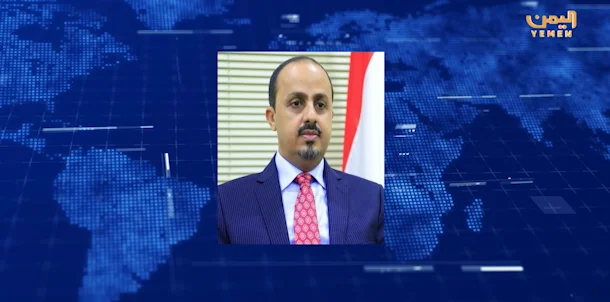
The Minister of Information, Culture, and Tourism in the Yemeni government, Muammar Al-Eryani, praised the European Union’s recent decision to classify the Iranian Revolutionary Guard as a terrorist organization. He described this move as a significant step forward and a clear message that the international community is beginning to address one of the most dangerous sources of instability in the region. This comes after years of overlooking the Guard’s military and security roles that extend beyond national borders.
Importance of the Decision
Al-Eryani emphasized that the value of this decision lies not only in its political symbolism but also in the practical measures that should follow. He called for actions to cut off funding sources, freeze assets, and pursue networks associated with the Revolutionary Guard. Additionally, he stressed the need to sever channels of support, smuggling, and armament.
Iran’s Role in Yemen
The minister highlighted the Revolutionary Guard’s direct and organized involvement in managing the Houthi coup in Yemen. Their intervention has not been limited to supplying the militia with weapons, expertise, and funding. It has also included operational oversight and management of military and security networks in areas under Houthi control. Al-Eryani pointed to the roles played by key figures, such as Hassan Irloo and Abdul-Ridha Shahlaei, as operational tools for the Iranian agenda.
Regional Patterns of Intervention
Al-Eryani noted that the Revolutionary Guard’s blatant intervention in Yemen is not an exception but part of a consistent regional pattern. This pattern involves building armed militias parallel to state structures, fueling conflicts, spreading chaos and terrorism, and using proxies to impose realities through force while extorting the international community.
Consequences for Yemen
He underscored that Yemen and its people have paid a heavy price since the coup. Parts of Yemen have transformed into advanced missile platforms and open laboratories for missiles and drones, targeting neighboring countries and threatening energy security, maritime routes, and international interests. Civilians have borne the brunt of this transformation into a battlefield for Iranian weapons and their proxies.
Call for Further Action
Al-Eryani urged the European Union to build on this decision by classifying the Houthi militia as a terrorist group. He cited their record of targeting commercial vessels, threatening freedom of navigation, and conducting cross-border attacks. These actions meet the criteria for terrorist classification due to their targeting of civilians and organized violence to achieve political goals. He also highlighted the Houthis’ operational and ideological ties to the Iranian Revolutionary Guard.
Conclusion
The EU’s designation of the Iranian Revolutionary Guard as a terrorist organization marks a pivotal moment in addressing regional instability. As Yemen continues to face the repercussions of this intervention, calls for further action against the Houthis emphasize the need for a unified international response to combat terrorism and protect civilian lives.
To follow the news in Arabic