The Military Court in the Third Military Region sentences 535 leaders of the Houthi terrorist group to death.

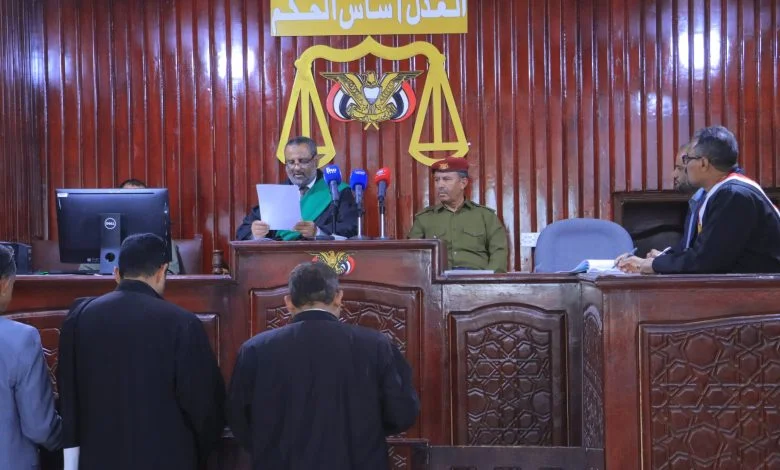
Military Court Sentences 535 Houthi Leaders to Death
On Tuesday, the Military Court of the Third Military Region sentenced 535 leaders of the Houthi terrorist organization to death. This ruling follows their conviction in a serious criminal case related to rebellion, the overthrow of constitutional legitimacy, and espionage for Iran.
Court Proceedings and Findings
The court, presided over by Judge Aqeel Mohammed Mohsen Taj Al-Din, held a public session attended by the Chief Prosecutor of the Third Military Region, Judge Salah Al-Qumairi, as well as lawyers representing the victims and the defendants. The court detailed that the convicted individuals participated in armed rebellion, undermined the sovereignty and unity of the Republic, and joined the Iranian-backed Houthi militia. Their actions included executing a violent coup against the republican system, placing the President and government under house arrest, and disrupting constitutional operations from September 21, 2014, to 2023.
Sentencing and Legal Justifications
The court imposed the death penalty by firing squad on the convicted individuals, along with the confiscation of all their movable and immovable assets. This decision aligns with Islamic law and current legal statutes. The primary defendant, Youssef Hassan Al-Madani, who falsely claimed to be the head of the militia’s General Staff, was found to have participated in a criminal conspiracy aimed at undermining the republican system and harming the country’s military, political, and economic standing in coordination with a foreign state.
Acquittals and Dismissals
In the same ruling, the court acquitted three defendants for their refusal to comply with militia orders and their subsequent enlistment in the legitimate armed forces. Additionally, five other defendants were acquitted due to insufficient evidence, while the court dismissed charges against seven others due to their deaths.
Appeals and Legal Implications
Following the verdict, the prosecution and victims’ representatives announced plans to appeal the second part of the ruling. Defendant number 228, Mohammed Ghaleb Da’a, along with the defendants’ lawyers, also indicated their intention to appeal.
Significance of the Ruling
Judge Salah Al-Qumairi emphasized the ruling’s importance in dismantling the rebellion, which has evolved beyond mere armed conflict. He stated that the law has stripped the rebellion of any political or ideological cover, reclassifying it as a serious criminal act, including war crimes and terrorism.
In a press statement after the session, Al-Qumairi noted that the ruling condemns the Houthi rebellion as a parallel leadership structure attempting to undermine the state from within. He asserted that legally dismantling this structure precedes any military action. The ruling serves as a documented legal narrative that contradicts the militia’s propaganda and provides the Yemeni government and international bodies with a judicial basis for condemning the group.
Restoring Justice and Accountability
Al-Qumairi highlighted that this ruling restores dignity to the victims and challenges the culture of impunity. It establishes an official judicial archive that meticulously documents the group’s responsibility for various crimes and violations, ensuring they face undeniable truths, regardless of how long justice takes.
Furthermore, the ruling strikes at the ideological project of the Houthis, exposing their deep ties to Iran as a partner in their crimes, and revealing their true nature as an Iranian proxy rather than a national project.
This landmark ruling marks a significant step in Yemen’s ongoing struggle for justice and accountability amid the ongoing conflict.
To follow the news in Arabic