Taiz’s Al-Saqr Club management officially takes over club headquarters and stadium.
Al-Saqr Club in Taiz Regains Control of Its Facilities

Historic Handover
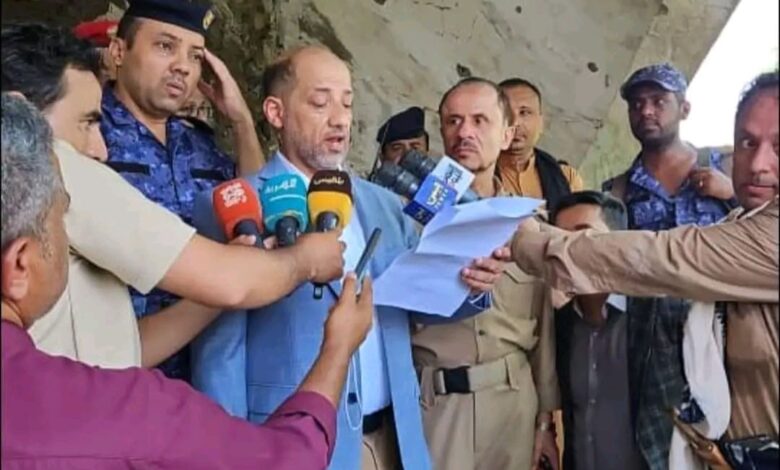
In a significant development for sports and civil institutions in Taiz, the management of Al-Saqr Sports Club officially received the club’s headquarters and stadium back from the emergency police and road security forces today. This move comes following the directives of His Excellency Dr. Rashad Mohammed Al-Alimi, President of the Presidential Leadership Council, during his visit to Taiz, emphasizing the removal of armed appearances from civil institutions, including Al-Saqr Club.
A New Chapter Begins
During the handover ceremony, attended by the head of the committee appointed by the governor of the province, Brigadier Abdu Farhan, Riad Al-Harwi, the Vice President of Al-Saqr Club’s management, expressed his and the entire sports community’s joy in reclaiming the club’s premises. In a press conference, Al-Harwi shared their renewed aspirations, stating, “We return to our club, armed with ambitions and hopes, ready to soar once again with mature visions, fruitful construction projects, and aspirations we aim to achieve through the collaboration of all related entities, including state institutions, organizations, and the private sector.”
Vision for Revival
Al-Harwi outlined the club’s plans to mobilize resources, capabilities, and all means of construction, rehabilitation, and change to ensure a significant resurgence. The project aims not only to improve the club’s infrastructure and facilities but also to enhance all its sports activities and events. “Rebuilding a club devastated by war is not an easy task. It will require considerable time, effort, and financial resources,” Al-Harwi acknowledged, expressing his hope to restore the club’s status across various sports, cultural, and social levels. He appreciated all efforts made towards returning the club to its management, general assembly, fans, and sports teams.
Distinguished Attendance
The handover ceremony saw the presence of several military and security leaders, along with the Director of the Office of Youth and Sports, Fouad Fadel, marking a pivotal moment for Al-Saqr Club and the broader sports community in Taiz.
This event not only signifies a step forward in restoring normalcy and civil governance in areas affected by conflict but also highlights the potential for sports as a unifying and rebuilding force within the community. As Al-Saqr Club embarks on this new journey, its management and supporters are hopeful for a future filled with achievement and success, both on and off the field.
To follow the news in Arabic