The Enduring Legacy of Abdrabbuh Mansur Hadi in Yemen’s Political Evolution

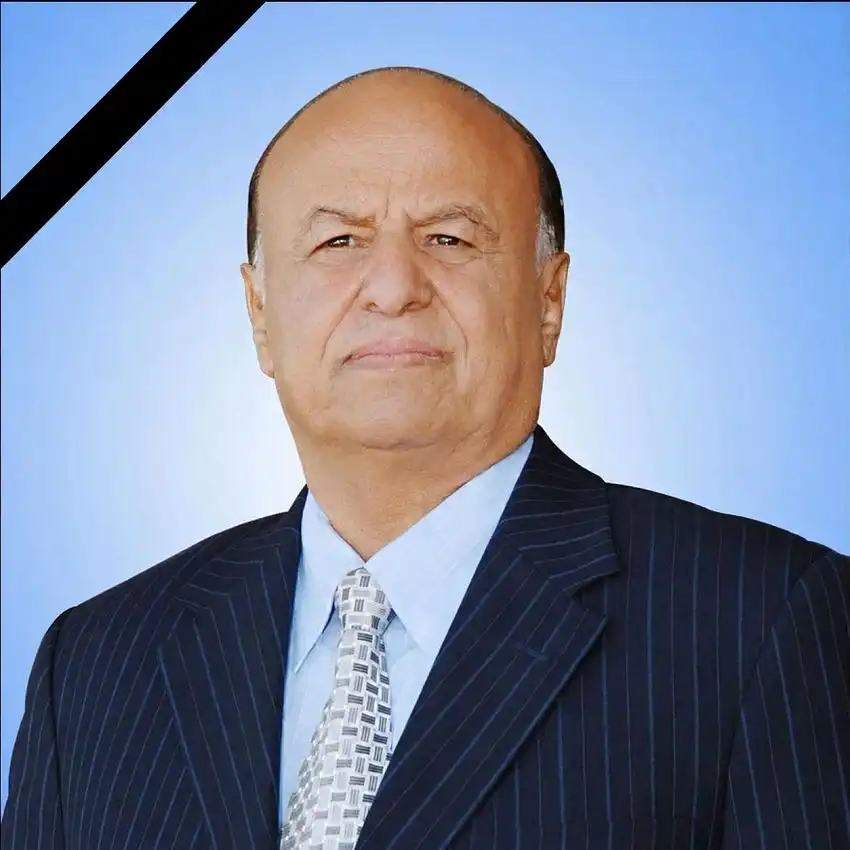
- Former President Abdrabbuh Mansur Hadi influenced Yemen's political and military landscape for decades.
- Hadi joined the military during British colonial rule and trained at Sandhurst Military Academy.
- He played a vital role in Yemen's unification and served as Vice President until 2012.
- Hadi called for Arab intervention following the Houthi coup, leading to Operation Decisive Storm.
The Legacy of Former Yemeni President Abdrabbuh Mansur Hadi
Former Yemeni President Abdrabbuh Mansur Hadi played a pivotal role in shaping Yemen’s political and military landscape over the past six decades. His name is closely associated with significant milestones, encompassing the pre-independence era in southern Yemen and the formation of the Presidential Leadership Council.
Early Life and Military Formation
Abdrabbuh Mansur Hadi was born on September 1, 1945, in the Al-Wadi’ah district of Abyan Governorate. Growing up in a rural environment during the British colonial period, he joined the military early on, enlisting in the Aden Protectorate Army. In 1966, he received specialized training at the prestigious Sandhurst Military Academy in the United Kingdom, which laid a solid foundation for his military career.
As the national liberation movement gained momentum, Hadi actively participated in the revolution against colonial rule, becoming closely associated with the October 14, 1963 revolution that ended British presence in southern Yemen.
Rise Within the Southern Army
Following Yemen’s independence, Hadi advanced through various positions in the People’s Democratic Republic of Yemen’s army. He transitioned between armored units, supply, and training divisions, establishing himself as a key military leader within the southern army.
The events of January 1986 in Aden marked a turning point in his career. Hadi, along with several military and political leaders, relocated to the north, initiating a new phase of political and military repositioning that paved the way for a significant role in Yemen’s unification project.
Unification and the 1994 War
With the declaration of unification in 1990, Hadi re-emerged as a prominent figure in the newly unified state. During the 1994 war, he served as a crucial military leader, initially as the commander of the Abyan front and later as Minister of Defense. His efforts were instrumental in stabilizing the unified state.
In October 1994, he became Vice President, a position he held until 2012.
Path to the Presidency and Power Transition in 2012
The protests of 2011 led to the Gulf Initiative, facilitating the transfer of power from President Ali Abdullah Saleh to his deputy, Abdrabbuh Mansur Hadi. In February 2012, Hadi was elected as a consensus president to lead a transitional phase aimed at rebuilding the state.
He launched the National Dialogue Conference, the largest political consensus process in Yemen’s history, which culminated in a proposal for a federal state comprising six regions.
Houthi Coup and the Collapse of the Transitional Phase
In September 2014, Houthi militias seized control of Sana’a, severely restricting Hadi’s movements. He fled to Aden and then abroad, asserting his commitment to fulfilling his constitutional duties. As the Houthis expanded their control, Hadi called for Arab intervention to support the legitimate government, leading to the launch of Operation Decisive Storm in March 2015, led by Saudi Arabia.
Since then, Hadi has led the Yemeni legitimacy from Riyadh amid a complex war, political and military divisions, alongside a severe economic and humanitarian crisis.
Power Transfer and Formation of the Presidential Leadership Council
In April 2022, Hadi announced the transfer of his powers to the Presidential Leadership Council, headed by Dr. Rashad Al-Alimi. This decision marked the end of his decade-long presidency and aimed to unify anti-Houthi forces while restructuring legitimate authority.
Death and Legacy
Abdrabbuh Mansur Hadi passed away on May 28, 2026, in Riyadh, Saudi Arabia, at the age of 81. His death followed years of living abroad after relinquishing power. Hadi remains a central figure in modern Yemeni history, not only as a former president but also as a witness and participant in major transformations, from colonialism to unification, from a fragile state to war, and towards the restructuring of authority.