Foreign Minister: The goal of “Fajr Yemen” is to end the coup and establish state authority over the entire national territory.

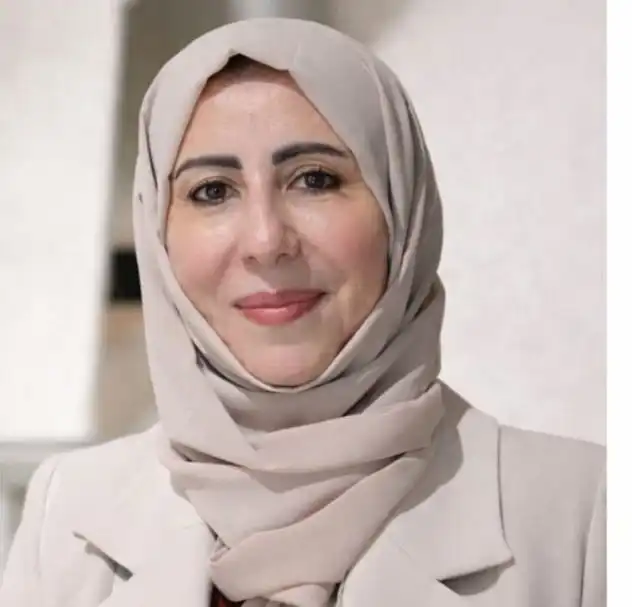
- Yemeni Foreign Minister reaffirms commitment to restoring state authority across national territory.
- "Fajr Yemen" aims to end the coup and consolidate state control over arms and decisions.
- Houthi militia escalates attacks despite the government's efforts for peace and diplomacy.
- Saudi Arabia's support is crucial in restoring state legitimacy and addressing the coup.
Yemeni Foreign Minister Affirms Government’s Commitment to Restoring State Authority
Yemeni Foreign Minister and Expatriates Affairs Dr. Afrah Al-Zuba, emphasized that the government has entered a phase of restoring state authority after exhausting opportunities for calm. She stressed that any upcoming political process must lead to the end of the coup, the return of institutions, and the consolidation of arms and decisions regarding war and peace under state control.
Focus on National Sovereignty
In an interview with Asharq Al-Awsat newspaper, the minister stated, “The current goal is to establish state authority over all national territory, preserving Yemen’s unity, sovereignty, independence, and territorial integrity.” She added, “We have not abandoned peace; rather, we have abandoned the illusion of peace that allows arms to remain outside the state. The rights of Yemenis to their state cannot hinge on the will of an armed group.”
Commitment to State Restoration
Dr. Al-Zuba explained that President Dr. Rashad Mohammed Al-Alimi, Chairman of the Presidential Leadership Council, announced the decision to restore the state based on constitutional responsibility and in accordance with National Defense Council resolutions. She noted that “Fajr Yemen” is not just the name of a military operation but a promise that the war will end with a state. She highlighted the unity of political and community forces around the state project and the support for its institutions and armed forces.
Peace Efforts and Houthi Response
The minister pointed out that the state has granted peace efforts full opportunities, but the Houthi militia responded with increased mobilization, escalation, and attacks on civilians, national facilities, neighboring countries, and international shipping lanes. She emphasized that the state’s use of force serves to protect citizens and enforce the law, not as a substitute for politics. Furthermore, she stated that diplomacy accompanies these efforts by rallying political and humanitarian support while refusing to treat the militia as a parallel authority to the state.
Saudi Support Acknowledged
Dr. Al-Zuba praised the political, military, and economic support from Saudi Arabia. She confirmed that coordination with the sisterly Kingdom of Saudi Arabia remains close and continuous, driven by a strategic partnership and a shared goal of ending the coup and restoring the state. She commended the Saudi Cabinet’s renewed full support for the Presidential Leadership Council, the government, and the Yemeni people, as well as the support of the Coalition to Restore Legitimacy since the launch of “Fajr Yemen.” She asserted that the field progress results from the sacrifices and cohesion of the forces, alongside this significant support.
International Support and Cooperation Priorities
The minister noted an increasing international support for state institutions, reflected in her meetings on the sidelines of the 81st session of the United Nations General Assembly. She affirmed that the true measure of this support lies in its impact on the state’s ability to protect its citizens and restore its institutions. She outlined cooperation priorities with partners to enhance defensive and security capabilities on land and sea, enforce the arms embargo under UN Security Council Resolution 2216 to cut off Iranian supplies, and provide economic, developmental, and humanitarian support to the government. She expressed hope for translating supportive positions into practical programs with clear timelines.
U.S. Position on Houthi Withdrawal
Dr. Al-Zuba described the U.S. position as clear in supporting the government and its right to defend its people. She mentioned Washington’s demand for the Houthis to withdraw from the areas they have seized, halt Iranian support, and fully implement the arms embargo. She confirmed that the government is working towards tangible cooperation that matches the scale of the threat, enabling its institutions to fulfill their duties and enhance economic stability.
Regional Security and Maritime Navigation
The minister linked the restoration of the state to regional security and international navigation. She asserted that the security of Bab el-Mandeb begins from the coast, and protecting ships at sea remains an incomplete solution as long as land serves as a launch point for threats. She warned against selective Houthi reassurances not to target specific countries’ vessels, as this allows for the potential to attack others and gives the militia time to rearm. She emphasized that freedom of navigation is a right for all countries, not a privilege granted by an armed group.
Houthi Attacks on Commercial Vessels
Dr. Al-Zuba reported that since November 2023, the Houthi militia has targeted over 100 commercial vessels, sinking several and damaging dozens more. They have also kidnapped a ship and detained dozens of crew members, with their attacks resulting in the deaths of Yemeni sailors and rescuers.
Iranian Support for Houthis
The minister confirmed that Iranian support for the Houthis is evidenced by documented findings and conclusions from the United Nations Expert Team and seized weapons shipments. She called for pursuing suppliers, intermediaries, and financiers, dismantling networks for purchasing, transporting, and smuggling arms, and halting the transfer of military technologies and expertise. She emphasized that the Yemeni issue should not be reduced to a confrontation with Iran, as the threat posed by the Houthis will not automatically end with any détente with Tehran, given their insistence on power, arms, and resources.
Civilian Protection and Humanitarian Obligations
Dr. Al-Zuba reiterated that protecting civilians, respecting international humanitarian law, and facilitating aid remain obligations during and after operations. She stated that the state’s responsibility includes citizens in areas controlled by the militia.
Call for a Legitimate Solution
She reaffirmed that any solution must rely on established references, constitutional legitimacy, and equal citizenship, with its core being the end of the coup and the return of institutions, not a power-sharing arrangement with arms.
To follow the news in Arabic