The Minister of Information refutes the blockade myth, stating ports are operational and markets are stocked, yet citizens struggle to afford goods.

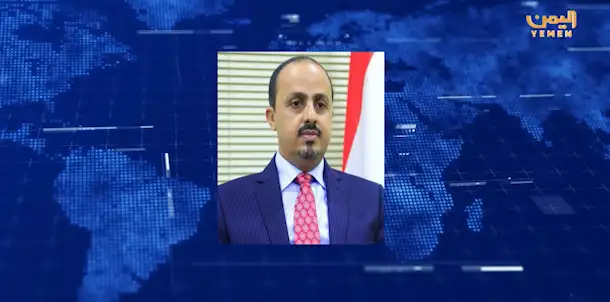
Minister of Information Addresses Houthi Claims of a “Siege”
Misleading Narratives Challenged by Economic Reality
Minister of Information Muammar Al-Eryani has strongly criticized the Houthi militia’s ongoing claims of a “siege” as the root cause of economic and humanitarian crises in areas under their control. He argues that these assertions clash with observable realities and economic indicators that expose the falsehood of their narrative. Al-Eryani poses a critical question: If a comprehensive siege has existed for years, where are the indicators and natural consequences of such a situation?
Economic Conditions Under Houthi Control
In a recent press statement, Al-Eryani highlighted that regions genuinely experiencing a siege typically suffer from severe shortages of food, fuel, and medicine. These areas often see long queues for basic necessities, repeated warnings about dwindling strategic reserves, and disruptions in supply chains. However, he noted that Houthi-controlled areas have not exhibited these signs. Instead, markets continue to operate, goods flow consistently, and the ports of Hodeidah have regularly received commercial vessels since the humanitarian truce began in April 2022.
Shipping Data Supports Minister’s Claims
Al-Eryani pointed to maritime traffic data, which confirms the ongoing arrival of fuel, wheat, food products, consumer goods, and construction materials at Hodeidah ports. Since the beginning of 2026, these ports have welcomed approximately 313 commercial ships. This influx has resulted in an abundance of goods in local markets, suggesting that the real issue lies not in a lack of supplies but in the declining purchasing power of citizens.
Economic Policies Behind Declining Consumption
The Minister attributed the decline in consumption to the destructive policies implemented by the Houthi militia against the state, national economy, and private sector. Key issues include the looting of public revenues, the suspension of employee salaries, and the imposition of taxes and fees that impoverish the community. These actions have eroded citizens’ purchasing power, leading to increased poverty, hunger, and unemployment.
Debunking the “Siege” Myth
Al-Eryani emphasized that the “siege” narrative can no longer withstand scrutiny. Ports remain operational, ships continue to arrive, and markets are filled with goods. He explained that rising prices in Houthi-controlled areas do not reflect a shortage of supply or disruption of deliveries. Instead, they indicate the existence of a parallel economy created by the militia to support its war efforts and fund its terrorist activities, enriching its leaders and financiers through a system based on monopolies and extortion.
The Reality for Citizens
In conclusion, Al-Eryani asserted that the truth known to every Yemeni is that markets have never lacked goods; rather, it is the citizens’ wallets that have been emptied. People in Houthi-controlled areas do not queue for flour or fuel out of scarcity; they do so because they cannot afford to buy these essentials. The militia has seized their salaries, confiscated resources, and burdened them with taxes and fees, turning their livelihoods into fuel for its wars and using the economy to finance its coup agenda.
For more information, visit Yemen TV.
To follow the news in Arabic