Devastation in Southern Lebanon: Displaced Residents Share Their Harrowing Experiences

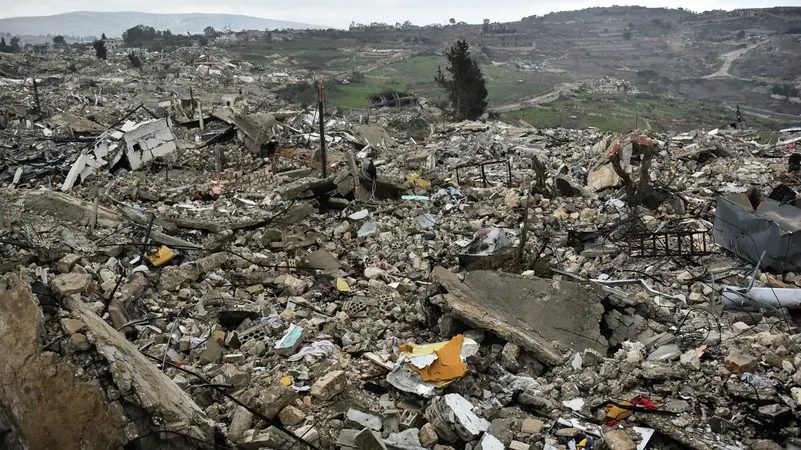
- Israeli airstrikes have caused extensive destruction in southern Lebanon since March 2.
- Over 50,000 housing units have suffered damage amid ongoing hostilities between Israeli forces and Hezbollah.
- Displaced residents report severe emotional distress and loss of homes and memories.
- Lebanese authorities report over 3,000 fatalities due to Israeli bombardments during the conflict.
Widespread Destruction in Southern Lebanon
Since March 2, Israeli airstrikes have relentlessly targeted southern Lebanon, resulting in widespread devastation across numerous villages and towns. Many displaced residents have characterized the destruction as “complete annihilation.” Satellite imagery and footage from both sides of the border reveal the scale of devastation, with Lebanese authorities reporting that over 50,000 housing units have suffered damage since hostilities erupted between Israeli forces and Hezbollah, according to Agence France-Presse.
Voices of the Displaced: “War Took Everything”
Farah, a displaced woman from the border town of Yaroun, expressed her profound grief, stating, “Everything has been destroyed. All we have left are memories and a few photographs. The war took our childhood, our memories, and our home.” She learned about the destruction of her house through a satellite image two weeks ago, underscoring the brutality that has engulfed the region.
Comprehensive Damage to Infrastructure
The intensity of airstrikes and demolition operations has escalated, particularly following the ceasefire announcement on April 17. These operations have had a devastating impact on:
- Thousands of homes
- Essential services
- Schools
- Places of worship
- Extensive agricultural lands
Displaced individuals from various towns have resorted to purchasing satellite images for $140 each to ascertain the fate of their homes, especially in areas where Israel prohibits their return.
Severe Impact on Key Towns
In Yaroun, 580 out of 800 homes were destroyed during the 2023-2024 war, and the current conflict has obliterated what remained, including the St. George Church, which now stands with only three walls. Satellite images reveal that Bint Jbeil has transformed into near-total rubble, including its renowned stadium, where Hassan Nasrallah delivered the “Liberation Speech” in 2000.
Urban Genocide: A Catastrophic Scale of Destruction
At the National Council for Scientific Research in Beirut, Secretary-General Shadi Abdullah presented images illustrating the destruction before and after the conflict. He stated, “Most buildings in Bint Jbeil have collapsed. What is happening is not military operations; it is the destruction of land, people, and property.” The council has accused Israel of committing “urban genocide,” a strategy aimed at erasing entire areas from the map.
According to the National Council for Scientific Research’s survey, alarming statistics indicate that:
- 290,000 housing units have been affected since 2023
- 61,000 units suffered damage since the onset of the recent war
- 6,000 units were completely destroyed during the ceasefire
- An additional 6,000 buildings sustained partial damage and may face demolition later
Lebanese authorities have reported over 3,000 fatalities due to Israeli bombardments.
Ongoing Humanitarian Crisis Amid Diplomatic Efforts
Despite the initiation of direct talks between Lebanon and Israel in Washington last month, Israel continues to launch daily strikes targeting Hezbollah. Demolition and destruction persist in border areas, while the Israeli military issues daily evacuation warnings for villages and towns, exacerbating the suffering of residents and the displaced.
RELATED_KEYPHRASES: southern Lebanon destruction, displaced residents experiences, Israeli airstrikes impact